སྒྱུ་རྩལ
མཛེས་སྡུག་དང་བདེ་ཐང
བཟོ་རིག
རིག་གནས་དང་ལོ་རྒྱུས
དགའ་སྟོན
ཁོར་ཡུག
ཟས་དང་བཏུང་རྫས
ཕྱིར་འཕྲུལ་རིག
ཚན་རིག
རྩེད་འགྲན
རིག་རྩལ
གྱོན་རུང
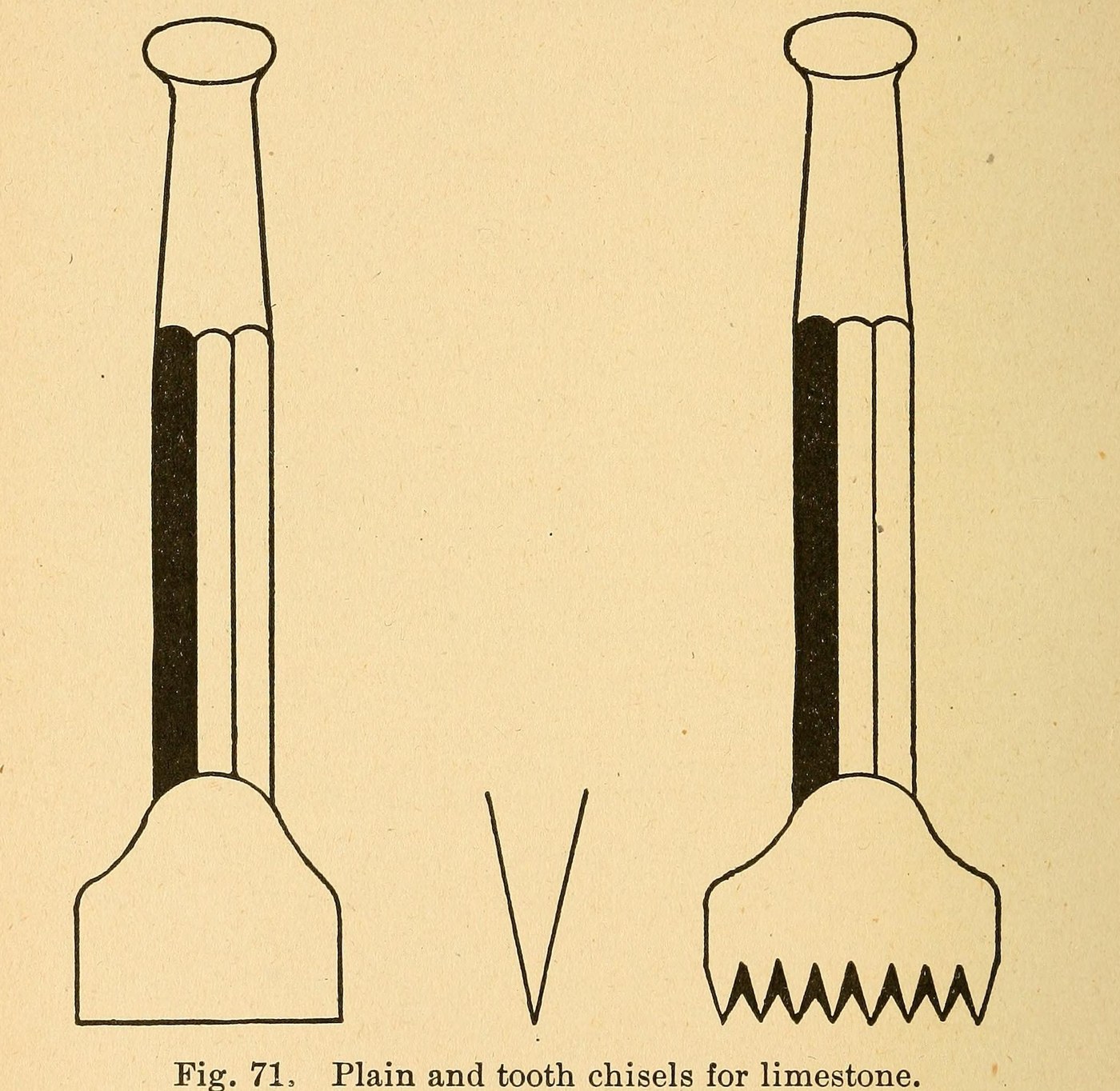


Stone Carving Chisels: Mallet-Headed Plain and Tooth Chisels and Points for Soft Stone (Holford, 1907)
Soft stone such as limestone and sandstone is cut with chisels struck by a wooden mallet, so their heads are broad and a little rounded. H. Holford's 20th Century Toolsmith and Steelworker (1907) shows a set: plain chisels, tooth chisels with a row of sharp teeth, and points, forged from 3/4 inch octagon steel of 75 points carbon and tempered a very pale blue.
He gives no lengths, widths or tooth spacing; those are unknown here. The brine bath is from his chapter on the hardening bath.
Source: H. Holford (1907), pp. 21, 131-133, 140-141. Picture: his Fig. 71.
བར་མ
A day for a set
ལམ་སྟོན
1
1
Read Holford
Read Holford
"In cutting soft stone of any description wooden mallets are used, consequently the heads of the tools are made broad and a little rounding, so as not to cut or bruise the mallet."
2
2
Forge the mallet heads
Forge the mallet heads
Use 3/4 inch octagon steel of 75 points carbon. For each tool, upset the head end a little, fuller it in, draw it out, then swage it to its broad, slightly rounded shape between top and bottom swages (Fig. 78). For a narrow chisel, forge the head first; for a wide one, forge the cutting end first. Sizes are not given (unknown).
གོམ་པ་འདིའི་རྫས་རིགས:
 ལག་ཆས་ལྕགས་ཁར་གྱི་ཡུ་བ་ཟུར་བརྒྱད།1 3/4 in octagon
ལག་ཆས་དགོས་མཁོ:
 མགར་ཐབ།
 མགར་བའི་རྡོ་ལེབ།
 མགར་བའི་ཐོ་བ།
 ཤུད་འཁོར།
 ཕུ་ལར (ཁུང་བཟོ་ལྕགས)
 ཡ་གི་ དང་ མ་གི་ སི་ཝེཇ་
 མགར་བའི་ལག་བཟུང་།
 མ་ཤེས་པའི་ཚད།
 ཉེན་སྲུང་མིག་ཤེལ།
 ཚ་བཟོད་ཀྱི་ལག་ཤུབས།
3
3
Forge the chisels and points
Forge the chisels and points
For a wide chisel, upset the end to the width of the chisel before drawing it down to a thin cutting edge. Hammer the flat surfaces. Draw the points down to almost a square point (Fig. 72). For tooth chisels, punch the teeth into the edge in a punch machine after the flat surfaces have been hammered, then file each tooth to an extremely sharp point.
ལག་ཆས་དགོས་མཁོ:
མགར་ཐབ།མགར་བའི་རྡོ་ལེབ།མགར་བའི་ཐོ་བ།མགར་བའི་ལག་བཟུང་། བུག་གནོན་འཕྲུལ།
 ལྕགས་བཤུ་ཆས་ཕྲ་མོ
4
4
Harden the chisels
Harden the chisels
Heat the cutting edge very evenly along its whole length and dip it at least one inch into the hardening bath (clean water, best as a strong brine, kept large and cold). Polish it bright by rubbing it across a board spread with fine clean sand near the forge, and draw the temper to a very pale blue, the right temper for all limestone tools.
ལག་ཆས་དགོས་མཁོ:
མགར་ཐབ། ཚྭ་ཁུ་གང་བ།
 ཤིང་ལེབ་
 བྱེ་མ་ཞིབ་མོ།མགར་བའི་ལག་བཟུང་།ཚ་བཟོད་ཀྱི་ལག་ཤུབས།
5
5
Harden the points
Harden the points
Dip the points deep into the bath. Draw the temper so it shows at least 5/8 inch back from the point; if it runs so fast that only the very tip is tempered, the point bends and breaks easily.
ལག་ཆས་དགོས་མཁོ:
མགར་ཐབ།ཚྭ་ཁུ་གང་བ།ཤིང་ལེབ་བྱེ་མ་ཞིབ་མོ།མགར་བའི་ལག་བཟུང་།ཚ་བཟོད་ཀྱི་ལག་ཤུབས།6
6
History and honest limits
History and honest limits
Holford sets the soft-stone tools apart from those for granite and marble: soft stone takes wooden mallets, hence the broad heads, and a very pale blue temper. The finest stone carvers' tools, struck only lightly, he hardens without drawing any temper at all.
He gives no lengths, widths or tooth spacing; the tools used to make them are ours.
རྫས་རིགས
1- 1 3/4 in octagonས་ཆ་འཛིན
ལག་ཆས་དགོས་མཁོ
15- ས་ཆ་འཛིན
- ས་ཆ་འཛིན
- ས་ཆ་འཛིན
- ས་ཆ་འཛིན
- ས་ཆ་འཛིན
- ས་ཆ་འཛིན
- ས་ཆ་འཛིན
- ས་ཆ་འཛིན
- ས་ཆ་འཛིན
- ས་ཆ་འཛིན
- ས་ཆ་འཛིན
- ས་ཆ་འཛིན
- ས་ཆ་འཛིན
- ས་ཆ་འཛིན
- ས་ཆ་འཛིན
བིལུ་པིརིན་ཊི་འདི་གིས་བཟོ་མི

འབྲེལ་ཡོད་བིལུ་པིརིན་ཊི
བིལུ་པིརིན་ཊི་འདི་ཚུ་ཐབས་ལམ་དང་རྫས་རིགས། སྤྱི་ཆོས་བགོ་བཤའ་བྱེད
CC0 སྤྱི་དབང
བིལུ་པིརིན་ཊི་འདི་CC0 འོག་བཀྲམས་ཡོད། ཁྱེད་རང་གིས་ཆོག་མཆན་མ་བཞེས་པར་ཕབ་ལེན་དང་བཟོ་བཅོས། བགོ་བཤའ། དགོས་མཁོ་གང་ལའང་བཀོལ་སྤྱོད་བྱས་ཆོག
བཟོ་མཁན་ལ་རྒྱབ་སྐྱོར་བྱེད་པའི་ཆེད་ཁོང་ཚོའི་བིལུ་པིརིན་ཊི་བརྒྱུད་ཐོན་སྐྱེད་ཉོ། བཟོ་མཁན་གྱིས བཟོ་མཁན་གྱི་ཁེ་ཕོགས ཚོང་པས་གཏན་འཁེལ་བྱས་པ། ཡང་ན་བིལུ་པིརིན་ཊི་འདིའི་པར་གསར་བཟོས་ཏེ་ཁྱེད་རང་གི་བིལུ་པིརིན་ཊི་ནང་མཐུད་སྦྲེལ་བྱས་ཏེ་ཡོང་སྒོ་བགོ་བཤའ་བྱེད།