སྒྱུ་རྩལ
མཛེས་སྡུག་དང་བདེ་ཐང
བཟོ་རིག
རིག་གནས་དང་ལོ་རྒྱུས
དགའ་སྟོན
ཁོར་ཡུག
ཟས་དང་བཏུང་རྫས
ཕྱིར་འཕྲུལ་རིག
ཚན་རིག
རྩེད་འགྲན
རིག་རྩལ
གྱོན་རུང
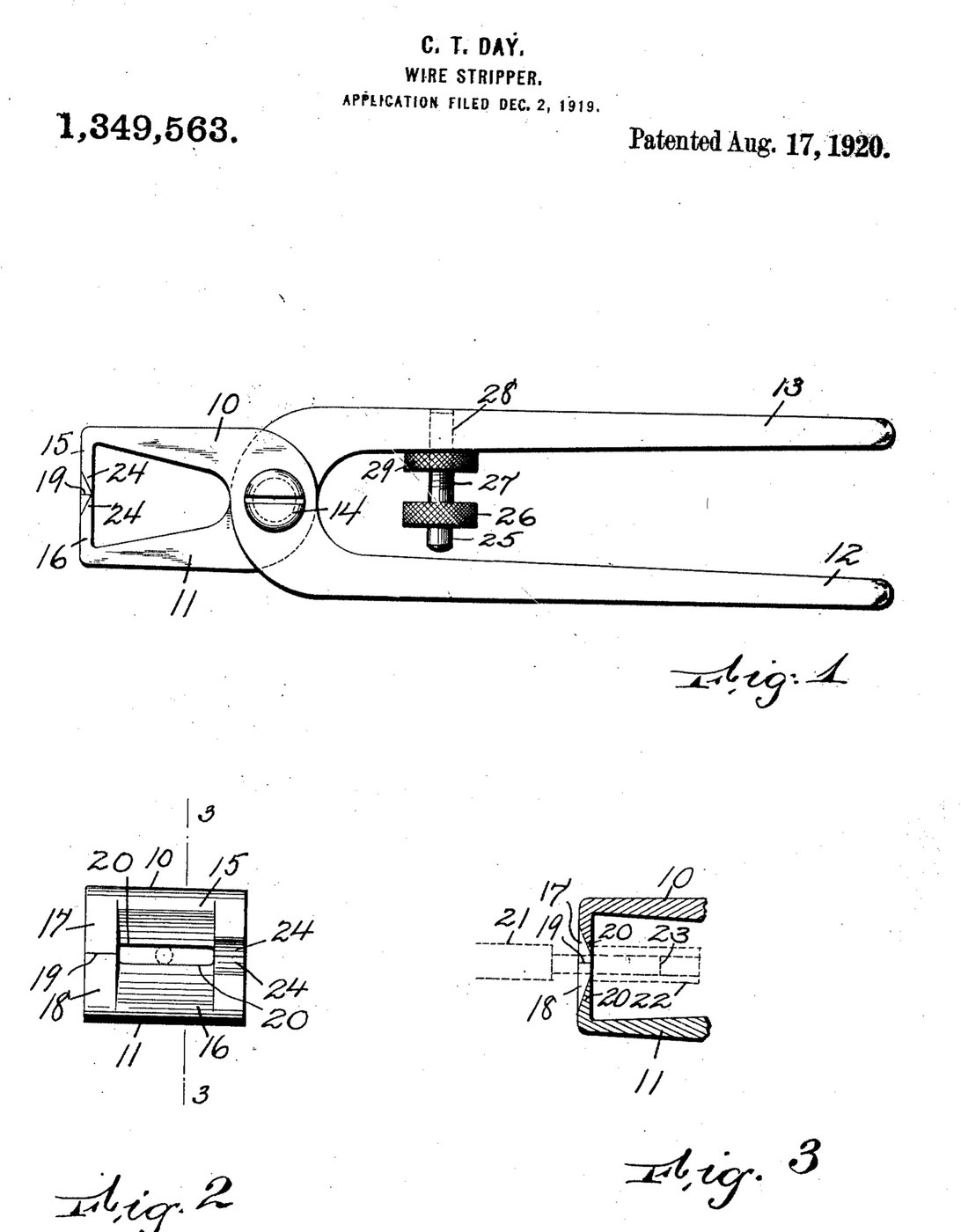


Wire Strippers: Pliers with Straight Parallel Stripping Edges (Day, US 1,349,563, 1920)
Pliers whose jaws stop with their two straight stripping edges exactly one wire-core apart. Grip the wire anywhere along the edges and twist: the insulation is cut through all round, but the copper is never nicked. A screw stop between the handles sets the gap for larger wire, and cutting edges beside the stripping edges cut the wire through.
Result: wire strippers that strip insulation without damaging the conductor.
Source: C. T. Day, US 1,349,563 (1920). Unknown: the metal, sizes and hardening. Picture: the patent drawing.
བར་མ
Unknown
ལམ་སྟོན
1
1
Forge the two jaw-handles
Forge the two jaw-handles
Make two pieces like a pair of pliers: each a jaw with a long handle, pivoted together by a bolt. Bend each jaw's end inward. Ours: tool steel forged and filed. Not given: the metal, sizes.
གོམ་པ་འདིའི་རྫས་རིགས:
 ལག་ཆས་ལྕགས་ཁར་གྱི་ཡུ་བ་ལེབ་ཏེ།1 jaws and handles
 མ་ཤེས་པའི་ལྕགས་རིགས།1 pivot bolt
ལག་ཆས་དགོས་མཁོ:
 མགར་ཐབ།
 མགར་བའི་རྡོ་ལེབ།
 ཐོ་བ།
 འཁོད་བཞག་ཕུག་འཕྲུལ།
 མ་ཤེས་པའི་ཚད།
2
2
Shape the cheek pieces and stripping edges
Shape the cheek pieces and stripping edges
Give each inward jaw end a cheek piece; the cheek faces meet when the jaws close and stop them closing further. Set back from those faces, file two straight, parallel stripping edges, much longer than the gap between them, so that with the jaws shut they stand apart by exactly the diameter of the wire's metal core. On the other side of the stripping edges, opposite the cheeks, file cutting edges that meet, for cutting the wire through.
ལག་ཆས་དགོས་མཁོ:
 ལྕགས་ཀྱི་དར་མ།མ་ཤེས་པའི་ཚད།
3
3
Add the stop, harden, and strip a wire
Add the stop, harden, and strip a wire
For use on a larger wire, drill and tap a hole in one handle and fit a stud with a hand piece and a threaded end. Screwed in, its free end meets the other handle and stops the jaws closing so far. A lock nut holds the setting. Harden the edges. To strip, lay the wire across the jaws anywhere along the stripping edges, close them and turn the pliers right and left with the wrist: the insulation is cut through all round, and a pull slides its end off the core. Not given: how they are hardened.
གོམ་པ་འདིའི་རྫས་རིགས:
མ་ཤེས་པའི་ལྕགས་རིགས།1 stud and lock nutལག་ཆས་དགོས་མཁོ:
འཁོད་བཞག་ཕུག་འཕྲུལ། སྐུད་རིས་གཏུབ་ཆས་ཆ་ཚང་།
 ཚ་དྲོད་བཅོས་ཐབས་ཀྱི་ཐབ།
 སྲ་བཟོའི་ཆུ་སྣོད།
རྫས་རིགས
2- 1 jaws and handlesས་ཆ་འཛིན
- 1 stud and lock nutས་ཆ་འཛིན
ལག་ཆས་དགོས་མཁོ
9- ས་ཆ་འཛིན
- ས་ཆ་འཛིན
- ས་ཆ་འཛིན
- ས་ཆ་འཛིན
- ས་ཆ་འཛིན
- ས་ཆ་འཛིན
- ས་ཆ་འཛིན
- ས་ཆ་འཛིན
- ས་ཆ་འཛིན
མཐུད་སྦྲེལ་བིལུ་པིརིན་ཊི་རྫས་རིགས
བིལུ་པིརིན་ཊི་འདི་གིས་བཟོ་མི

CC0 སྤྱི་དབང
བིལུ་པིརིན་ཊི་འདི་CC0 འོག་བཀྲམས་ཡོད། ཁྱེད་རང་གིས་ཆོག་མཆན་མ་བཞེས་པར་ཕབ་ལེན་དང་བཟོ་བཅོས། བགོ་བཤའ། དགོས་མཁོ་གང་ལའང་བཀོལ་སྤྱོད་བྱས་ཆོག
བཟོ་མཁན་ལ་རྒྱབ་སྐྱོར་བྱེད་པའི་ཆེད་ཁོང་ཚོའི་བིལུ་པིརིན་ཊི་བརྒྱུད་ཐོན་སྐྱེད་ཉོ། བཟོ་མཁན་གྱིས བཟོ་མཁན་གྱི་ཁེ་ཕོགས ཚོང་པས་གཏན་འཁེལ་བྱས་པ། ཡང་ན་བིལུ་པིརིན་ཊི་འདིའི་པར་གསར་བཟོས་ཏེ་ཁྱེད་རང་གི་བིལུ་པིརིན་ཊི་ནང་མཐུད་སྦྲེལ་བྱས་ཏེ་ཡོང་སྒོ་བགོ་བཤའ་བྱེད།