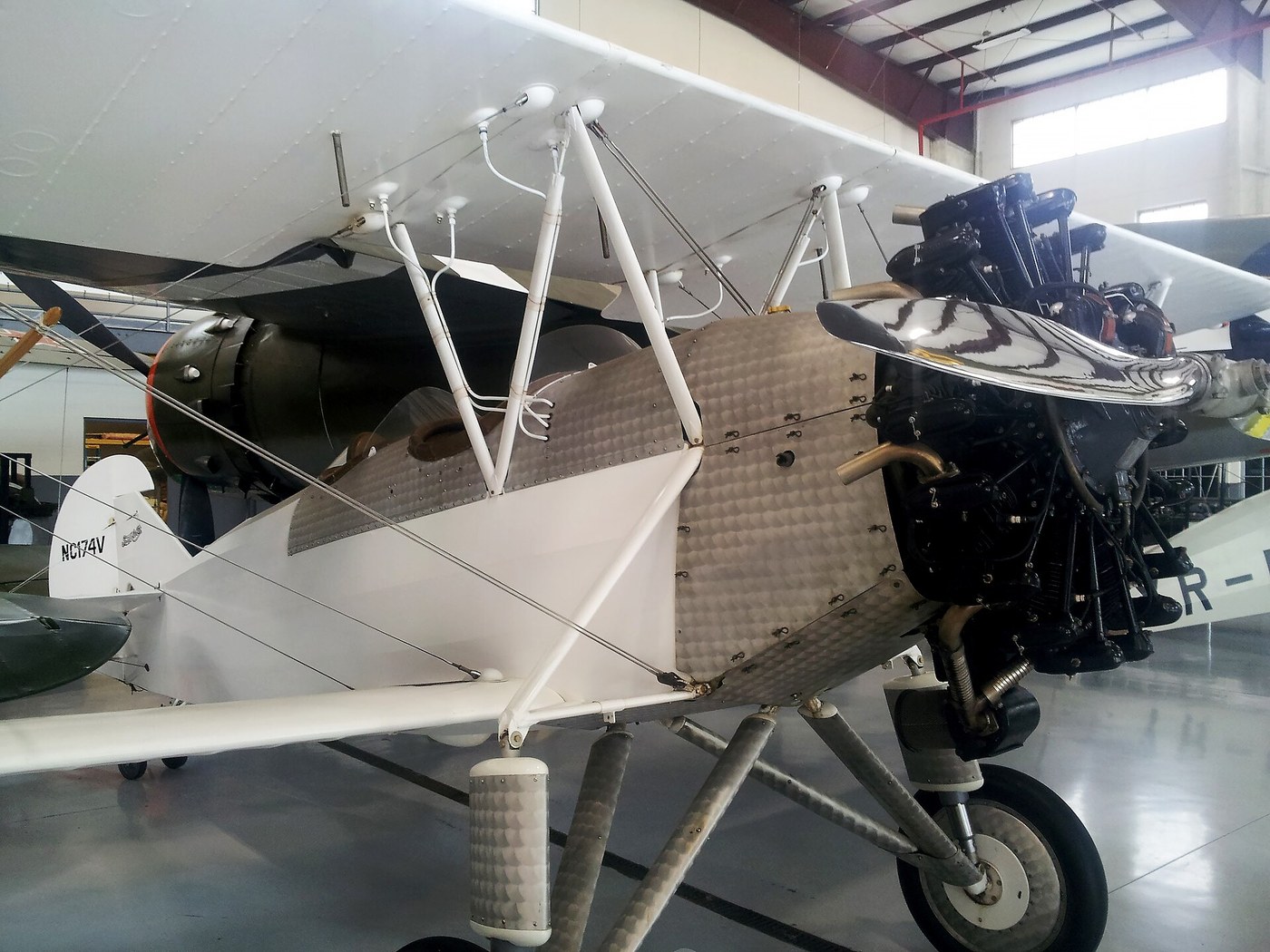


The Aileron and Wing Warping
说明
Establish that roll is the difficult axis
Establish that roll is the difficult axis
Find out why control needed inventing at all.
- Take a trimmed model glider and disturb it in pitch — nose up slightly — then release. Watch what it does.
- Disturb it in yaw and release.
- Now disturb it in roll, dropping one wing, and release.
Pitch and yaw recover on their own if the tail is doing its job; roll does not. A dropped wing tends to stay dropped, and worse, the machine then sideslips toward the low wing, which usually tightens the situation rather than relieving it. Nothing in the tail addresses roll, because the tail is small and close to the centreline — it has no leverage about the roll axis.
Add dihedral — angle the wings up in a shallow V — and try again. The model will now roll back toward level on its own, because in a sideslip the lower wing meets the airflow at a greater effective angle and lifts more. Dihedral gives you stability but not CONTROL: it returns you to level, it cannot make you turn.此步骤所需材料:
 轻木板2 张
 巴尔沙木条1 束
 木工胶1 瓶
所需工具:
 带备用刀片的手工刀
 6 英寸数显卡尺
 量角器
量角器 数显角度尺
数显角度尺 可拍慢动作视频的智能手机
 透明安全眼镜
Build the wing-warping mechanism
Build the wing-warping mechanism
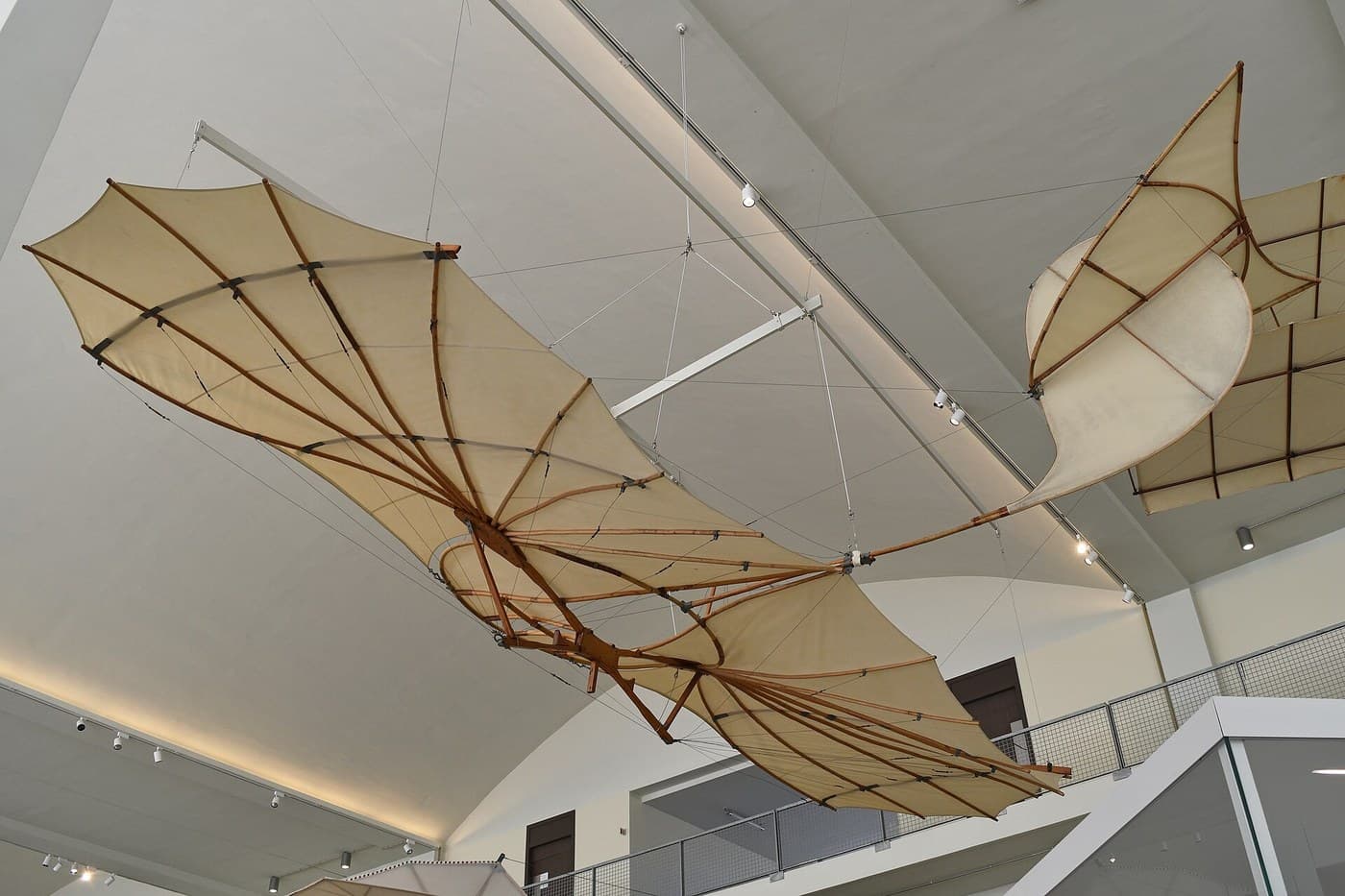
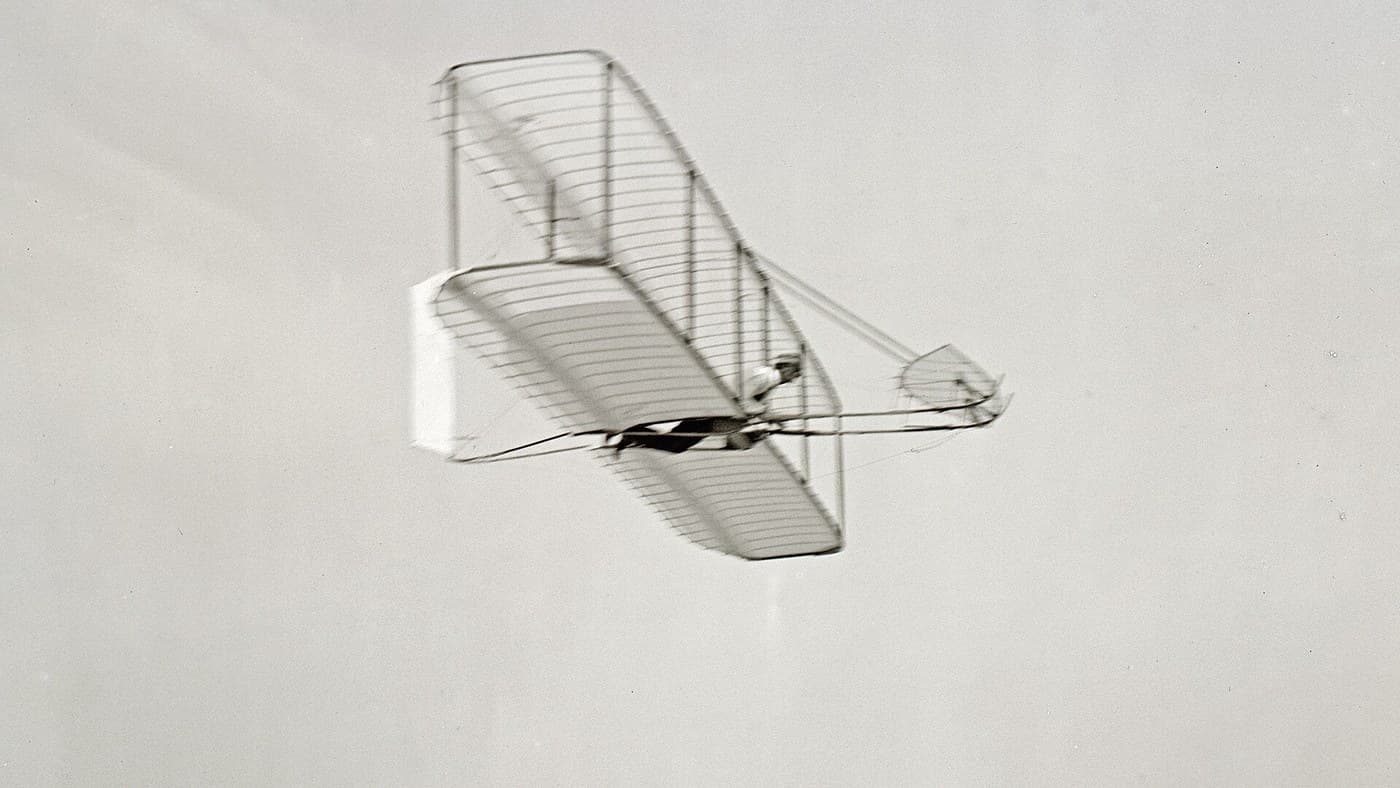
Twist the whole wing, the way the 1903 Flyer did.
- Build a wing with flexible trailing-edge structure — ribs firmly attached to the main spar but the trailing edge free to move vertically at the tips.
- Rig cables from each wingtip trailing edge to a common control, crossed so that pulling one down raises the other.
- Set the neutral position with both tips at equal incidence — check with an angle gauge, not by eye.
- Operate the control and measure the incidence change at each tip.
You are changing the wing’s angle of attack asymmetrically: more incidence on one side means more lift there, and the aircraft rolls. The Wrights got the idea, by their own account, from twisting an empty inner-tube box in the bicycle shop.
Feel how much force the control needs, and note that the whole wing structure has to be deliberately compliant for it to work. That compliance is the problem: a structure soft enough to warp on demand is soft enough to warp under aerodynamic load, and as speeds and wing loadings rose in the following decade this became a genuine hazard. Warping was effectively gone from new designs by about 1915.此步骤所需材料:
轻木板2 张巴尔沙木条1 束 钢琴丝1 coil
 舵角1 套
舵角1 套 U 形夹1 套
所需工具:
带备用刀片的手工刀6 英寸数显卡尺量角器数显角度尺 锉刀套装透明安全眼镜
Build ailerons on an identical wing
Build ailerons on an identical wing
Same job, different mechanism, and the difference is entirely structural.
- Build a second wing to the same plan, but rigid — braced trailing edge, no deliberate compliance.
- Cut a hinged panel into the outboard trailing edge of each side, roughly a quarter of the semi-span.
- Link them so that one goes up as the other goes down.
- Measure the deflection angles and confirm they are symmetric.
The aileron changes the effective camber of the outer wing rather than the incidence of the whole wing, and it does so without asking the structure to bend. That is the entire advantage — the wing can now be made as stiff as you like, which is what allowed wings to get thinner, faster and eventually all-metal.
Reverse-engineering note: ailerons sit OUTBOARD because roll authority is a moment, so leverage matters, and the tips have the longest arm. They stop short of the very tip both because the structure is shallow there and because the tip vortex makes the last few percent of span aerodynamically poor anyway.此步骤所需材料:
轻木板2 张巴尔沙木条1 束 铰链胶带(舵面)1 卷舵角1 套U 形夹1 套木工胶1 瓶
所需工具:
带备用刀片的手工刀6 英寸数显卡尺量角器数显角度尺锉刀套装透明安全眼镜Fly both and find adverse yaw
Fly both and find adverse yaw
Both mechanisms share a flaw, and finding it is the point of this step.
- Fly each wing in turn on the same fuselage, in calm air, filming from behind.
- Apply roll input and watch the NOSE, not the wings.
- Note which way the nose swings at the moment roll begins.
The nose swings the WRONG way — away from the intended turn — at the start of the roll. The wing being asked to lift more is also, unavoidably, producing more drag; the wing lifting less produces less. That drag difference is a yawing moment opposing the turn, and it is called adverse yaw.
This is why an aeroplane needs a rudder to turn properly, and why pilots are taught to lead a turn with coordinated rudder rather than roll alone. It is not a training quirk — it is a direct consequence of lift and drag being produced by the same surface.
Two real fixes exist and both are visible on aircraft today. Differential ailerons move the up-going one further than the down-going one, so the drag is more evenly matched. Frise ailerons project the leading edge of the up-going aileron into the airflow beneath the wing, deliberately adding drag on that side. Look along the wing of almost any light aircraft and you can see which it uses.此步骤所需材料:
 坐标纸1 pad
所需工具:
可拍慢动作视频的智能手机 手持风速仪量角器数显角度尺透明安全眼镜
Compare the structures, not just the handling
Compare the structures, not just the handling
The two mechanisms fly similarly. They do not survive similarly.
- Load each wing at the tip with a steadily increasing weight and measure the twist with an angle gauge.
- Record the angle of twist against load for both.
- Now estimate how that twist would change the local angle of attack in flight.
The warping wing twists far more under load, and the twist adds to whatever the pilot commanded. At low speed and light loading this is merely imprecise. As speed rises, aerodynamic loads rise with the square of speed, and a wing that twists under load can enter a feedback loop where twist increases load, which increases twist. That is aeroelastic divergence and it destroys wings.
So the aileron did not win because it rolled better. It won because it decoupled the control from the structure, letting engineers make wings stiff — and stiffness was the prerequisite for everything that followed, from the cantilever monoplane to the all-metal stressed skin.
Worth stating plainly, because it is a recurring pattern: the superseded design was not stupid, it had a hard limit built into its principle. Warping is fine on a slow, lightly-loaded, heavily-braced biplane, which is exactly the aircraft the Wrights had. It fails on the aircraft that came next.此步骤所需材料:
 校准砝码组1 套坐标纸1 pad
所需工具:
数显角度尺 数字天平6 英寸数显卡尺
 C 形夹量角器透明安全眼镜
材料
9- 2 张占位符
- 1 束占位符
- 1 瓶占位符
- 1 coil占位符
- 1 套占位符
- 1 套占位符
- 1 卷占位符
- 1 pad占位符
- 1 套占位符
相关蓝图
这些蓝图共享知识——技术、材料或原理
CC0 公共领域
此蓝图以 CC0 协议发布。你可以自由复制、修改、分发和使用此作品,无需征得许可。
通过购买蓝图中的产品支持创客,他们将获得 创客佣金 (由供应商设定),或创建此蓝图的新版本并将其作为连接包含在你自己的蓝图中以分享收入。