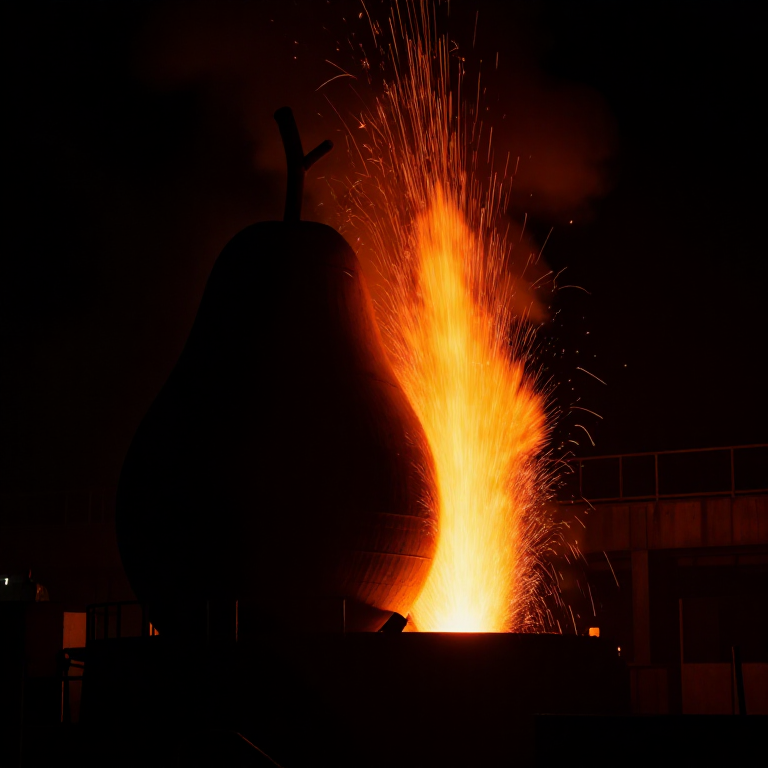


Making Steel in a Bessemer Converter — Mass Steel by Blowing Air Through Iron
Crucible steel was superb but slow, made a few kilograms at a time. In 1856 Henry Bessemer found a way to make steel by the tonne in about twenty minutes, and the price of steel collapsed from a luxury to a commodity. Rails, ships, bridges, and the first steel-framed buildings all became possible almost overnight.
His method sounds reckless: blow cold air straight up through a vessel of molten pig iron. The oxygen in the blast burns out the silicon, manganese, and carbon that make pig iron brittle — and because those reactions give off enormous heat, the metal does not cool but actually gets hotter, staying liquid with no added fuel. A volcano of flame and sparks roars from the converter's mouth while the carbon burns away.
The trick is knowing when to stop. The operator reads the flame, and the instant the carbon is gone, halts the blow and adds back a precise dose of carbon-rich spiegeleisen to hit the exact steel he wants. Tilt, pour, and there is a ladle of molten steel where minutes before there was crude pig iron.
说明
Understand the converter
Understand the converter
Build and line the converter
Build and line the converter
此步骤所需材料:
 耐火砖120 个
所需工具:
 手铲
手铲Charge molten pig iron
Charge molten pig iron
此步骤所需材料:
 生铁锭100 公斤
Start the blast
Start the blast
所需工具:
 鼓风机
鼓风机Burn out the impurities
Burn out the impurities
Read the flame
Read the flame
所需工具:
 密闭式护目镜
Stop at the drop
Stop at the drop
Recarburise with spiegeleisen
Recarburise with spiegeleisen
此步骤所需材料:
 镜铁8 公斤
Handle phosphoric iron
Handle phosphoric iron
此步骤所需材料:
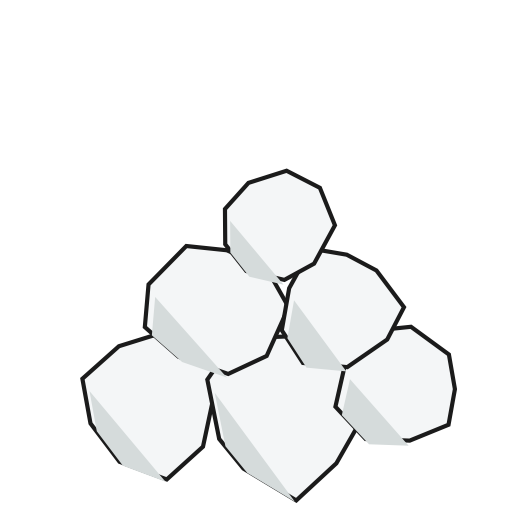 生石灰10 公斤
Pour into the ladle
Pour into the ladle
所需工具:
 锭模
锭模Strip and roll
Strip and roll
所需工具:
 轧机
轧机Appreciate the impact
Appreciate the impact


相关蓝图
这些蓝图共享知识——技术、材料或原理


CC0 公共领域
此蓝图以 CC0 协议发布。你可以自由复制、修改、分发和使用此作品,无需征得许可。
通过购买蓝图中的产品支持创客,他们将获得 创客佣金 (由供应商设定),或创建此蓝图的新版本并将其作为连接包含在你自己的蓝图中以分享收入。