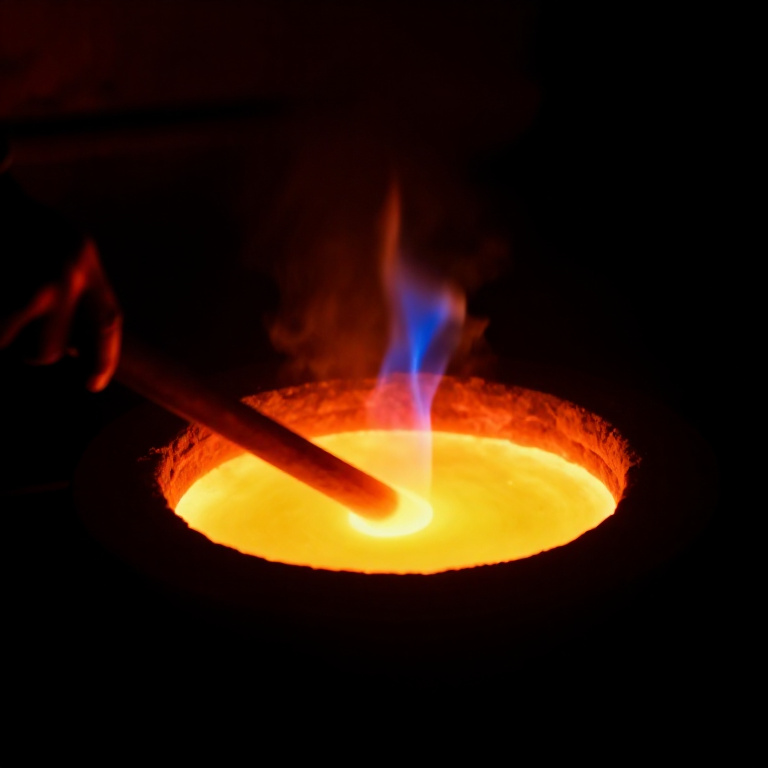


Puddling Wrought Iron from Pig Iron — Burning Out the Carbon in a Reverberatory Furnace
Pig iron straight from the blast furnace is cheap and plentiful but nearly useless for anything that must bend or take a blow: its high carbon makes it brittle as glass. To turn it into the tough, malleable wrought iron that built the railways and bridges of the 1800s, the carbon has to be burned out. Henry Cort's puddling process, patented in 1784, did exactly that — at scale, with coal.
The trick is the reverberatory furnace, which keeps the fuel separate from the metal. Coal burns in a side firebox and the flame is drawn over a low bridge and reflected down off the furnace roof onto a hearth of pig iron, so the sulphurous coal smoke never touches the iron. A workman called a puddler stirs the molten bath through a small door with a long iron rabble, exposing every part of it to the air until the carbon oxidises away.
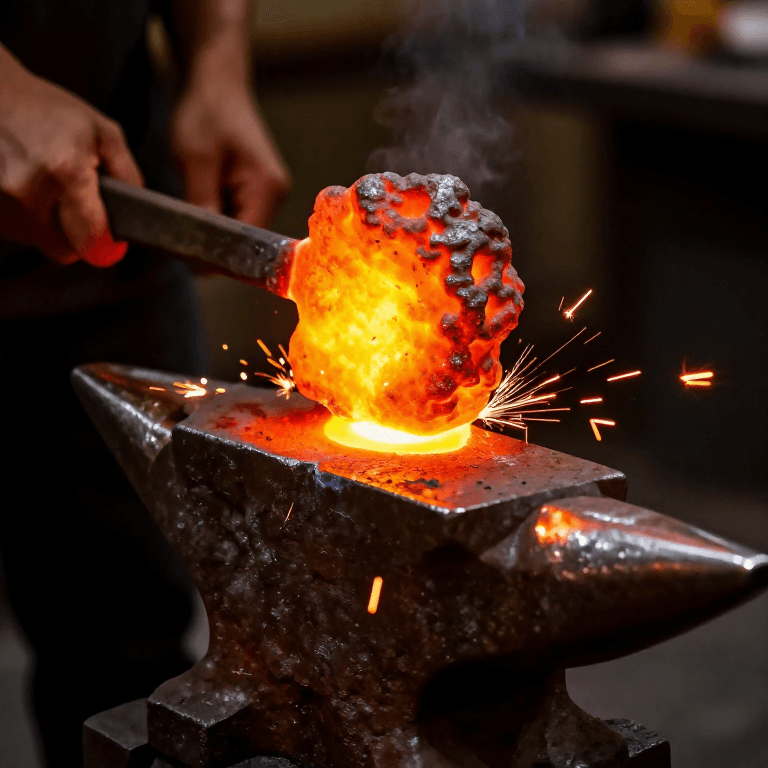
As the carbon leaves, something strange happens: the purer iron's melting point rises above the furnace temperature, so the metal grows stiff and pasty even in the heat. The puddler gathers it into spongy balls, which are then hammered and rolled to squeeze out the slag and consolidate the fibres into bars of wrought iron.
说明
Understand the goal
Understand the goal
Build a reverberatory furnace
Build a reverberatory furnace
此步骤所需材料:
 耐火砖100 个
所需工具:
 手铲
手铲Fettle the hearth
Fettle the hearth
此步骤所需材料:
 氧化铁皮5 公斤
Fire the furnace with coal
Fire the furnace with coal
此步骤所需材料:
 烟煤60 公斤
Charge and melt the pig iron
Charge and melt the pig iron
此步骤所需材料:
 生铁锭30 公斤
Puddle the bath
Puddle the bath
所需工具:
 搅炼铁钩
搅炼铁钩Bring on the boil
Bring on the boil
Let it come to nature
Let it come to nature
所需工具:
搅炼铁钩Ball up the iron
Ball up the iron
所需工具:
搅炼铁钩Shingle the ball
Shingle the ball
所需工具:
 大锤
大锤Roll into bars
Roll into bars
所需工具:
 轧机
轧机Identify wrought iron
Identify wrought iron
所需工具:
 锤子
锤子
相关蓝图
这些蓝图共享知识——技术、材料或原理

CC0 公共领域
此蓝图以 CC0 协议发布。你可以自由复制、修改、分发和使用此作品,无需征得许可。
通过购买蓝图中的产品支持创客,他们将获得 创客佣金 (由供应商设定),或创建此蓝图的新版本并将其作为连接包含在你自己的蓝图中以分享收入。