合作
艺术
美容与健康
工艺
文化与历史
娱乐
环境
食品与饮料
逆向工程
科学
体育
技术
可穿戴设备



Bore and Tone Holes: A Hole Can Be Made Bigger and Not Smaller
A wind instrument is a column of air with a length. Change the length and the note changes, and the whole craft is about changing it in controlled steps.
Two facts decide almost everything. A pipe closed at one end sounds an octave lower than an open one of the same length, which is why panpipes are surprisingly short. And a tone hole does not end the air column at the hole — it ends it somewhere below, by an amount that depends on how big the hole is.
That second fact is the working rule of the whole craft: cut every hole small and tune it by enlarging it, because wood cannot be put back.
中级
5 hours
说明
1
1
Open, closed, and how the instrument is excited
Open, closed, and how the instrument is excited
**An open pipe** — a flute, a recorder, a quena — resonates at a half wavelength and overblows to the octave, then the twelfth, giving the full harmonic series.
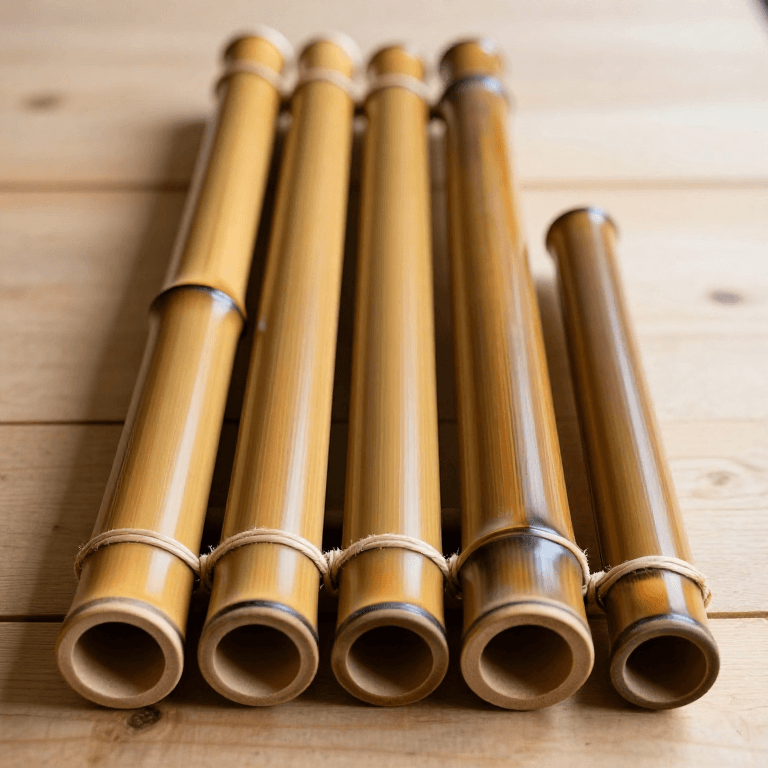
**A pipe closed at one end** — a panpipe, a stopped organ pipe, a clarinet — resonates at a quarter wavelength. It sounds an octave lower for the same length and it produces only the odd harmonics, so it overblows to the twelfth and skips the octave entirely. That is why a clarinet's fingering changes so awkwardly between registers, and why its lowest note is so low for its size.
How the column is set going is a separate question from its length:
**An air jet across an edge** — flute, quena, shakuhachi, panpipes, and the fipple of a recorder or whistle. The jet flaps in and out of the pipe at the resonance.
**A beating reed** — clarinet, oboe, bagpipe chanter. A tongue of cane opens and closes the entrance, and it acts as a closed end.
**A free reed** — sheng, khaen, accordion, harmonica. The tongue swings through a slot and its own stiffness sets the pitch, so the pipe is a resonator rather than the thing that decides the note.
此步骤所需材料:
 竹3 个
所需工具:
 直尺
 半音调音器与节拍器(夹式)
2
2
Lengths, corrections and hole positions
Lengths, corrections and hole positions
正在加载 Jupyter 笔记本…
所需工具:
 台式电脑
3
3
Cutting and tuning a simple flute
Cutting and tuning a simple flute
Work in this order and nothing is wasted.
**Cut the tube long.** Longer than the calculation, by 20 mm or more. The overall length is the one dimension that can be corrected by cutting, and only in one direction.
**Make the embouchure or fipple first and tune the whole tube.** With no finger holes at all, the pipe sounds one note. Shorten it until that note is right. Now the length is known to be correct before a single hole is drilled.
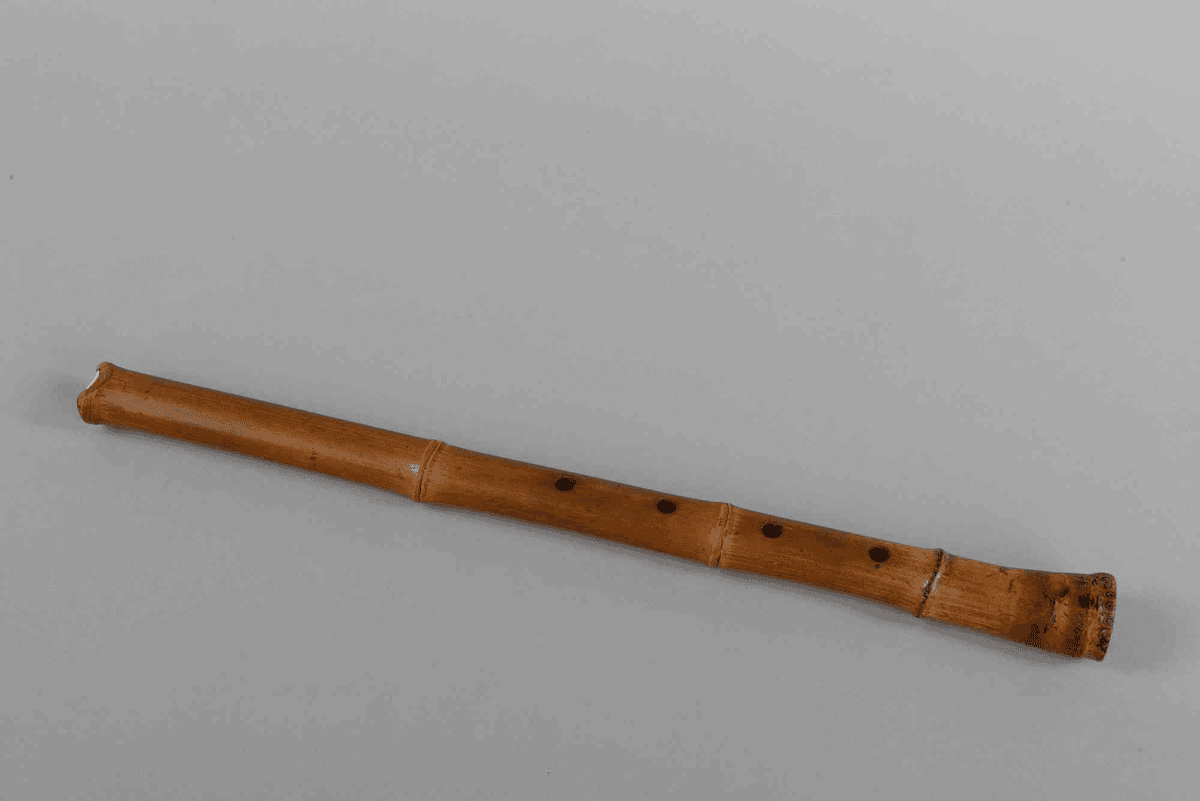
**Mark the holes from the calculation, then drill them undersized.** Two millimetres under is a reasonable start.
**Tune from the bottom hole upwards**, enlarging each until it is in tune, because each hole's pitch depends on the ones below it being open.
**Undercut rather than enlarge, when the hole is already as big as a finger can seal.** Angling the walls of the hole inside the bore raises the pitch further while the opening the finger covers stays the same size. That is the traditional fix for a hole that has run out of room.
Check the tuning warm and with the pipe wet. Both change the pitch, and the instrument is played in that state, not cold and dry.
此步骤所需材料:
竹2 个 蜂蜡1 个
所需工具:
 钻头套装
 什锦锉套装
 6 英寸数显卡尺半音调音器与节拍器(夹式)
 砂纸
4
4
The bore is not just a hole through the middle
The bore is not just a hole through the middle
A cylinder is the simplest bore and not the only one, and the shape changes which harmonics line up.
**Cylindrical** — flute, clarinet, most bamboo flutes. Simple to make, and the harmonic behaviour follows the open or closed rule directly.
**Conical, widening towards the bell** — oboe, bassoon, saxophone, many folk shawms. A cone driven by a reed at its narrow end behaves like an OPEN pipe: it overblows to the octave and gives all the harmonics, although the reed closes one end. That is why a saxophone overblows an octave and a clarinet a twelfth, although both are single-reed instruments.
**Bore diameter changes the tone more than the pitch.** A wider bore for a given length is louder, darker, harder to overblow; a narrow bore is quieter, brighter and jumps to the upper registers easily. The shakuhachi's wide bore and the quena's narrow one are two deliberate answers.
**Small irregularities matter.** A ridge, a node left in a bamboo tube, or a rough patch sits somewhere in a standing wave, and its effect depends on where. Near a pressure maximum it changes the note; near a node it does almost nothing. This is why traditional makers ream and polish a bore, and why two tubes of identical length do not always play the same.
此步骤所需材料:
竹3 个所需工具:
6 英寸数显卡尺 粗齿锉砂纸半音调音器与节拍器(夹式)
相关蓝图
这些蓝图共享知识——技术、材料或原理
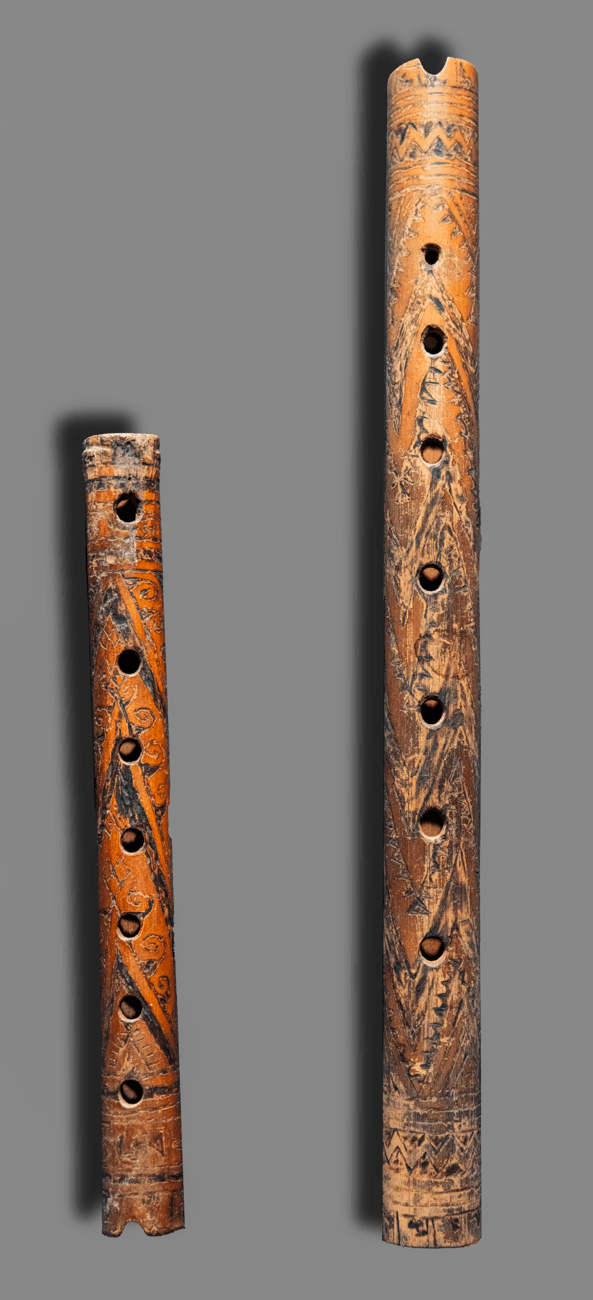
CC0 公共领域
此蓝图以 CC0 协议发布。你可以自由复制、修改、分发和使用此作品,无需征得许可。
通过购买蓝图中的产品支持创客,他们将获得 创客佣金 (由供应商设定),或创建此蓝图的新版本并将其作为连接包含在你自己的蓝图中以分享收入。