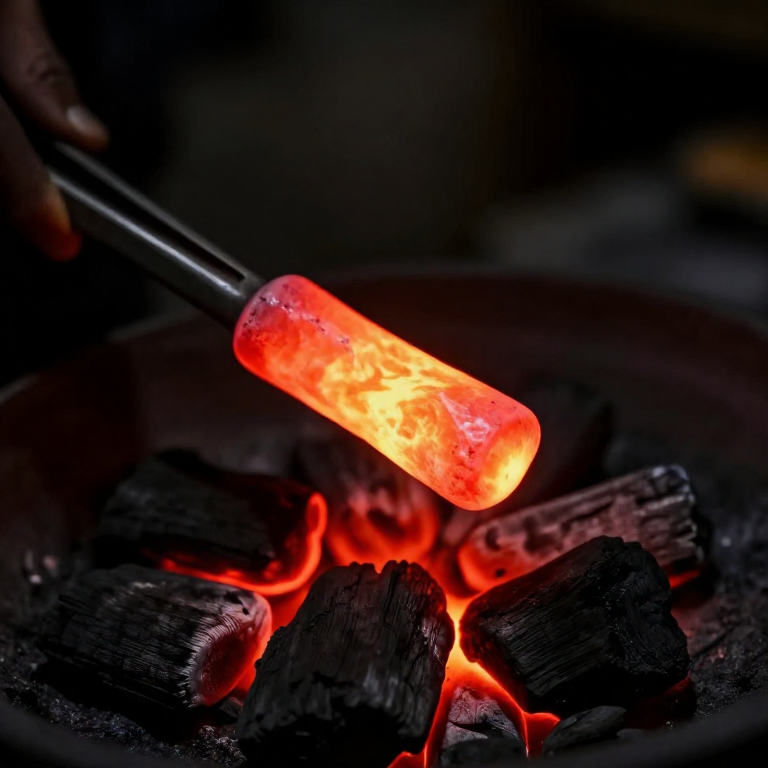


Annealing and Cold-Working Bronze — Hardening Without a Forge
Annealing and cold-working are the two inseparable halves of Bronze Age metallurgy. Every bronze tool, weapon, and ornament was shaped and strengthened by this cycle — hammer to harden, heat to soften, hammer again. Understanding these two processes is the foundation of all pre-industrial metalwork.
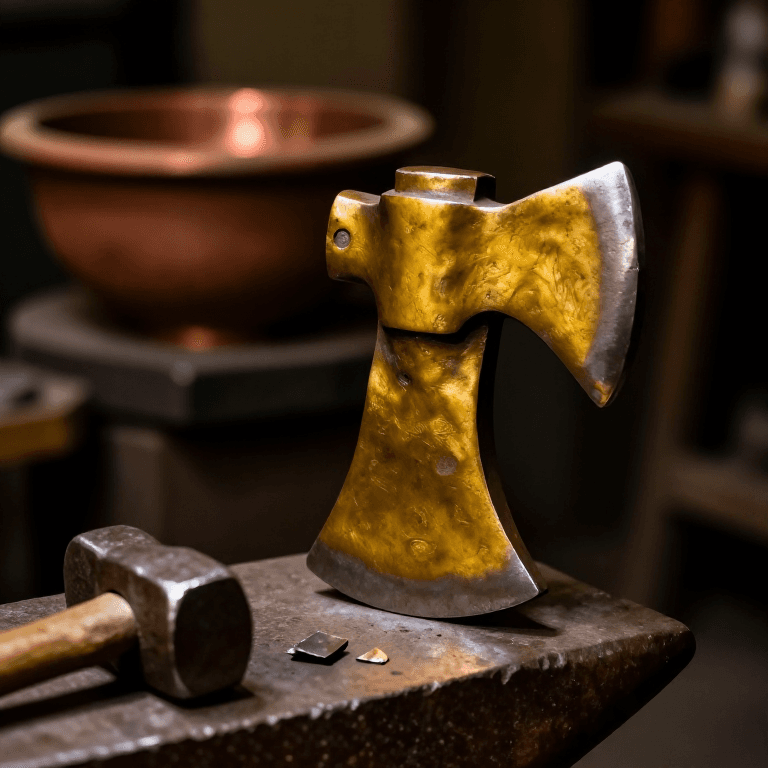
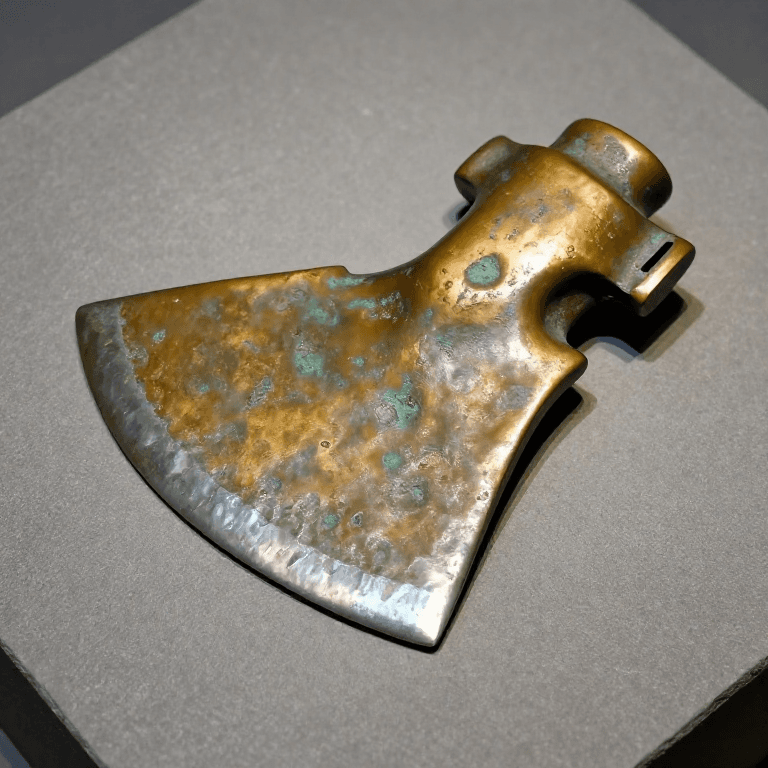
Cold-working means deforming metal at room temperature. Each hammer blow compresses the crystal grains, creating dislocations that resist further movement — the metal becomes harder and stiffer. This is called work-hardening. A freshly cast bronze axe at 80 HV (Vickers hardness) can be cold-worked to 200+ HV, rivalling mild steel.
But work-hardening has a limit. Continue hammering past it and the bronze cracks. Annealing resets the process: heating to 500-600 °C causes the distorted grains to recrystallise into new, strain-free grains. The metal is soft again and ready for the next cycle. A Bronze Age smith might anneal the same piece 15 times during a single project.
说明
Prepare a test piece
Prepare a test piece
此步骤所需材料:
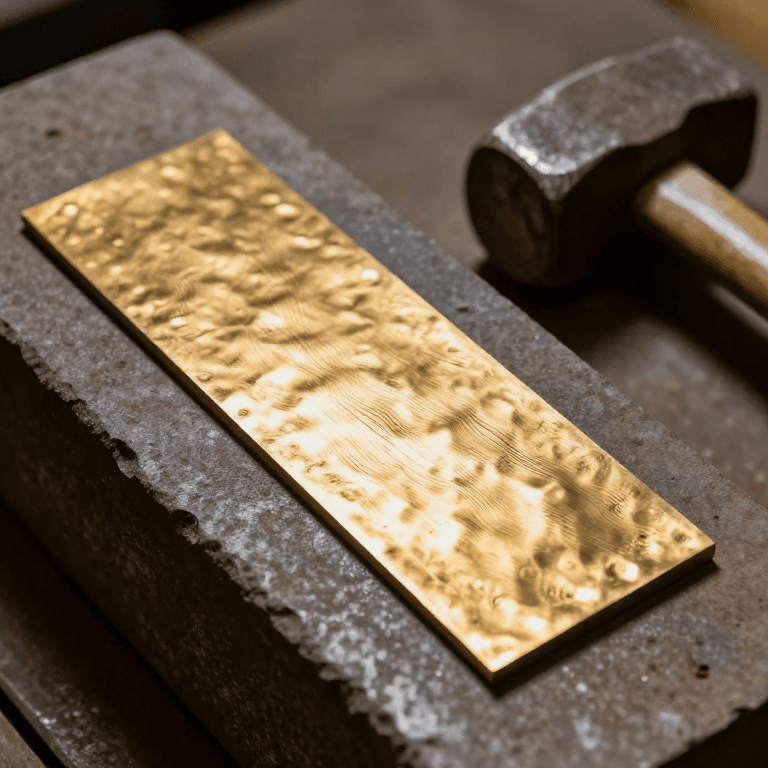
 铜板100 克
Test as-cast hardness
Test as-cast hardness
Cold-work one half
Cold-work one half
所需工具:
 石锤(打制石器)
 平整石板
平整石板Compare hardness
Compare hardness
Anneal the cold-worked section
Anneal the cold-worked section
此步骤所需材料:
 木炭500 克
所需工具:
 长柄夹钳
长柄夹钳Test annealed hardness
Test annealed hardness
Demonstrate the full cycle on a cutting edge
Demonstrate the full cycle on a cutting edge
Understand the critical differences from steel
Understand the critical differences from steel
相关蓝图
这些蓝图共享知识——技术、材料或原理
CC0 公共领域
此蓝图以 CC0 协议发布。你可以自由复制、修改、分发和使用此作品,无需征得许可。
通过购买蓝图中的产品支持创客,他们将获得 创客佣金 (由供应商设定),或创建此蓝图的新版本并将其作为连接包含在你自己的蓝图中以分享收入。