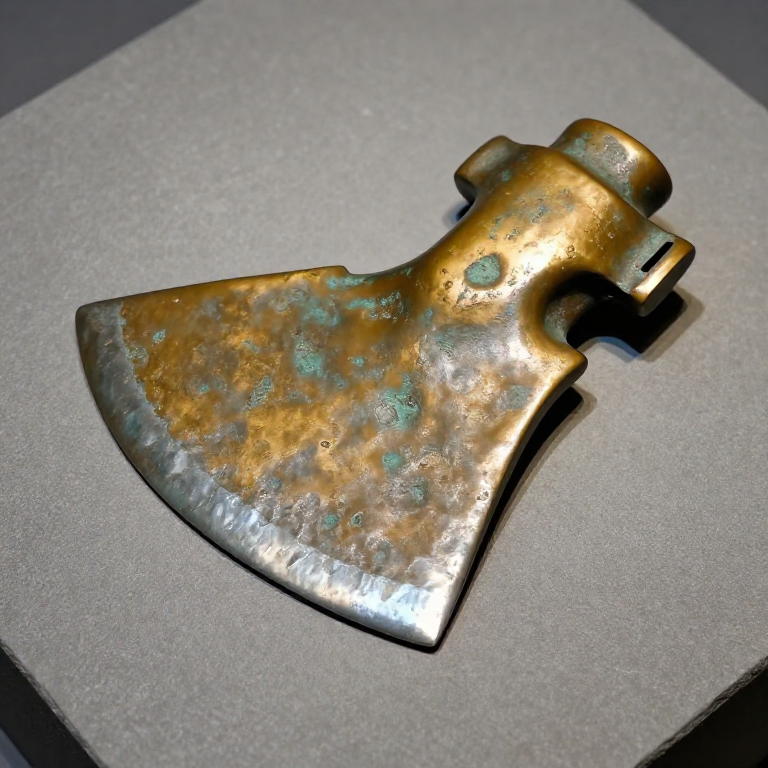


Casting a Bronze Flat Axe — The First Metal Cutting Tool
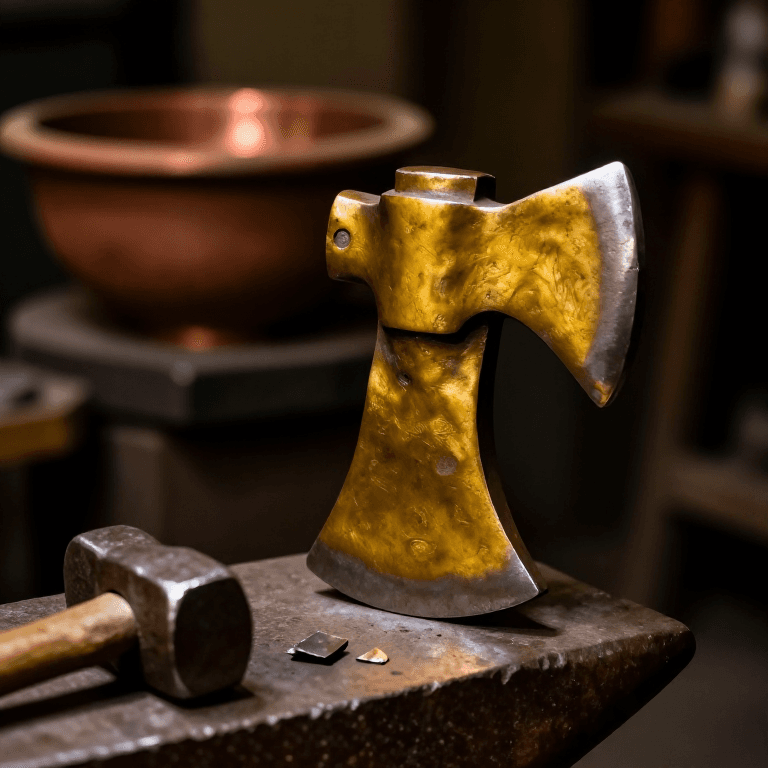
The flat axe was the first metal tool to surpass its stone predecessor in every way — sharper, more durable, and resharpened by simple hammering rather than knapping a new edge. Cast from bronze (roughly 90% copper, 10% tin), these axes appeared across Europe, the Near East, and East Asia from around 3300 BCE.
This blueprint uses an open-face stone mould — the simplest casting method. Molten bronze is poured into a carved soapstone cavity and allowed to cool. The resulting casting has one flat face (from the mould floor) and one slightly convex face (from the open top where the metal surface tensions). After demoulding, the axe is cold-hammered to harden the cutting edge, ground to shape, and hafted onto a wooden handle with rawhide lashing.
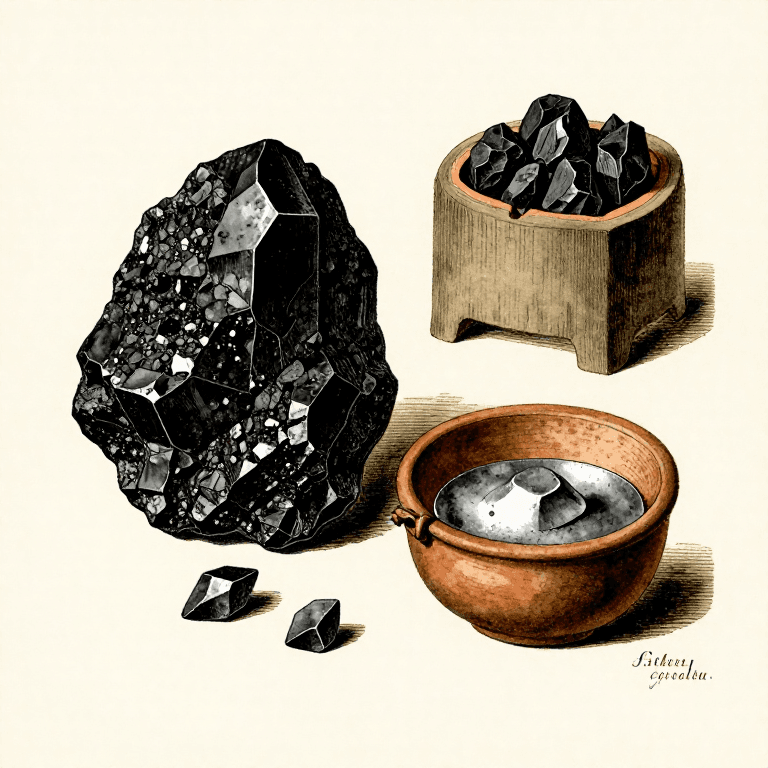
A single flat axe required the combined knowledge of mining, smelting, alloying, crucible-making, mould-carving, and woodworking — making it one of the most knowledge-intensive objects of its era.
说明
Prepare the mould
Prepare the mould
此步骤所需材料:
 动物脂(板油)30 克
Charge the crucible with bronze
Charge the crucible with bronze
此步骤所需材料:
 铜板270 克
Melt and alloy the bronze
Melt and alloy the bronze
此步骤所需材料:
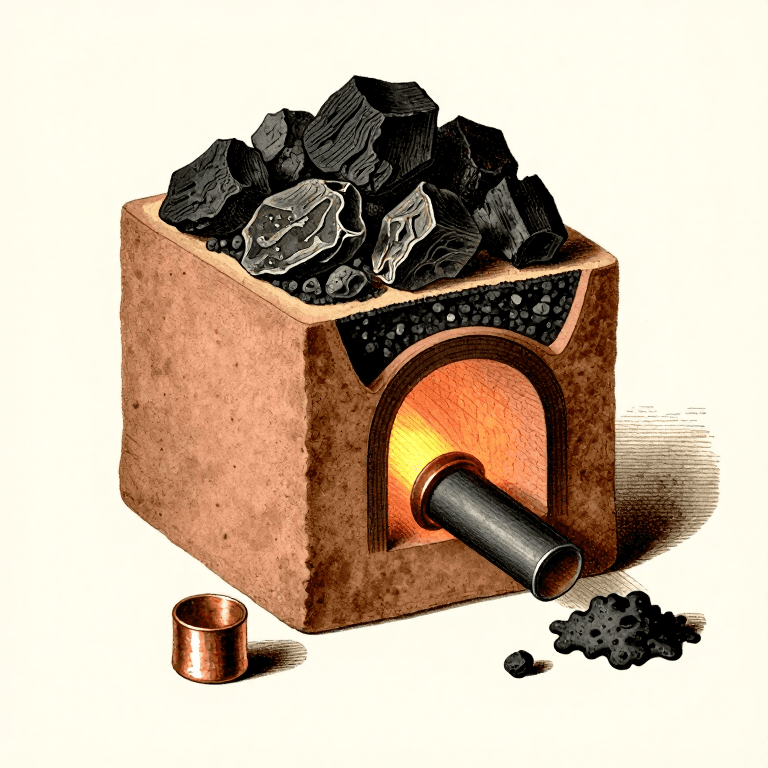
 木炭3 公斤
Pour the bronze into the mould
Pour the bronze into the mould
所需工具:
 坩埚钳
坩埚钳Cool and demould
Cool and demould
Remove the pour channel and flash
Remove the pour channel and flash
所需工具:
 石锤(打制石器)
Cold-hammer the cutting edge
Cold-hammer the cutting edge
所需工具:
 平整石板
平整石板Grind and sharpen
Grind and sharpen
所需工具:
 磨刀石
磨刀石 砂岩(磨料)
Shape the haft
Shape the haft
Bind the axe head to the haft
Bind the axe head to the haft
此步骤所需材料:
 生皮条2 m
已连接蓝图材料
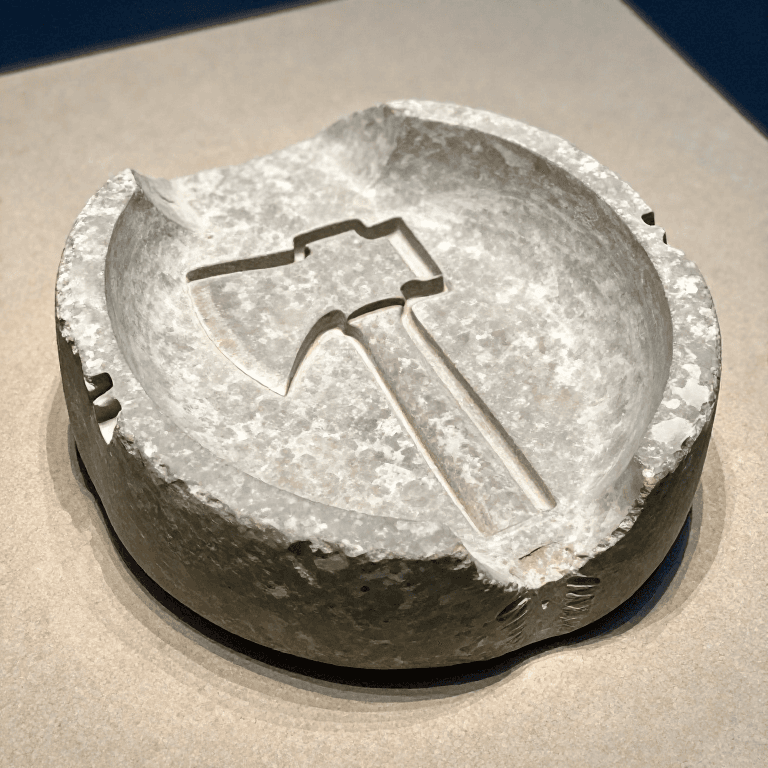
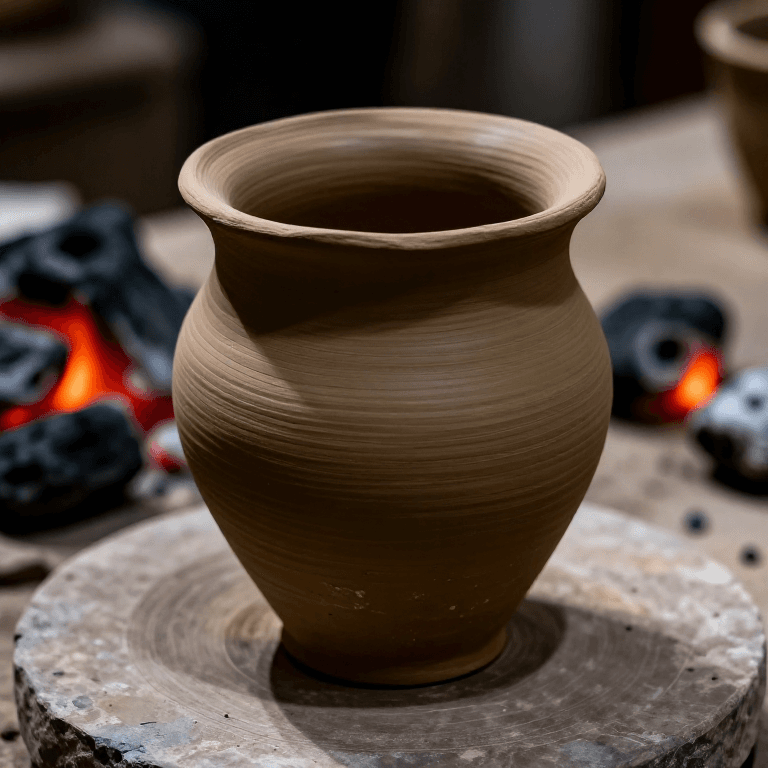
此蓝图制作
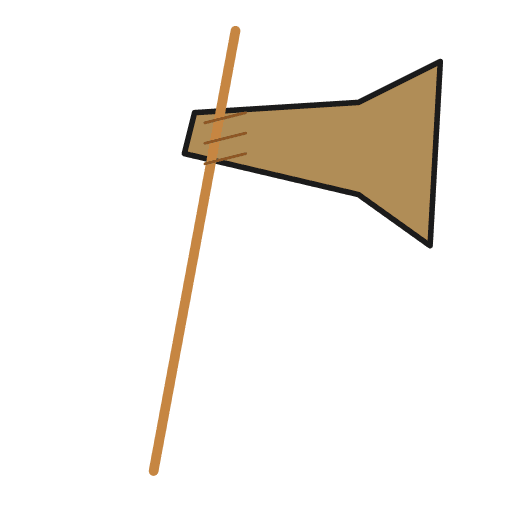
相关蓝图
这些蓝图共享知识——技术、材料或原理
CC0 公共领域
此蓝图以 CC0 协议发布。你可以自由复制、修改、分发和使用此作品,无需征得许可。
通过购买蓝图中的产品支持创客,他们将获得 创客佣金 (由供应商设定),或创建此蓝图的新版本并将其作为连接包含在你自己的蓝图中以分享收入。