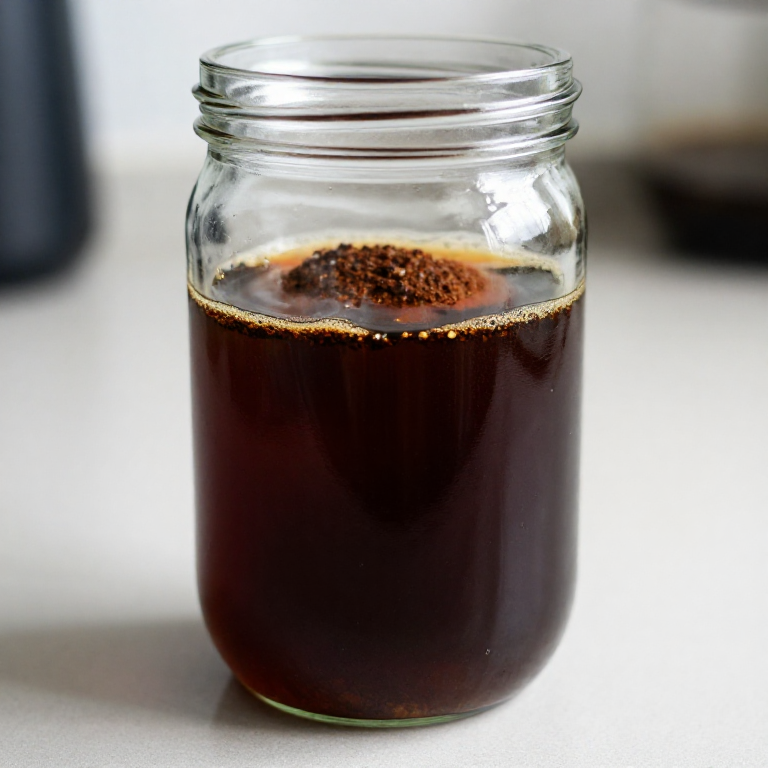


Cold Brew Coffee
Every extraction is a race between compounds. Put ground coffee in water and different substances dissolve at different rates — acids and caffeine come out fast, sugars and browning products more slowly, and the bitter, astringent late-extracting compounds slowest of all. Brewing is deciding when to stop the race.
Hot water runs the race quickly, so a filter brew is over in four minutes. Drop the temperature to room temperature or below and everything slows enormously — so cold brew simply runs the same race for 12 to 24 hours instead. The result is not "coffee, but cold": the proportions come out different, because slowing every reaction does not slow them all by the same factor.
⚠ The usual explanation for why cold brew tastes smoother is largely wrong. It is widely claimed that cold brew is dramatically less acidic because it extracts far less chlorogenic acid. Measurements do not support that: pH and chlorogenic acid concentrations come out broadly comparable between cold and hot brews. What does differ reliably is titratable acidity — cold brews measure lower — and the mix of individual acids extracted, plus the fact that slow cold extraction does not break chlorogenic acids down into the harsher quinic and caffeic acids that hot brewing produces. The difference is real; the popular reason for it is not.
Brew both, measure both, and taste them side by side.
说明
Grind coarse and weigh everything
Grind coarse and weigh everything
Grind to a coarse setting, like raw sugar. Weigh coffee and water rather than measuring by volume — start at 1:8 by mass for a concentrate (say 125 g coffee to 1000 g water).
Record the grind setting.
Grind size is the biggest variable you control. Fine grounds have enormous surface area and over-extract even in the cold, giving the muddy bitterness people wrongly blame on the method.
此步骤所需材料:
 咖啡粉125 克
所需工具:
 数字厨房秤
数字厨房秤Combine and wet everything once
Combine and wet everything once
Add the grounds to the vessel, pour the water on, and stir once, thoroughly, until no dry clumps float.
Do not stir again.
Note the water temperature.
Dry pockets never extract at all, and repeated stirring agitates fines into suspension so the final brew is cloudy and keeps extracting after you filter it.
所需工具:
 冷萃咖啡壶
冷萃咖啡壶 温度计
温度计Steep, and sample the curve
Steep, and sample the curve
Steep at a recorded temperature. Draw a small filtered sample at 4, 8, 12, 18 and 24 hours, and taste and note each.
Expect the brew to gain body and sweetness up to somewhere in the 12-18 hour range and then start gaining harshness without gaining much else.
There is a plateau, and past it you are only extracting the compounds you did not want. Find yours rather than trusting a number from the internet.
所需工具:
 秒表
秒表Filter twice
Filter twice
Strain first through a coarse mesh to remove the bulk of the grounds, then through paper.
Let it drain — do not squeeze or press the bed.
Pressing forces out the most bitter, most astringent liquid held in the grounds, along with fines that keep extracting in the bottle. The last 10 % of yield costs you most of the quality.
所需工具:
 咖啡滤纸 / 滤纸
Brew a hot control and compare properly
Brew a hot control and compare properly
Brew the same coffee, same grind, same ratio, as a hot immersion brew for 4 minutes. Chill it to the same temperature as the cold brew.
Taste blind, side by side, at equal strength and equal temperature.
Comparing warm coffee with cold coffee is not an experiment, it is a temperature test — perceived acidity and sweetness both shift strongly with serving temperature, and that alone accounts for a great deal of what people attribute to the brewing method.
Measure the acidity claim yourself
Measure the acidity claim yourself
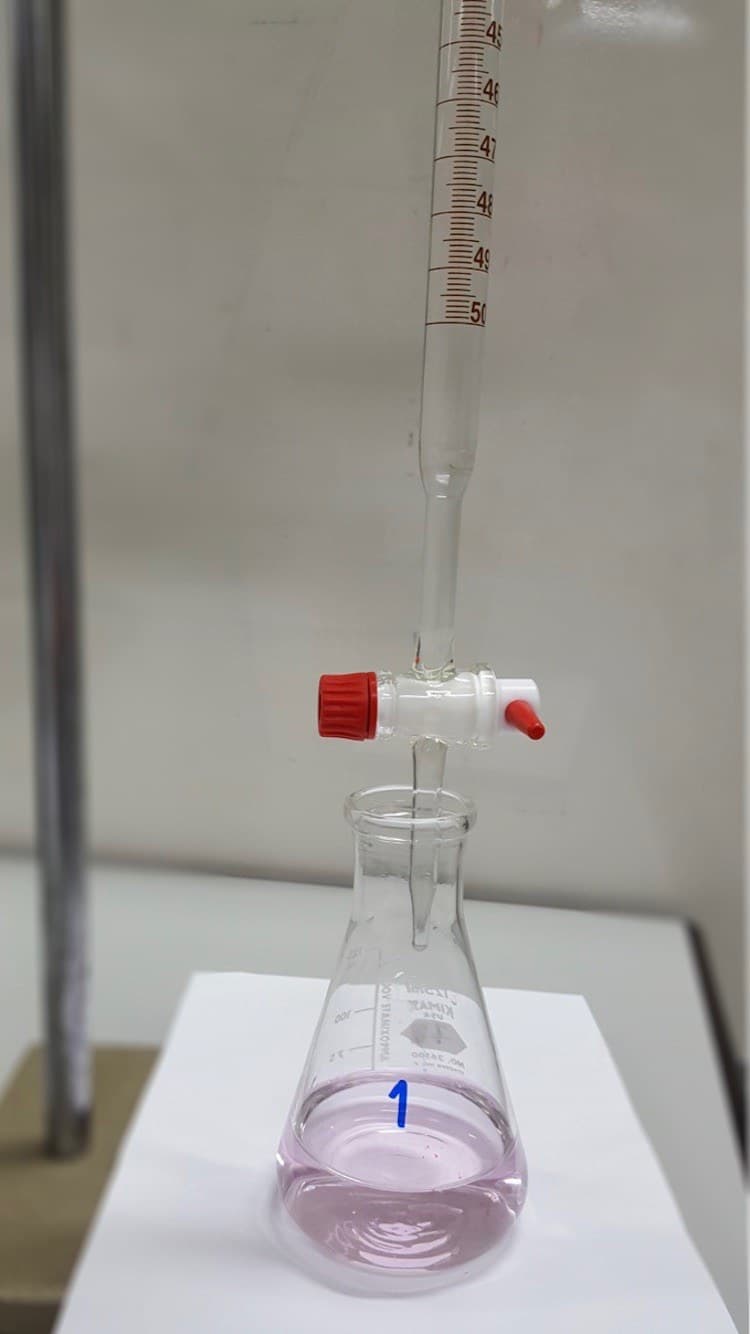
Measure the pH of both brews. Then titrate equal volumes of each against dilute sodium hydroxide to a phenolphthalein endpoint and record the volume used — that is titratable acidity.
Expect the two pH values to be close, and the cold brew to need less base.
pH measures acid strength; titratable acidity measures how much acid is there. They are different questions, and the cold-brew claim is only true of the second one.
此步骤所需材料:
 氢氧化钠溶液100 毫升
 酚酞指示剂溶液5 毫升
所需工具:
 pH 计与滴定装置
 滴定管(玻璃)
Compendium — the chemistry, and the marketing
Compendium — the chemistry, and the marketing
What the measurements actually show. Studies comparing immersion cold brew with hot immersion brewing of the same coffee find higher pH and lower titratable acidity in the cold brews — so "less acidic" is defensible in the titratable sense and much weaker in the pH sense. Meanwhile chlorogenic acid concentrations and pH come out broadly comparable between the two, which undermines the most commonly repeated explanation. Most coffee acids are highly soluble and extract quickly even in cold water, so they are largely present in both. The more likely mechanism is that hot brewing degrades chlorogenic acids into quinic and caffeic acids, which taste harsher — so it is the breakdown, not the extraction, that differs.
Caffeine is not lower, and often is not even similar. Cold brew is usually made and stored as a concentrate, so a cup of undiluted cold brew can carry considerably more caffeine than a cup of filter coffee. Caffeine is quite soluble even cold, and the long contact time compensates for the slow rate. "Cold brew is gentler" is a statement about flavour, not about dose.
Temperature changes proportions, not just speed. Chemical rates rise steeply with temperature, but not by the same factor for every compound, so lowering the temperature does not simply produce a weaker version of the same drink — it re-weights the mixture. The heavier, less soluble aromatic compounds that hot water pulls out easily are under-represented, which is why cold brew reads as sweeter and less complex, with more chocolate and less floral or fruity character. It is a different extraction, not a slower one.
Traditions worth knowing. Slow-drip cold coffee is long established in Japan as Kyoto-style, using a tower that drips cold water through a bed of grounds over hours — often called Dutch coffee, from its supposed introduction via Dutch traders, an attribution that is repeated far more confidently than the evidence supports. Immersion cold brew is much simpler and is what this blueprint makes. Cold brew is also not the same thing as iced coffee, which is hot-brewed coffee chilled, and which tastes markedly different for exactly the reasons above.
Practical and safety notes. Cold brew is a low-acid, nutrient-rich liquid held for many hours at room temperature, so steeping in the refrigerator is the safer choice, and finished concentrate should be refrigerated and used within about a week. Use clean equipment; a sour or fermented smell means discard it. Dilute concentrate roughly 1:1 to 1:3 with water or milk to taste. And keep notes — coffee, grind, ratio, temperature, time — because with a 24-hour cycle you get one experiment a day and undocumented ones are wasted.

CC0 公共领域
此蓝图以 CC0 协议发布。你可以自由复制、修改、分发和使用此作品,无需征得许可。
通过购买蓝图中的产品支持创客,他们将获得 创客佣金 (由供应商设定),或创建此蓝图的新版本并将其作为连接包含在你自己的蓝图中以分享收入。