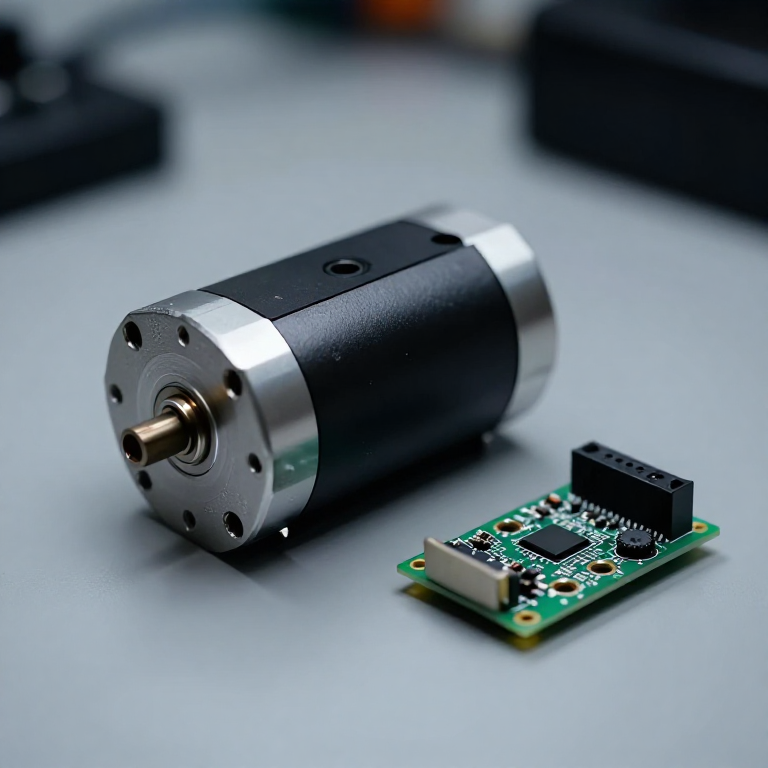


Controlling a Stepper Motor with an EasyDriver
A stepper motor doesn't just spin — it moves in exact, repeatable steps, so you can command a precise angle with no position sensor at all. This motor takes 400 steps per revolution (0.9° per step). The EasyDriver board turns two simple Arduino signals — one pulse on STEP, one level on DIR — into the carefully sequenced coil currents a bipolar stepper needs. It's the same open-loop precision that drives 3D printers, CNC machines and camera sliders.
说明
Identify the two motor coils
Identify the two motor coils
A bipolar stepper has 4 wires — two coils of two wires each. Set a multimeter to continuity (or ohms) and find the pairs: the two wires that beep (low resistance) share a coil. Call them Coil A and Coil B. There is no polarity within a coil.
此步骤所需材料:
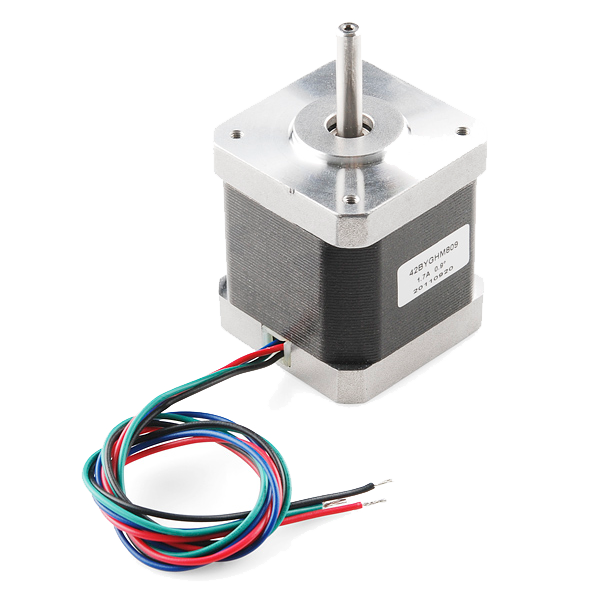 Stepper Motor - 68 oz.in (400 steps/rev)1 个
所需工具:
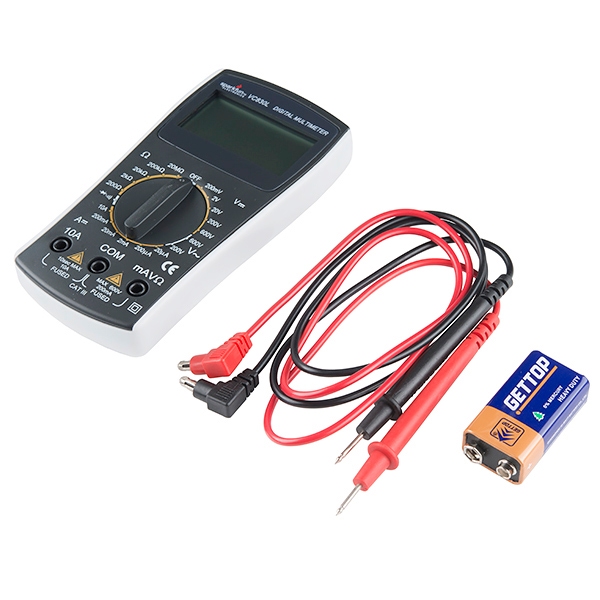 Digital Multimeter - Basic
Wire the driver, motor and power
Wire the driver, motor and power
Push the EasyDriver into the breadboard. Screw Coil A into the driver's A+/A- terminals and Coil B into B+/B-. Connect a 9 V battery to M+ and GND (motor power, 6–30 V). From the Arduino: D2 to STEP, D3 to DIR, D4 to MS1, D5 to MS2, D6 to ENABLE. IMPORTANT: also join Arduino GND to the EasyDriver GND so they share a ground.
此步骤所需材料:
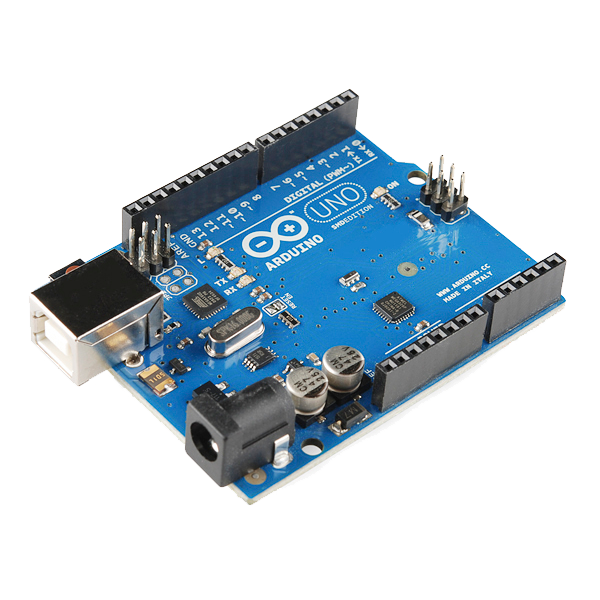 Arduino Uno R3 SMD1 个
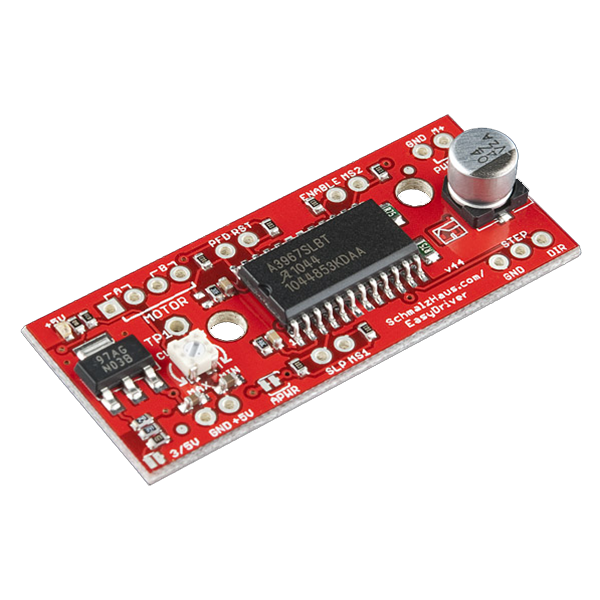 EasyDriver Stepper Motor Driver1 个
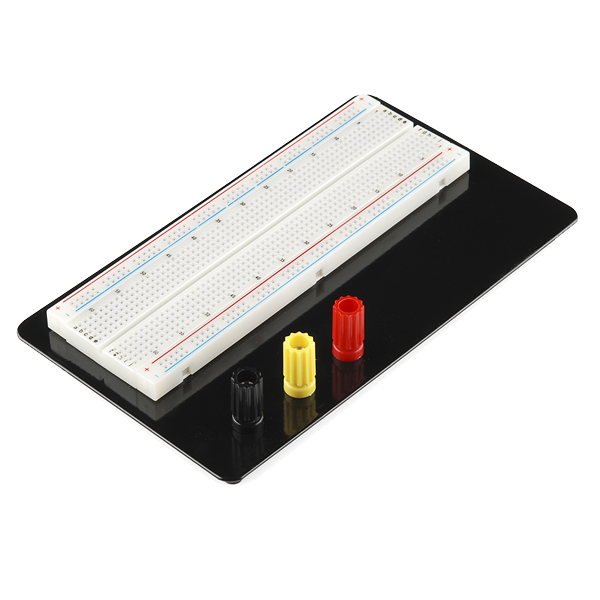 Breadboard - Classic1 个
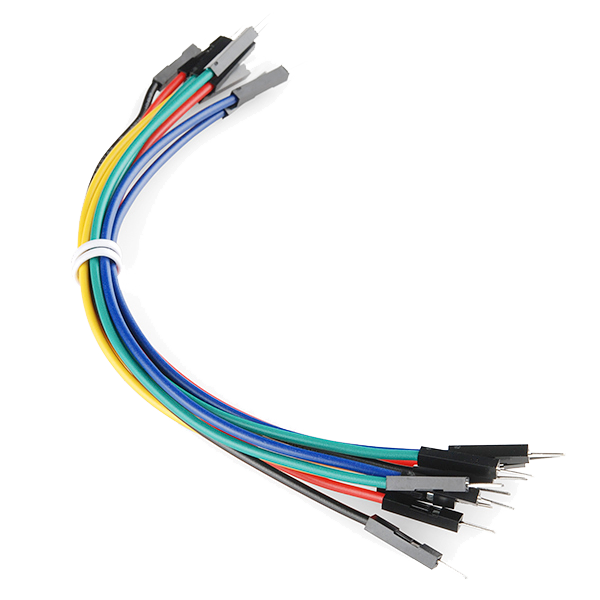 Jumper Wires Premium M/M 20 AWG - 15.5 cm1 包
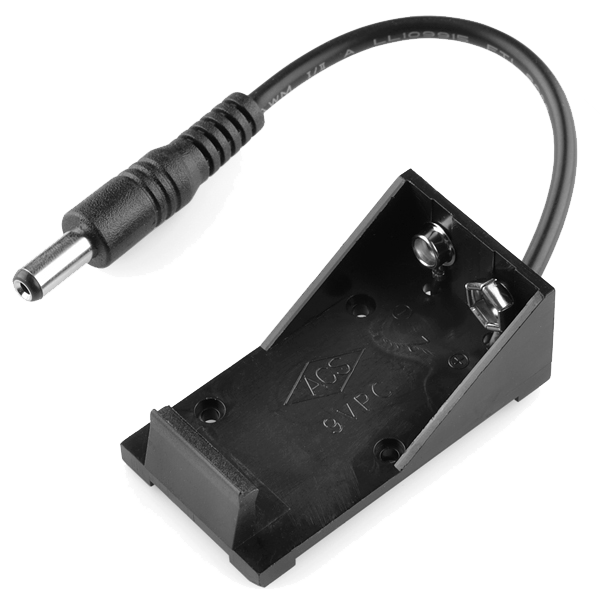 9V Battery Holder1 个
Set the driver's current limit
Set the driver's current limit
The EasyDriver has a small potentiometer that limits coil current. With a small screwdriver, start it near the middle; once running, turn it down if the motor or chip gets hot, or up if the motor is weak or skips. Never exceed the motor's rated current — this board delivers up to 750 mA per phase.
Connect and open the IDE
Connect and open the IDE
Plug the Arduino into your computer with the USB cable, open the Arduino IDE, and select Arduino Uno and its serial port. Leave the 9 V motor battery switched off until the sketch is uploaded.
此步骤所需材料:
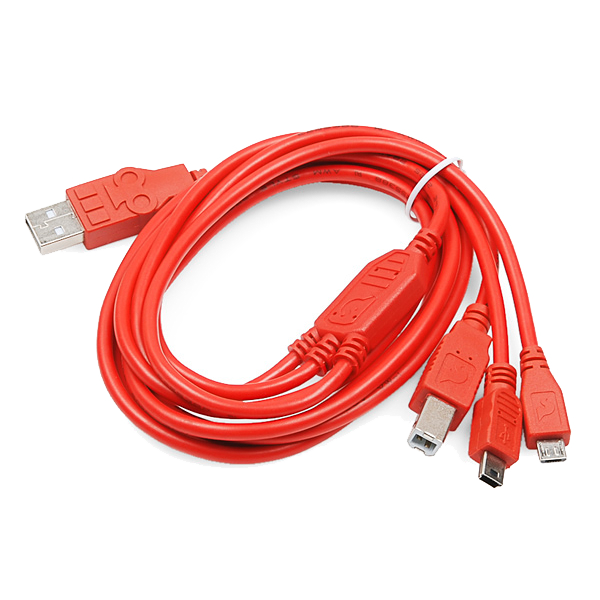 SparkFun Cerberus USB Cable - 1.8 meter1 个
所需工具:
 装有 Arduino IDE 的电脑
Upload the stepper sketch
Upload the stepper sketch
Paste this sketch and upload, then switch on the battery. It turns the shaft one full revolution one way, pauses, and reverses — on a loop.
Test it
Test it
Switch on the 9 V battery. The shaft turns exactly one revolution one way, pauses a second, then one revolution back. In full-step mode this 400-step motor needs 400 STEP pulses per turn. If it only buzzes or vibrates without turning, a coil pair is split across the two channels — swap two wires so each coil sits on one channel (A or B).
Turn steps into precise motion
Turn steps into precise motion
Steppers move an exact angle per pulse, so you can position with no feedback: to rotate a set angle, use steps = 400 × angle ÷ 360 (e.g. 100 steps = 90°). For smoother, quieter motion set MS1 and MS2 HIGH for 1/8 microstepping (3200 micro-steps per revolution). This precise, repeatable motion is exactly what drives 3D printers, CNC machines, camera sliders and robot joints.
材料
7- $15.72
- Arduino Uno R3 SMD10% 佣金1 个$26.95
- 1 个$14.19
- Breadboard - Classic10% 佣金1 个$9.46
- $4.99
- 9V Battery Holder10% 佣金1 个$3.55
- $5.66
所需工具
2- $14.19
相关蓝图
这些蓝图共享知识——技术、材料或原理


CC0 公共领域
此蓝图以 CC0 协议发布。你可以自由复制、修改、分发和使用此作品,无需征得许可。
通过购买蓝图中的产品支持创客,他们将获得 创客佣金 (由供应商设定),或创建此蓝图的新版本并将其作为连接包含在你自己的蓝图中以分享收入。