艺术
美容与健康
工艺
文化与历史
娱乐
环境
食品与饮料
逆向工程
科学
体育
技术
可穿戴设备
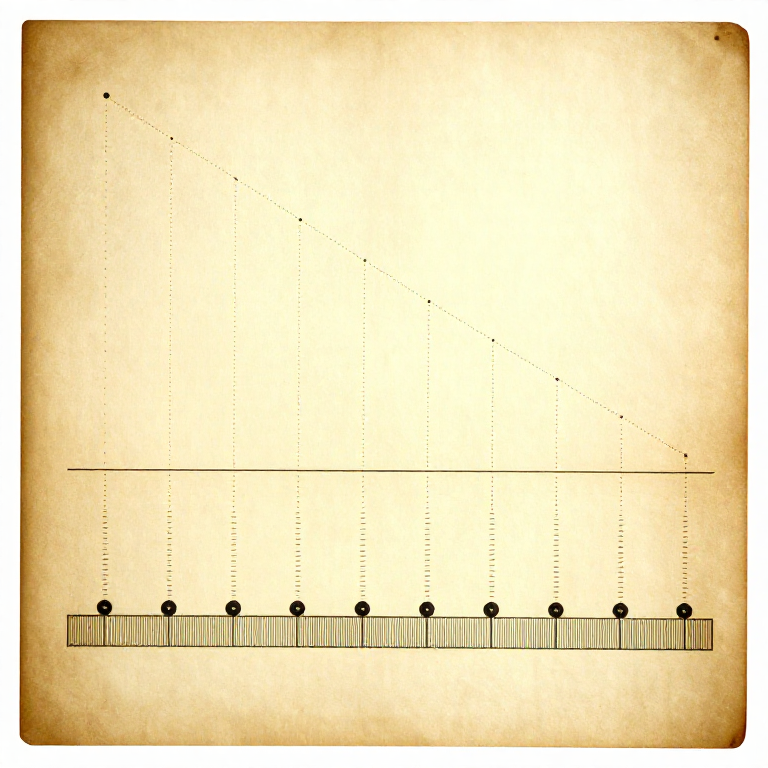


Cumulative Error: Why You Measure From One End, Not Piece to Piece
Mark the first position, then measure the next from that mark, then the next from that one — and every small error is carried forward and added to the next. By the tenth position the total can be several millimetres, and no single measurement was wrong.
Measure every position from the SAME origin instead and each error stays local. The tenth mark is as accurate as the first, because it did not inherit anything.
This is the arithmetic behind the face-side rule, the story stick and stepping off with dividers. All three are the same idea: share one reference, and errors stop compounding.
中级
3 hours
说明
1
1
Chain measuring versus measuring from one end
Chain measuring versus measuring from one end
CHAIN measuring is marking each position from the previous mark. It feels natural and it is what a tape measure invites, because you keep moving the hook.
ABSOLUTE measuring is leaving the tape hooked at one end and reading every position from there. Each mark has one measurement's worth of error and no more.
The difference is invisible for two or three marks and serious for ten. It is why a shelf unit made by measuring each shelf from the last has a visibly uneven top shelf, and why a cutting list should give cumulative positions rather than individual lengths.
此步骤所需材料:
 硬木板1 个
所需工具:
 卷尺
卷尺 直尺
直尺2
2
How the error actually grows
How the error actually grows
正在加载 Jupyter 笔记本…
所需工具:
 计算器卷尺
计算器卷尺3
3
Mark a whole set together, from one setting
Mark a whole set together, from one setting
Clamp all the identical parts side by side with their ends flush and their face sides all the same way up, then strike every line across the whole bundle at once.
Now the parts cannot disagree, because there is only one line. Any error in its position is shared, and a shared error usually does not matter — a shelf unit that is uniformly 1 mm shorter than the drawing is fine, while one with shelves at slightly different heights is not.
The same reasoning gives the stop block. Set it once and cut ten pieces against it, and all ten are identical; measure ten pieces individually and you have ten slightly different lengths, however carefully you measured.
此步骤所需材料:
硬木板4 个所需工具:
 固定角尺
固定角尺 划线刀
划线刀 重型台钳
重型台钳4
4
When the total matters, and when only the divisions do
When the total matters, and when only the divisions do
Decide which of the two you actually need before laying anything out, because the right method differs.
If the OVERALL size must be exact — a piece fitting a known opening — measure absolutely from one end and accept whatever the divisions come to. If the DIVISIONS must be even and the total can be whatever it is, step them off with dividers and never measure at all.
Most work is the second kind and gets treated as the first, which is why so much of it has a visibly narrow space at one end. Deciding this question explicitly is the whole of good layout, and it takes ten seconds at the start of a job.
此步骤所需材料:
硬木板1 个所需工具:
 两脚规卷尺
两脚规卷尺 尺寸记录木条
相关蓝图
这些蓝图共享知识——技术、材料或原理


CC0 公共领域
此蓝图以 CC0 协议发布。你可以自由复制、修改、分发和使用此作品,无需征得许可。
通过购买蓝图中的产品支持创客,他们将获得 创客佣金 (由供应商设定),或创建此蓝图的新版本并将其作为连接包含在你自己的蓝图中以分享收入。