合作
艺术
美容与健康
工艺
文化与历史
娱乐
环境
食品与饮料
逆向工程
科学
体育
技术
可穿戴设备
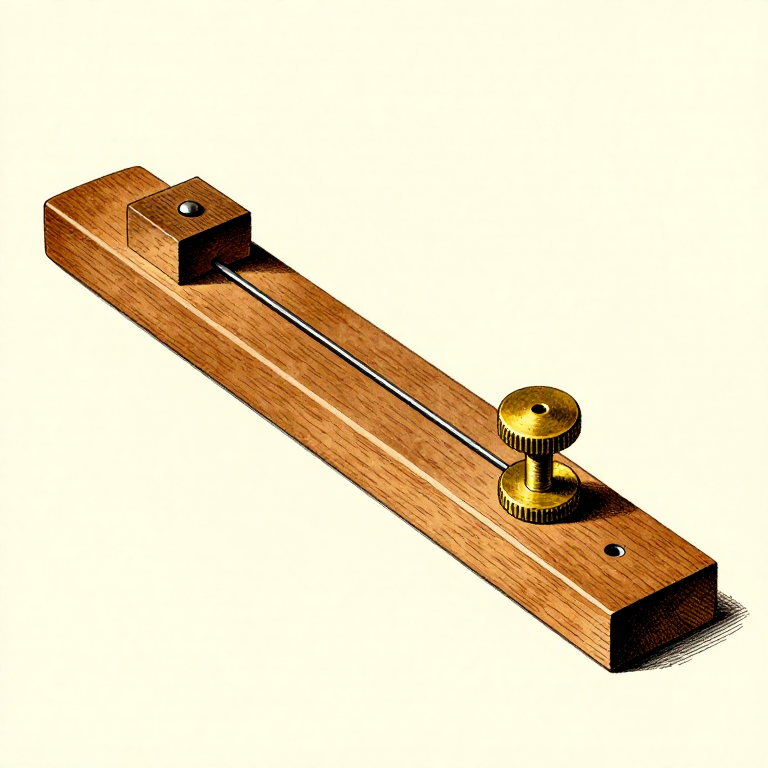


The Marking Gauge: Distance From a Surface, Not a Number
A marking gauge scribes a line a fixed distance from a surface, and it does it identically on every board you run it along. That repeatability is the point — far more than the number it is set to.
In fact the number rarely matters. You set the gauge from the actual part it has to match — a chisel width, a tenon thickness, the piece it will fit against — and never read a scale at all. An error in the setting is then an error everywhere equally, which is usually harmless; an error that varies board to board is not.
The mortise gauge takes the same idea further: two pins, so a mortise and its tenon are marked from one setting and cannot disagree.
初学者
2 hours
说明
1
1
Set it from the thing it must match
Set it from the thing it must match
To mark a mortise, set the gauge pins to the actual chisel you will cut it with. To mark a tenon, set it to the mortise you have already cut. To gauge a thickness, set it against the part that has to fit.
Setting from the object instead of from a number removes a whole layer of error — no reading a scale, no rounding, no converting. And it guarantees the two things agree, which is the only thing that actually matters in a joint.
Nudge the stock gently with a tap on the bench to adjust it rather than sliding it by hand: fine adjustment by tapping is far more controllable, and then lock the thumbscrew and check the setting has not moved.
此步骤所需材料:
 硬木板1 个
所需工具:
 划线规
 斜边凿子套装
 直尺
2
2
Stock against the FACE, and press it there
Stock against the FACE, and press it there
The gauge's stock must be held firmly against the face side or face edge for the whole stroke. The pin will follow wherever the stock goes, so any lift or rock puts a wander in the line.
Press sideways into the reference surface harder than you press down into the wood. That is the hand pressure that matters and it is the one beginners get backwards — pushing down hard makes the pin dig in and follow the grain, while the stock drifts away from the face.
Always the marked face, on every board of a set. A gauge run from the opposite face on one board out of four is exactly the error the face-side convention exists to prevent.
此步骤所需材料:
硬木板4 个所需工具:
划线规 重型台钳
3
3
Tilt it forward and take two light passes
Tilt it forward and take two light passes
Tilt the beam so the pin trails rather than digs, and push the gauge away from you in a light first pass to score the surface, then a second to deepen it.
A pin driven straight down into the wood follows the grain and wanders off into the softer early wood, especially on softwood. Trailing it, and scoring lightly first, keeps it on the line you intended.
A WHEEL gauge — a small round cutter instead of a pin — slices the fibres rather than tearing them, so it wanders much less and works across the grain cleanly. If a pin gauge keeps running off, that is the reason, and it is the tool rather than your hand.
此步骤所需材料:
 干燥软木板1 个硬木板1 个
所需工具:
划线规 放大目镜
4
4
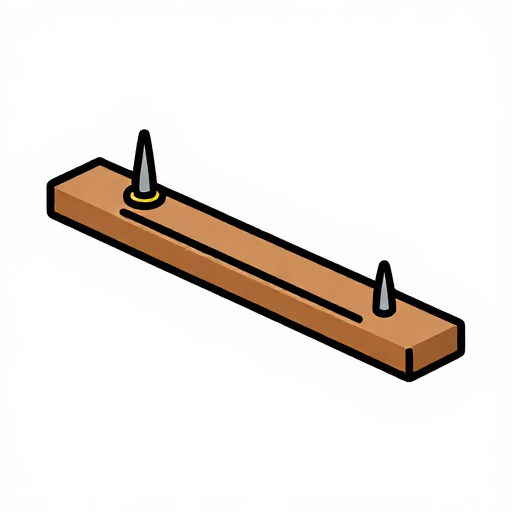
The mortise gauge: two pins so they cannot disagree
The mortise gauge: two pins so they cannot disagree
A mortise gauge carries two pins on one beam, one fixed and one adjustable. Set the gap between them to the chisel, set the stock to position them on the work, and both walls of the mortise are marked in a single pass.
Then mark the tenon from the SAME setting, without touching the pins. The two parts are now defined by one measurement, so they cannot disagree with each other however inaccurate that measurement was.
That is the whole principle of this rung in one tool. Getting the absolute number right is rarely what determines whether a joint fits; making the two halves come from the same setting almost always is.
此步骤所需材料:
硬木板2 个所需工具:
 双针划线器斜边凿子套装
 固定角尺
相关蓝图
这些蓝图共享知识——技术、材料或原理

CC0 公共领域
此蓝图以 CC0 协议发布。你可以自由复制、修改、分发和使用此作品,无需征得许可。
通过购买蓝图中的产品支持创客,他们将获得 创客佣金 (由供应商设定),或创建此蓝图的新版本并将其作为连接包含在你自己的蓝图中以分享收入。