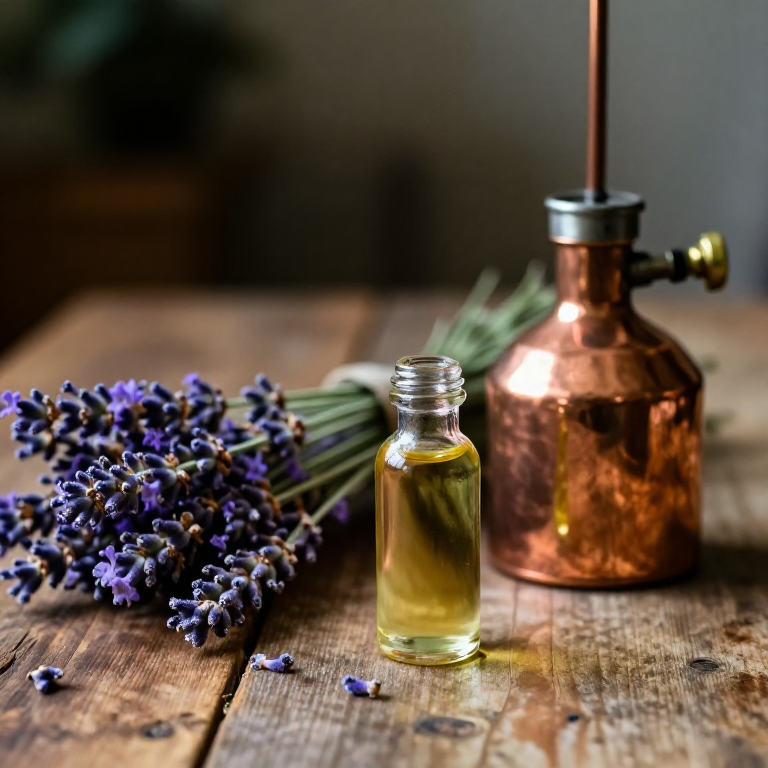

Distilling Lavender Essential Oil — The Ancient Healer's Fragrant Antiseptic
Lavender (Lavandula angustifolia) has been used medicinally for at least 2,500 years. The ancient Egyptians used lavender in their mummification process. The Romans named the plant 'lavare' (to wash) because they added it to their bathwater for its cleansing and calming properties. Greek physician Dioscorides documented lavender's use for chest complaints, insect bites, and wound cleaning in his De Materia Medica (77 AD).
Lavender essential oil is extracted by steam distillation — a process that separates the volatile aromatic compounds from the plant material using the gentlest possible heat. The oil contains linalool and linalyl acetate as its primary active compounds, which have scientifically documented antibacterial, anti-inflammatory, and anxiolytic (anxiety-reducing) properties.
During World War I, French chemist René-Maurice Gattefossé severely burned his hand in a laboratory explosion and plunged it into a vat of lavender oil — the only liquid within reach. The burn healed rapidly with minimal scarring, prompting Gattefossé to research lavender's healing properties systematically. He coined the term 'aromatherapy' in 1937, founding an entire field of study that traces its roots to a remedy ancient civilizations already knew.
说明
Harvest lavender at peak oil content
Harvest lavender at peak oil content
Harvest lavender when approximately half the flowers on each stem have opened — this is the point of maximum essential oil concentration. Cut in the morning after the dew has dried but before the midday sun volatilizes the oils. Use sharp shears and cut stems approximately 20-30 cm long, just above the woody growth.
Collect 2-3 kg of fresh lavender stems for a small batch distillation. The oil yield is approximately 1-2% by weight — meaning 2 kg of fresh lavender produces roughly 20-40 ml of essential oil. Do not wash the harvested stems — water dilutes the surface oils and introduces moisture that extends distillation time.
此步骤所需材料:
 新鲜薰衣草茎3 公斤
所需工具:
 刀
刀Wilt the lavender overnight
Wilt the lavender overnight
Spread the harvested lavender in a single layer on clean cloth or bamboo mats in a shaded, well-ventilated area. Allow to wilt for 12-24 hours. This partial drying concentrates the essential oils by removing excess moisture from the plant cells, improving oil yield during distillation. The stems should feel limp but not crispy — fully dried lavender yields less oil because some volatile compounds evaporate during drying.
Do not pile the stems — heat builds in stacked plant material, causing fermentation that degrades the oil quality. The ideal wilting environment is cool, dry, and shaded with good air circulation. After wilting, the material should have lost approximately 30-40% of its fresh weight.
此步骤所需材料:
 竹晾架1 个
Set up the steam distillation apparatus
Set up the steam distillation apparatus
Steam distillation requires three components: a boiler to generate steam, a retort or still pot to hold the plant material, and a condenser to cool the steam back into liquid. The simplest traditional setup uses a large copper pot with a tight-fitting lid, a copper tube (the 'swan neck') leading from the lid to a coiled copper condenser tube submerged in cold water.
Fill the boiler section with clean water to approximately one-third capacity — never more than half, as the water must not contact the plant material. Place a perforated metal or bamboo platform above the water level to support the lavender. The steam will rise through the plant material, carrying the volatile oil compounds upward through the swan neck and into the condenser.
此步骤所需材料:
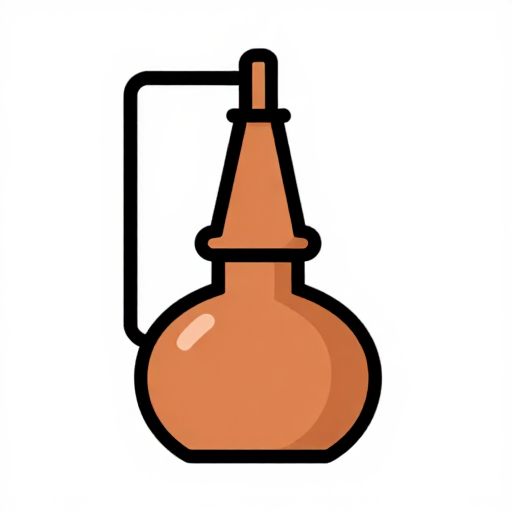 铜蒸馏器1 个
Load the still with lavender
Load the still with lavender
Pack the wilted lavender loosely onto the perforated platform inside the still. Do not compress the material — steam must be able to pass through the plant mass evenly. If packed too tightly, the steam will channel through gaps rather than contacting all the plant material, reducing yield. If packed too loosely, the steam passes through without sufficient contact time.
Fill the still to approximately two-thirds of the available space above the platform. Seal the lid tightly — any steam leak reduces both yield and quality. Traditional copper stills use a flour-and-water paste (luting) to seal the junction between the lid and the pot body. Modern stills use rubber gaskets, but the principle is the same: every molecule of steam should pass through the condenser, not escape into the air.
Distill with gentle steam
Distill with gentle steam
Light the fire under the boiler and bring the water to a gentle boil. The steam rises through the lavender, rupturing the oil glands in the flowers and stems and carrying the volatile oil compounds upward as a steam-oil vapor mixture. This vapor passes through the swan neck and into the condenser coil submerged in cold water.
Maintain a slow, steady distillation — vigorous boiling produces too much steam too quickly, which can carry water droplets and plant particles into the condenser (this is called 'bumping'). The distillate should drip from the condenser outlet at approximately 2-3 drops per second. Continue distilling for 1.5-2 hours — the first 30 minutes produce the highest-quality oil (called the 'head'), while later fractions contain progressively heavier compounds.
此步骤所需材料:
 块状木炭3 公斤
Separate the oil from the hydrosol
Separate the oil from the hydrosol
The distillate collects in a receiving vessel as a mixture of two immiscible liquids: lavender essential oil (which is lighter than water and floats on top) and lavender hydrosol (the aromatic water beneath). Allow the distillate to settle undisturbed for at least 30 minutes — the oil layer will form a thin, clear-to-pale-yellow film on the surface.
Carefully decant or pipette the oil layer into a clean glass bottle. A traditional oil separator (a tall, narrow glass vessel with a spout at the bottom) makes this easier — the water drains from below while the oil remains. Do not discard the hydrosol — lavender hydrosol is itself a valuable product used as a skin toner, linen spray, and gentle antiseptic wash. Ancient Romans used lavender hydrosol as their primary bath additive.
此步骤所需材料:
 卡扣式玻璃瓶2 个
Test and store the essential oil
Test and store the essential oil
Pure lavender essential oil should be clear to pale yellow, with a fresh, floral, slightly herbaceous aroma. Place a single drop on a piece of white paper — it should evaporate completely within 24 hours leaving no oily residue (unlike fixed oils such as olive or almond oil, which leave a permanent stain). If it leaves a greasy mark, the oil contains non-volatile contaminants from bumping during distillation.
Store the essential oil in dark glass bottles (amber or cobalt blue) filled as full as possible to minimize air contact. Keep in a cool, dark place. Properly stored lavender oil retains its potency for 2-3 years. Label each bottle with the harvest date, plant variety, and distillation date. The oil's antibacterial properties — documented by Gattefossé and confirmed by modern research — make it useful for minor wound cleaning, burn treatment, insect bite relief, and as a sleep aid when a few drops are placed on a pillow.
已连接蓝图材料
相关蓝图
这些蓝图共享知识——技术、材料或原理
Peppermint Tea for Digestive Relief — The Cooling Herb That Calms the Stomach
Bob 创作
热饮
Thyme Infusion for Coughs and Respiratory Infections — The Ancient Antiseptic Herb
Bob 创作
热饮
Honey as a Wound Dressing — The Oldest Antimicrobial Medicine Known to Humanity
Bob 创作
荒野
Drying Medicinal Herbs for Winter Storage — Preserving Nature's Pharmacy
Bob 创作
荒野
CC0 公共领域
此蓝图以 CC0 协议发布。你可以自由复制、修改、分发和使用此作品,无需征得许可。
通过购买蓝图中的产品支持创客,他们将获得 创客佣金 (由供应商设定),或创建此蓝图的新版本并将其作为连接包含在你自己的蓝图中以分享收入。