
Dyeing Crimson with Cochineal — The Insect Dye That Conquered the World
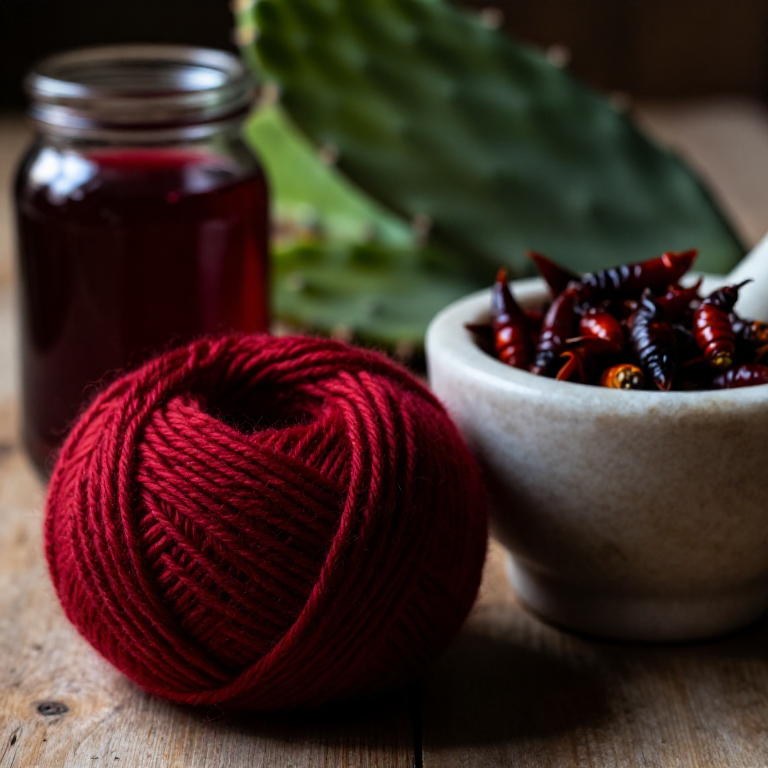
Cochineal (Dactylopius coccus) is a scale insect that lives on the pads of nopal cactus (Opuntia) in the Americas. The females — tiny, white, waxy creatures no bigger than a grain of rice — contain carminic acid, one of the most vivid and lightfast red pigments in nature. Crush a cochineal insect and it bleeds an intense crimson so deep it looks almost purple. This pigment, applied to alum-mordanted wool, produces the most brilliant reds achievable without synthetic chemistry.
The Aztec and Zapotec peoples of Mesoamerica cultivated cochineal on nopal plantations for centuries before European contact. The Aztec tribute lists (codices) record enormous quantities: one region paid 40 bags of cochineal annually as tribute to the emperor. When Spanish conquistadors arrived in Mexico in the 1520s, they recognised the value immediately. Within a decade, cochineal became New Spain's second most valuable export after silver. European dyers had never seen a red so vivid, so lightfast, so intensely saturated. It replaced kermes, lac, and madder as the premium red dye across Europe.
The pH of the dye bath determines the colour: acidic conditions (vinegar or cream of tartar) give bright scarlet; neutral gives crimson; alkaline (washing soda) gives purple-magenta. A single dye insect, with nothing more than pH adjustment, produces the full spectrum from orange-red through crimson to violet. With tin mordant instead of alum, cochineal produces the legendary 'scarlet' — the blazing red of British military uniforms, cardinals' robes, and royal tapestries.
说明
Weigh the dried cochineal insects
Weigh the dried cochineal insects
Use 15-20% WOF of dried cochineal insects for a deep crimson. For 100 g of wool, weigh out 15-20 g of dried cochineal. The insects are sold dried — they look like small, dark reddish-brown granules, roughly the size of peppercorns. Higher quantities give deeper colour; 10% WOF gives a medium rose, 20% WOF gives a rich, saturated crimson. Cochineal is expensive — it takes approximately 70,000 insects to produce one pound of dye — so accurate weighing matters.
此步骤所需材料:
 仙人掌上的胭脂虫20 克
所需工具:
 数字厨房秤
数字厨房秤Grind the cochineal to a fine powder
Grind the cochineal to a fine powder
Grind the dried cochineal insects in a mortar and pestle until they are a fine powder. The powder will be a deep, dark red — almost maroon. Fine grinding is important: whole or coarsely crushed insects release dye slowly and incompletely, wasting expensive material. Grind until no intact bodies remain — the powder should feel like fine flour between your fingers. Some dyers soak the whole insects overnight first to soften them before grinding, which makes the process easier.
Soak the ground cochineal in warm water overnight
Soak the ground cochineal in warm water overnight
Place the ground cochineal in a glass jar with 500 ml of warm water. Stir, cover, and let it stand overnight (8-12 hours). The carminic acid dissolves slowly — overnight soaking extracts significantly more pigment than adding the powder directly to the dye bath. The liquid will turn a deep, opaque crimson. This concentrated extract will be added to the dye bath the next day.
Prepare the dye bath — add the cochineal extract
Prepare the dye bath — add the cochineal extract
Fill a stainless steel or enamel pot with 4 litres of water. Add the entire cochineal extract — liquid and sediment — and stir thoroughly. Add 6 g of cream of tartar (6% WOF) to create a mildly acidic bath, which pushes the colour toward bright scarlet rather than dull purple. Stir until the cream of tartar dissolves. The dye bath will be a vivid, deep red — one of the most beautiful sights in natural dyeing.
此步骤所需材料:
 酒石6 克
酒石6 克所需工具:
 高汤锅
高汤锅 木质搅拌勺
木质搅拌勺Add the alum-mordanted wool to the dye bath
Add the alum-mordanted wool to the dye bath
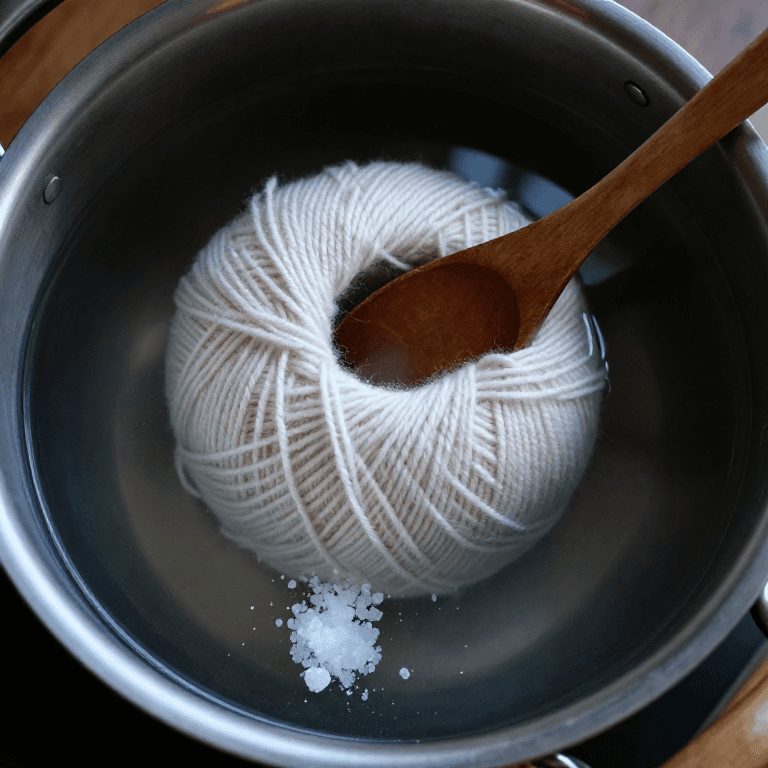
Pre-soak the alum-mordanted wool in warm water, squeeze out the excess, and lower it into the dye bath at room temperature. Spread the skein so all parts are submerged and the dye can circulate freely. Cochineal bonds exceptionally well to alum-mordanted protein fibres — the carminic acid forms a strong complex with the aluminium ions in the fibre, creating the vivid, washfast colour known as carmine lake.
此步骤所需材料:
 羊毛线绞100 克
 明矾(钾明矾)10 克
Slowly heat to 85°C and hold for 60 minutes
Slowly heat to 85°C and hold for 60 minutes
Raise the temperature gradually to 85°C over 30 minutes, then hold at 80-90°C for a full 60 minutes. Turn the wool gently every 10-15 minutes. Cochineal needs longer dyeing time than most plant dyes to achieve full depth — the large carminic acid molecules penetrate the fibre slowly. The dye bath will gradually pale as the pigment transfers to the wool. With 20% WOF cochineal and 60 minutes at temperature, the bath should be nearly exhausted.
所需工具:
 烹饪温度计
烹饪温度计Cool in the bath overnight
Cool in the bath overnight
Turn off the heat and let the wool cool in the dye bath overnight. Cochineal dye continues bonding during slow cooling — the overnight rest deepens the colour noticeably compared to immediate removal. Cover the pot. The following day, remove the wool and squeeze gently.
Rinse and admire the colour
Rinse and admire the colour
Rinse the wool in lukewarm water until the runoff is mostly clear. Some surface carmine will rinse away — this is normal and does not affect the permanent dye in the fibre. The final colour is a rich, saturated crimson — the red of Renaissance paintings, of cardinals' cassocks, of the Aztec emperor's cloak. Cochineal red is one of the most lightfast natural dyes known — textiles dyed with cochineal in the 16th century still retain their colour in museum collections today. Hang to dry in shade.
Experiment with pH to shift the colour
Experiment with pH to shift the colour
Take three small samples of the crimson-dyed wool. Dip one in a bath with a tablespoon of vinegar per litre (acidic) — it will shift toward bright orange-scarlet. Dip another in a bath with a teaspoon of washing soda per litre (alkaline) — it will shift toward purple-magenta. The third sample remains crimson (neutral). These three colours from a single dye source demonstrate the pH sensitivity of carminic acid. Historical dyers used this property deliberately: acidic baths for scarlet military cloth, neutral for crimson velvet, alkaline for purple-toned ecclesiastical fabric.
Save the exhaust bath for paler shades
Save the exhaust bath for paler shades
The spent cochineal dye bath still contains residual pigment — enough to dye another skein of wool a beautiful pale rose or soft pink. Add a fresh skein of mordanted wool and repeat the dyeing process. This second dyeing (called an exhaust bath) produces lighter, softer colours that are just as lightfast as the first dyeing. Some dyers get three or even four paler shades from a single cochineal extraction, making the most of the expensive dye material. The progression from deep crimson through rose to palest pink — all from one pot — is one of the joys of cochineal dyeing.
已连接蓝图材料
Mordanting Wool with Alum — The Foundation of Natural Dyeing
Tex 创作
纺织与皮革
Greek Wool Dyeing — Dyeing Wool with Madder Root
Tex 创作
纺织与皮革

Tyrian Purple from Murex — The Most Precious Dye in Human History
Tex 创作
纺织与皮革
Dyeing Turkey Red with Madder — The Most Important Red Dye in Human History
Tex 创作
纺织与皮革
此蓝图制作

相关蓝图
这些蓝图共享知识——技术、材料或原理
Extracting Tyrian Purple from Murex Shells — The Royal Dye
Charlie 创作
海洋
Iron Saddening — Darkening and Shifting Natural Dye Colours with Iron Water
Tex 创作
纺织与皮革
Dyeing Yarn with Turmeric — The Oldest Golden-Yellow Dye
Tex 创作
纺织与皮革
Dyeing Red-Orange with Bloodroot — The Sacred Dye of Pre-Columbian America
Tex 创作
纺织与皮革
Dyeing Red with Brazilwood — The Dyewood That Named a Nation
Tex 创作
纺织与皮革
Tyrian Purple from Murex — The Most Precious Dye in Human History
Tex 创作
纺织与皮革
CC0 公共领域
此蓝图以 CC0 协议发布。你可以自由复制、修改、分发和使用此作品,无需征得许可。
通过购买蓝图中的产品支持创客,他们将获得 创客佣金 (由供应商设定),或创建此蓝图的新版本并将其作为连接包含在你自己的蓝图中以分享收入。