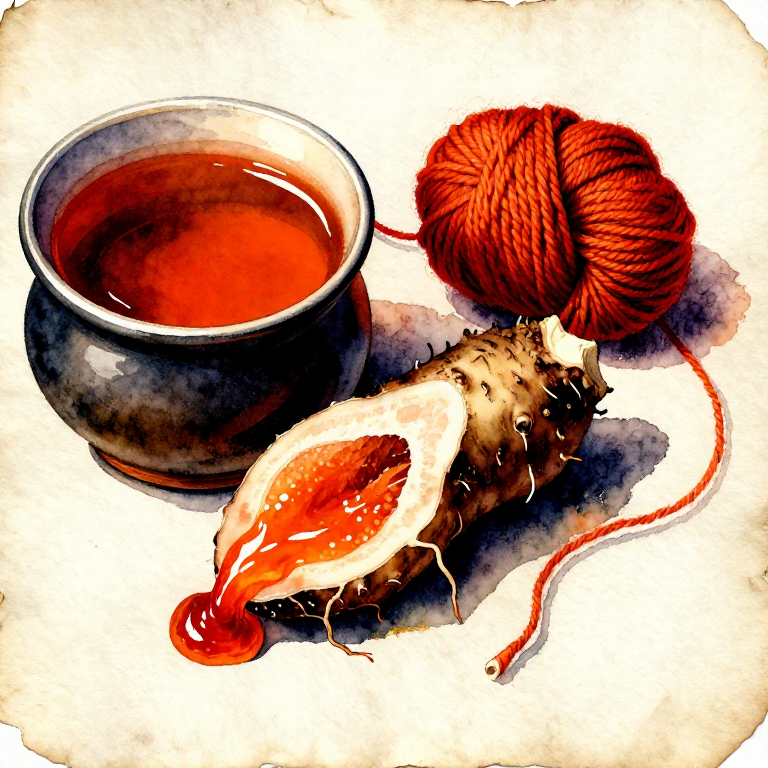


Dyeing Red-Orange with Bloodroot — The Sacred Dye of Pre-Columbian America
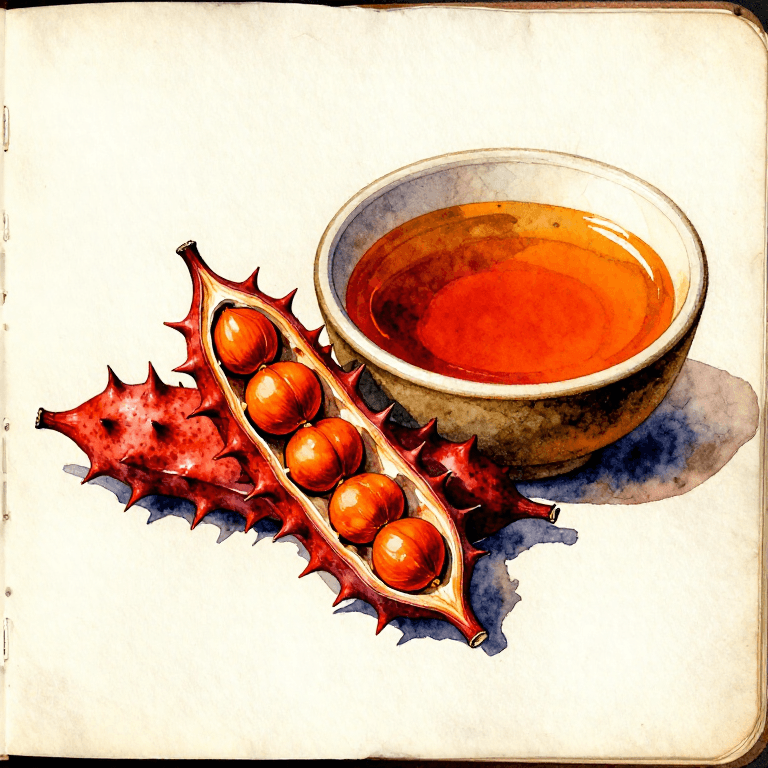
Bloodroot (Sanguinaria canadensis) is a spring-flowering woodland plant native to eastern North America. Its rhizome exudes a vivid red-orange sap when cut — a dramatic visual that gave the plant its common name and made it unmistakable to Indigenous peoples across the continent. The root contains sanguinarine and chelerythrine, benzophenanthridine alkaloids that produce intense red-orange pigment. Indigenous nations including the Ojibwe, Cherokee, Haudenosaunee (Iroquois), and Lenape used bloodroot extensively as a body paint, textile dye, and medicine for centuries before European contact.
As a textile dye, bloodroot produces a warm red-orange on protein fibres (wool, silk) with alum mordanting. The colour is vivid when fresh but has only moderate lightfastness — similar to safflower or annatto. Indigenous dyers used bloodroot primarily on animal hides, quillwork, and bast fibres (inner bark, basswood), where the colour was protected from prolonged sunlight. The root was also mixed with bear grease or animal fat as a body paint that doubled as insect repellent.
SAFETY WARNING: Sanguinarine is a toxic alkaloid. It causes severe skin irritation on contact in sensitive individuals, and is toxic if ingested. The fresh root sap stains skin intensely and can cause chemical burns with prolonged exposure. Always wear gloves when handling bloodroot. Work in a well-ventilated area. Never ingest any part of the plant. Keep away from eyes and mucous membranes. Despite its toxicity, sanguinarine is used in regulated doses in some commercial toothpastes and mouthwashes for its antimicrobial properties — but the concentrated root sap is far stronger than these diluted products.
说明
Weigh the dried bloodroot rhizome and prepare safety equipment
Weigh the dried bloodroot rhizome and prepare safety equipment
Use 50-100% WOF of dried bloodroot rhizome. For 100 g of wool, weigh out 50-100 g of dried root. Dried bloodroot rhizome is sold as dark reddish-brown pieces with a distinctive orange-red interior when broken. IMPORTANT: Put on nitrile or rubber gloves before handling the root — sanguinarine stains skin bright orange and can cause irritation or chemical burns with prolonged contact. Work in a well-ventilated area or outdoors. Chop or break the dried root into small pieces (1-2 cm) using a dedicated cutting board that you do not use for food.
此步骤所需材料:
 血根草根茎(干)80 克
所需工具:
 数字厨房秤
数字厨房秤 橡胶手套
橡胶手套Soak the root pieces overnight in warm water
Soak the root pieces overnight in warm water
Place the chopped bloodroot pieces in a dye pot with 4 litres of warm water and soak overnight (8-12 hours). Cover the pot — sanguinarine is light-sensitive and the soak should happen in a dark or covered environment. The water will turn a vivid orange-red within the first hour as sanguinarine dissolves. By morning, the liquid will be an intensely coloured red-orange. Keep gloves on when handling the pot or any splashed liquid — the dye stains everything it touches.
所需工具:
 高汤锅
高汤锅Simmer at 75-80°C for 45 minutes
Simmer at 75-80°C for 45 minutes
Wearing gloves, bring the pot to a gentle simmer (75-80°C) and hold for 45 minutes. Do not boil — sanguinarine degrades at high temperatures, dulling the colour from vivid red-orange to muddy brown. Work in a well-ventilated area as the steam carries traces of the alkaloid. Stir occasionally with a dedicated spoon. The liquid will deepen to an intense red-orange. The root pieces will pale as they release their pigment.
所需工具:
 烹饪温度计
烹饪温度计 木质搅拌勺
木质搅拌勺Strain out the root material
Strain out the root material
Strain the dye liquor through a fine mesh strainer into a clean pot. Wear gloves throughout — the spent root and liquor are both staining and irritating. Press the root pieces gently to extract remaining liquid. Dispose of spent root pieces carefully — do not compost where children or animals might contact them. The strained liquor should be a brilliant, clear red-orange.
所需工具:
 细目筛
细目筛Dye alum-mordanted wool at 75°C for 45 minutes
Dye alum-mordanted wool at 75°C for 45 minutes
Pre-wet the alum-mordanted wool in lukewarm water for 15 minutes, squeeze gently, and lower it into the bloodroot dye bath at room temperature. Slowly raise to 75°C over 20 minutes, then hold for 45 minutes. Turn gently every 10 minutes using gloves. The wool will develop a warm red-orange — vivid and saturated when fresh. The alum mordant helps fix the sanguinarine to the wool fibre, improving washfastness. Without mordant, the colour washes out significantly. Iron modification shifts the colour toward dark brown-red.
此步骤所需材料:
 羊毛线绞100 克
 明矾(钾明矾)10 克
Cool overnight, rinse with gloves, and dry in shade
Cool overnight, rinse with gloves, and dry in shade
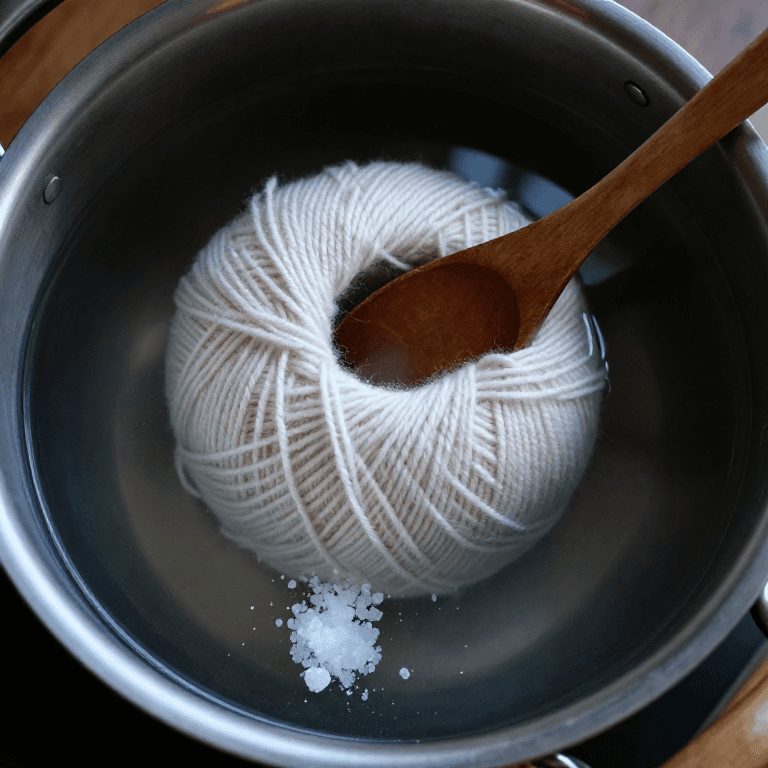
Turn off the heat and let the wool cool in the dye bath overnight. Wearing gloves, remove the wool, squeeze gently, and rinse in lukewarm water until the runoff is mostly clear. The rinse water will be orange — dispose of it safely, not where it could contact food-growing soil. The final colour is a warm red-orange, reminiscent of the autumn woodland floor where bloodroot grows. Lightfastness is moderate — the colour will fade toward pale orange with prolonged sunlight exposure, similar to annatto. For this reason, Indigenous dyers favoured bloodroot for items stored indoors or worn intermittently. Dry thoroughly in shade. Clean all pots, strainers, and tools that contacted the dye bath before returning them to kitchen use — or better, dedicate them to dye work permanently.
已连接蓝图材料
此蓝图制作

相关蓝图
这些蓝图共享知识——技术、材料或原理
CC0 公共领域
此蓝图以 CC0 协议发布。你可以自由复制、修改、分发和使用此作品,无需征得许可。
通过购买蓝图中的产品支持创客,他们将获得 创客佣金 (由供应商设定),或创建此蓝图的新版本并将其作为连接包含在你自己的蓝图中以分享收入。