

Dyeing Yellow with Fustic — The Colonial Dyewood That Coloured the New World Trade
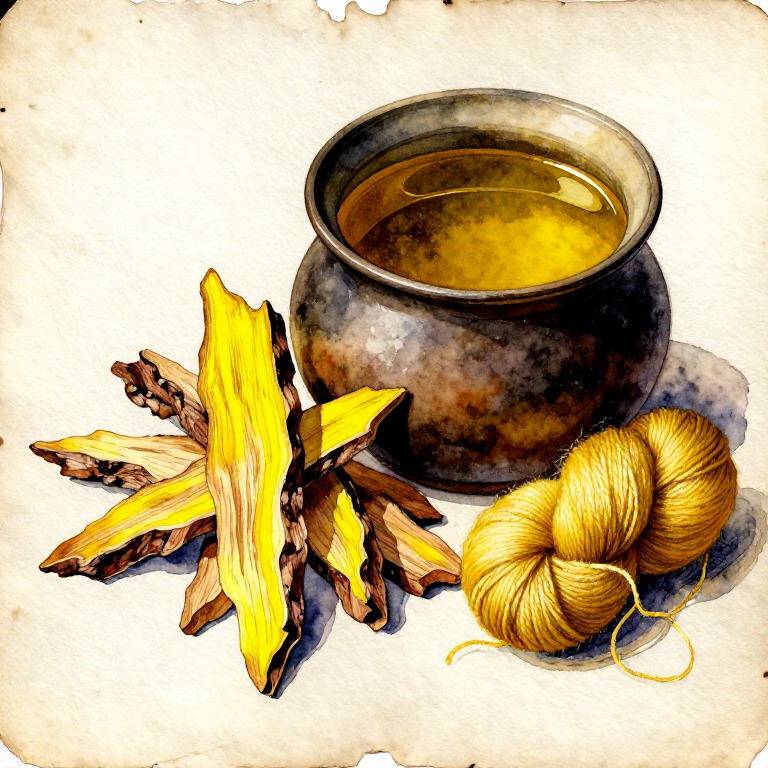
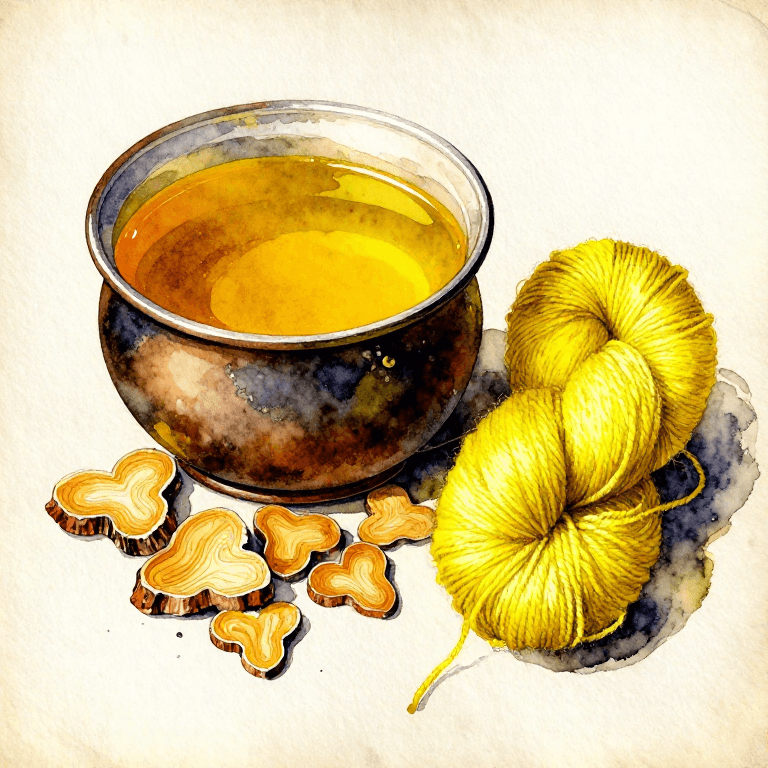
Old fustic (Maclura tinctoria) is a tropical tree native to Central and South America and the Caribbean. Its vivid yellow heartwood contains morin and other flavonoid pigments — the same chemistry as its North American relative, the osage orange (Maclura pomifera). Fustic heartwood produces a deep, warm golden-yellow to olive on alum-mordanted wool, with excellent lightfastness rivalling weld. The colour was so reliable and the source so abundant that fustic became one of the most important commercial dyewoods of the colonial era.
After the Spanish conquest of the Americas, fustic wood was shipped to Europe in enormous quantities. It rapidly displaced many traditional European yellow dye sources because it was cheaper, stronger, and easier to use. By the 17th century, fustic was the dominant yellow dyewood in European textile production. It was used both as a standalone yellow and as a base for compound colours — fustic yellow over-dyed with indigo produced the fast greens that coloured military uniforms across Europe.
The term 'fustic' can cause confusion because there are two distinct dye woods with this name. Old fustic (Maclura tinctoria) is the large tropical tree described here, producing strong, lightfast yellows. Young fustic (Cotinus coggygria, the smoke tree) is a smaller European shrub producing weaker, more fugitive yellows. When dye books simply say 'fustic,' they almost always mean old fustic — the colonial dyewood.
说明
Weigh the fustic heartwood chips
Weigh the fustic heartwood chips
Use 50-100% WOF of fustic heartwood chips. For 100 g of wool, weigh out 50-100 g of chips. Fustic heartwood is a deep golden-yellow colour, distinctly brighter than most temperate hardwoods. The chips are sold commercially by dye suppliers. Good quality fustic chips should be a vivid yellow-orange when freshly cut. The heartwood is very dense and heavy — a small volume provides substantial dye.
此步骤所需材料:
 染料桑心材碎片80 克
所需工具:
 数字厨房秤
数字厨房秤Soak the chips overnight in warm water
Soak the chips overnight in warm water
Place the fustic chips in a dye pot with 4 litres of warm water and soak overnight (8-12 hours). The water will begin turning a vivid golden-yellow within minutes — fustic releases dye more readily than most heartwood sources. By morning, the soaking water will be an intense, deep yellow. This pre-soak softens the dense tropical hardwood and ensures thorough extraction during simmering.
所需工具:
 高汤锅
高汤锅Simmer the chips for 60 minutes
Simmer the chips for 60 minutes
Bring the pot to a gentle simmer (80-85°C) and hold for 60 minutes. Stir occasionally. The liquid will deepen to a very intense golden-yellow — one of the most vivid yellow dye baths from any wood source. Do not boil. Fustic chips can be simmered a second and even third time in fresh water for progressively lighter baths. The wood retains dye across multiple extractions — colonial dyers extracted every last bit of colour before discarding spent chips.
所需工具:
 烹饪温度计
烹饪温度计 木质搅拌勺
木质搅拌勺Strain out the chips
Strain out the chips
Strain the dye liquor through a fine mesh strainer into a clean pot. Press the chips to extract all the golden liquid. The strained dye bath should be a deep, clear golden-yellow. Fustic chips are rigid and strain out cleanly without the pulpy residue of softer plant dyes.
所需工具:
 细目筛
细目筛Dye alum-mordanted wool at 80°C for 45 minutes
Dye alum-mordanted wool at 80°C for 45 minutes
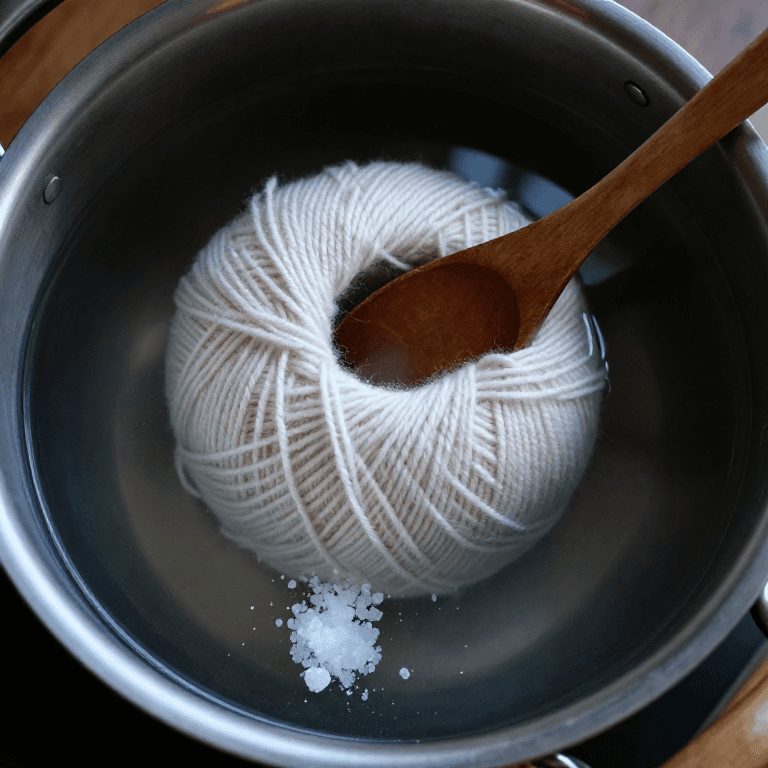
Pre-wet the alum-mordanted wool in lukewarm water for 15 minutes, squeeze gently, and lower it into the fustic dye bath at room temperature. Slowly raise to 80°C over 20 minutes, then hold for 45 minutes. Turn gently every 10 minutes. The wool will absorb colour rapidly, developing a deep, warm golden-yellow. The alum mordant produces the brightest, clearest yellow. With iron modification, the colour shifts to olive-green to khaki — the olive drab used in 18th-century military uniforms.
此步骤所需材料:
 羊毛线绞100 克
 明矾(钾明矾)10 克
Cool overnight, rinse, and dry
Cool overnight, rinse, and dry
Turn off the heat and let the wool cool in the dye bath overnight. Remove, squeeze gently, and rinse in lukewarm water until the runoff is clear. The final colour is a deep, warm golden-yellow — noticeably richer and deeper than most flower-based yellows. Fustic has excellent lightfastness, comparable to weld and osage orange. This durability is why it dominated the colonial dye trade for three centuries. Dry in shade.
已连接蓝图材料
此蓝图制作

相关蓝图
这些蓝图共享知识——技术、材料或原理
CC0 公共领域
此蓝图以 CC0 协议发布。你可以自由复制、修改、分发和使用此作品,无需征得许可。
通过购买蓝图中的产品支持创客,他们将获得 创客佣金 (由供应商设定),或创建此蓝图的新版本并将其作为连接包含在你自己的蓝图中以分享收入。