艺术
美容与健康
工艺
文化与历史
娱乐
环境
食品与饮料
逆向工程
科学
体育
技术
可穿戴设备
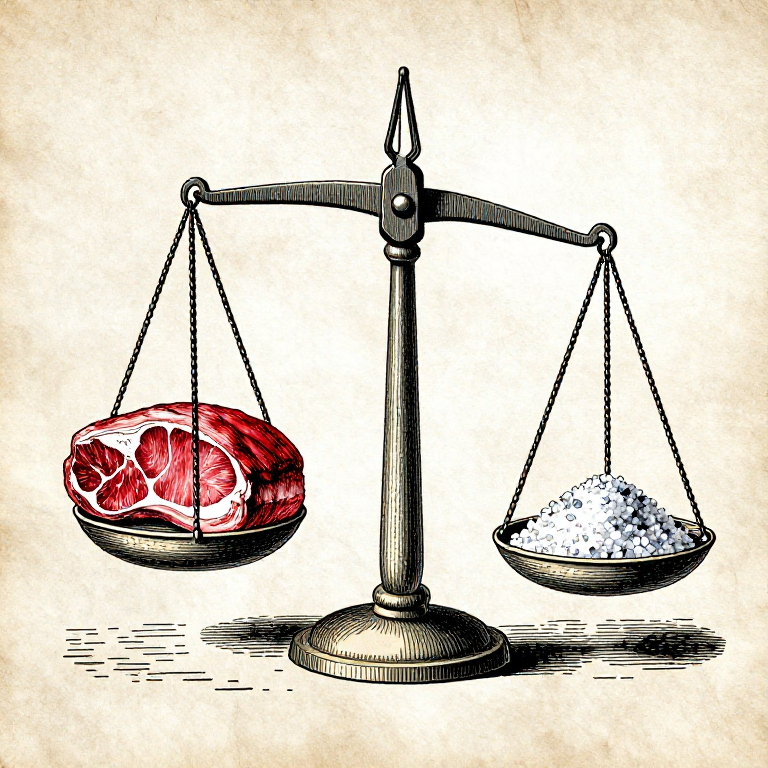


Equilibrium Curing: The Meat Cannot Get Saltier Than the Salt You Gave It
The traditional cure buries meat in a box of salt and takes it out when it feels ready. It has fed people for thousands of years and it gives a different answer every time, because the result depends on the shape of the piece, the temperature, the salt grain and exactly when someone decided to lift it out.
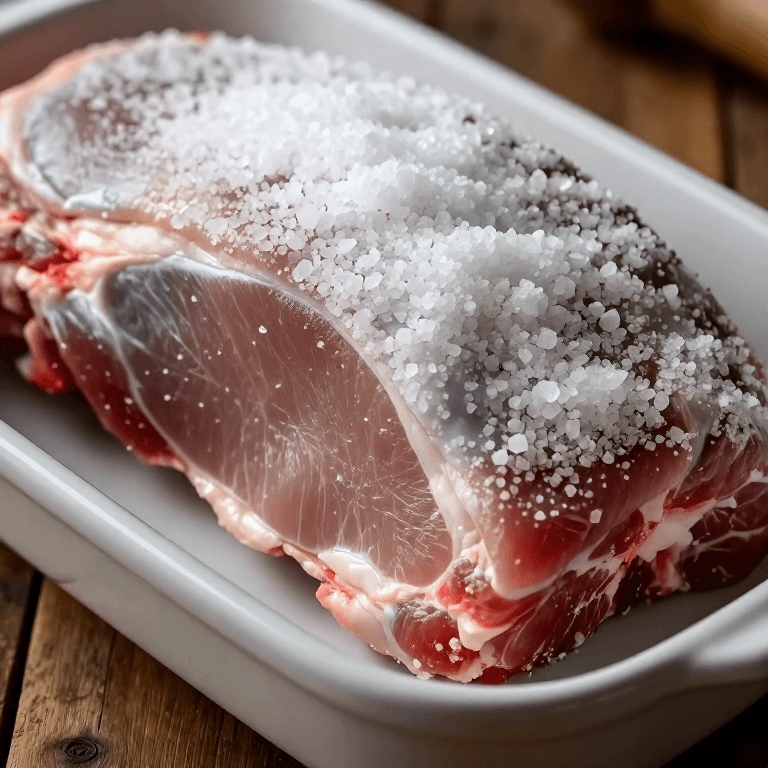
Equilibrium curing weighs the salt against the meat — typically 2.5% of the green weight — seals both in a bag, and waits. Because all the salt there is, is in the bag, the meat cannot become saltier than the target. Leaving it an extra week changes nothing.
It is the single change that turns curing from a craft you must be taught into one you can compute, and it costs nothing but a scale.
中级
4 hours
说明
1
1
Green weight, and the percentages that hang off it
Green weight, and the percentages that hang off it
**Green weight** is the weight of the meat before anything is done to it. Every percentage in a cure is of that number, exactly as the weight of fibre is in dyeing, and for the same reason: it is what makes a recipe transferable.
Weigh the trimmed piece, write the number down, and use it for the salt, the sugar, the curing salt and later for the weight loss.
Typical percentages of green weight:
* **salt 2.0 to 3.0%** — 2.5% is the standard target
* **sugar 0.5 to 1.5%** — balances the salt, feeds fermentation if there is any
* **curing salt #1 0.25%** — which delivers exactly 156 ppm of nitrite
* **spices to taste** — they are not part of the safety calculation
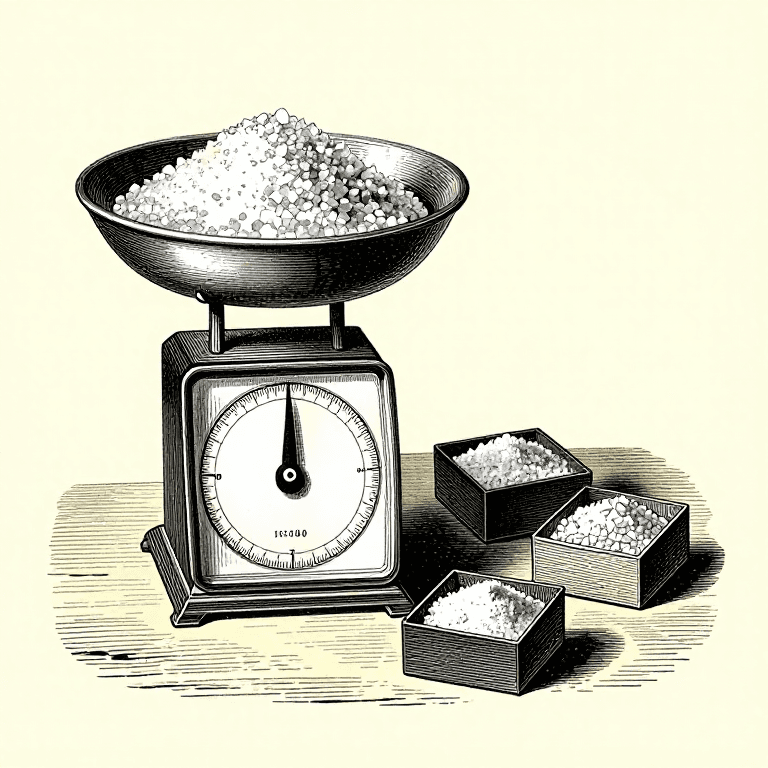
A scale reading to a gram is enough for the salt on a kilo of meat. For the curing salt, which is a quarter of one percent, use a scale that reads to 0.1 g — an error of a gram there is a 40% error in the nitrite.
此步骤所需材料:
 带骨猪肩肉1 个
 盐1 个
盐1 个 砂糖1 个
砂糖1 个 腌制盐1 个
所需工具:
 数字厨房秤
数字厨房秤 屠宰刀与分割套装
2
2
Working the cure out
Working the cure out
正在加载 Jupyter 笔记本…
所需工具:
 台式电脑
台式电脑3
3
Doing it: the bag, the turning, the rinse
Doing it: the bag, the turning, the rinse
**Weigh, mix, seal.** Weigh the trimmed meat, work out and weigh the cure, rub all of it over the whole surface, and seal it in a bag with as little air as possible. A vacuum bag is ideal; a zip bag with the air pressed out works.
**Refrigerate the whole time.** 3 to 5 C. The cure is not a preservative until it has penetrated, so the meat is ordinary raw meat for the first days and must be kept like it.
**Turn it daily.** Liquid comes out of the meat and pools; turning keeps every surface in contact with it. That liquid is the cure and stays in the bag.
**Rinse at the end**, briefly, and pat dry. This removes surface salt only — the salt inside is where the flavour and the safety are, and a rinse cannot take it out.
**Rest before drying or smoking.** A day uncovered in the fridge lets the surface dry and form a pellicle, which is the tacky skin that smoke actually sticks to. Smoking a wet surface deposits far less.
此步骤所需材料:
带骨猪肩肉1 个盐1 个腌制盐1 个 真空包装袋2 个
所需工具:
 真空封口机数字厨房秤
 速读温度计
速读温度计4
4
Brine, and when it is the better answer
Brine, and when it is the better answer
A wet cure — a brine — does the same arithmetic in water, and the same equilibrium logic applies: weigh the salt against the **meat plus the water** together, and the whole system comes to the target concentration.
So for 2 kg of meat in 2 litres of water at 2.5%, the salt is 2.5% of 4000 g = 100 g. Not 2.5% of the meat, and not 2.5% of the water.
Brine is the better choice in three cases:
**Awkward shapes.** A whole bird or a bone-in piece cures evenly in liquid and very unevenly under dry salt.
**Large pieces, quickly.** Liquid carries salt to the whole surface at once.
**When juiciness matters.** A brined piece gains weight and holds it through cooking, which is why poultry is brined and bacon is not.
For a thick piece, the centre can be reached by **injecting** some of the brine with a syringe rather than waiting for diffusion — which is exactly how commercial hams are cured in days rather than months, and it is the one part of industrial practice that is worth borrowing at home.
此步骤所需材料:
带骨猪肩肉1 个 腌渍盐1 个砂糖1 个
所需工具:
数字厨房秤速读温度计相关蓝图
这些蓝图共享知识——技术、材料或原理

CC0 公共领域
此蓝图以 CC0 协议发布。你可以自由复制、修改、分发和使用此作品,无需征得许可。
通过购买蓝图中的产品支持创客,他们将获得 创客佣金 (由供应商设定),或创建此蓝图的新版本并将其作为连接包含在你自己的蓝图中以分享收入。