艺术
美容与健康
工艺
文化与历史
娱乐
环境
食品与饮料
逆向工程
科学
体育
技术
可穿戴设备
危险


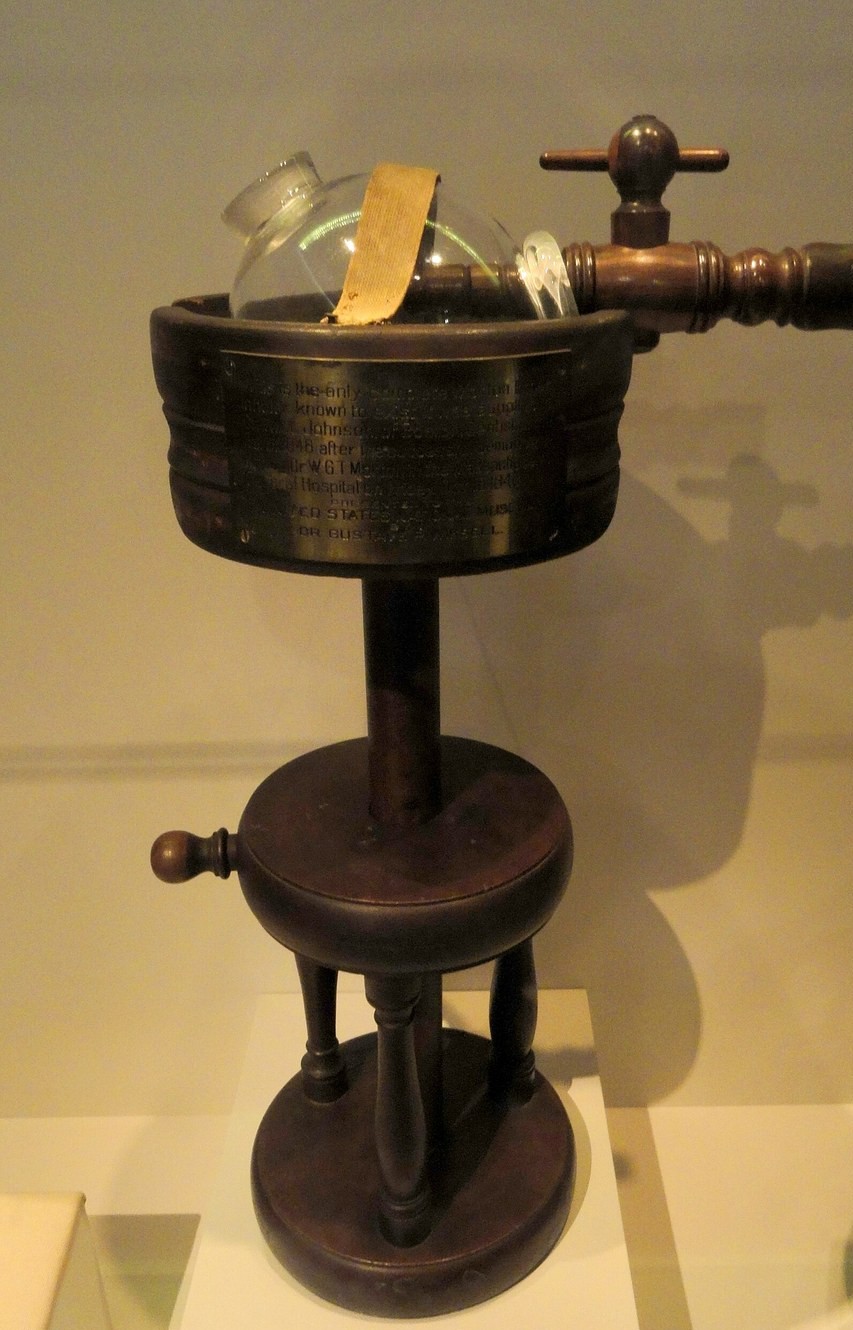
The Ether Inhaler
Before 16 October 1846 surgery was speed. A surgeon's reputation rested on how few seconds an amputation took, because the patient was awake and held down. On that morning at Massachusetts General Hospital a glass globe with a sponge in it ended that era in about five minutes.
The device looks trivial and is not. Diethyl ether boils at 34.6 degrees Celsius, which means at room temperature the air above it is already saturated with roughly 58 percent ether vapour. The concentration that produces surgical anaesthesia is around 2 percent. So the inhaler is not a vaporiser at all — the ether vaporises perfectly well on its own. The inhaler is a DILUTER, and every part of it exists to stop the patient receiving thirty times the dose they need.
That inversion is the whole engineering lesson, and it is why this blueprint is a fluid-mechanics build rather than a chemistry one. You will build the glass draw-over vaporiser and characterise it — with a safe surrogate, never with ether. Ether itself is here as the subject, described honestly, behind the hazard gate: it is extremely flammable with an explosive range in air from about 1.9 to 36 percent, it autoignites near 160 degrees Celsius, and on storage in light and air it forms shock-sensitive peroxides. The clinical boundary is absolute — this is a bench instrument for understanding a vapour circuit. It is not an anaesthetic machine and must never be connected to a person.
高级
6 hours
相关蓝图
这些蓝图共享知识——技术、材料或原理


CC0 公共领域
此蓝图以 CC0 协议发布。你可以自由复制、修改、分发和使用此作品,无需征得许可。
通过购买蓝图中的产品支持创客,他们将获得 创客佣金 (由供应商设定),或创建此蓝图的新版本并将其作为连接包含在你自己的蓝图中以分享收入。