艺术
美容与健康
工艺
文化与历史
娱乐
环境
食品与饮料
逆向工程
科学
体育
技术
可穿戴设备
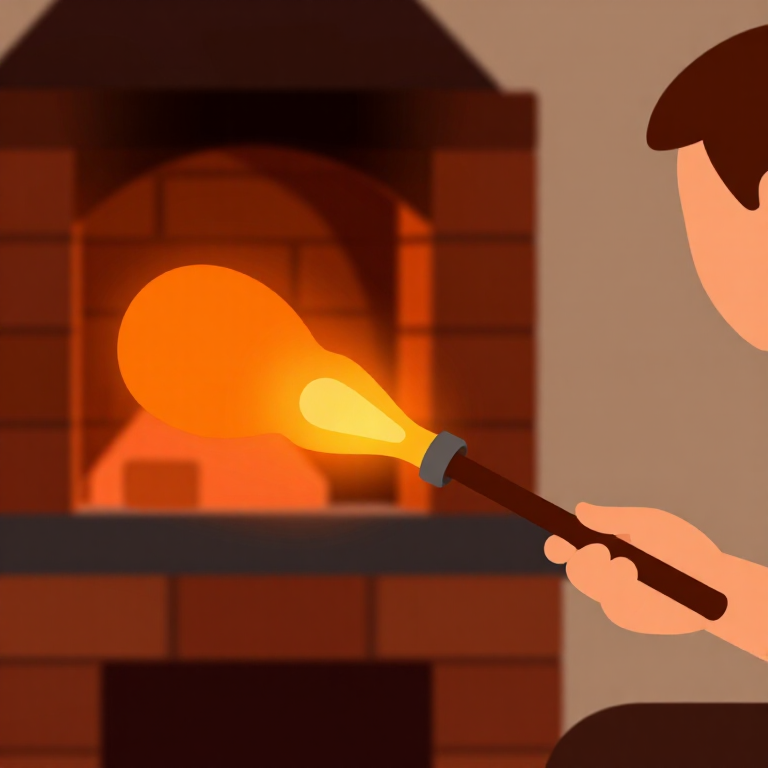


Blowing a Glass Bottle by Hand — Free-Blown Vessel Shaping
Free-blowing a glass bottle is one of the foundational skills in glassworking. The glassblower gathers molten soda-lime glass on a blowpipe, inflates it into a bubble, and shapes the body, neck, and lip using a combination of gravity, centrifugal force, and simple hand tools. Unlike mould-blown glass, free-blown bottles are shaped entirely by the maker's skill — every piece is unique. This technique has been used continuously since Roman times and remains the basis of all studio glassblowing today.
中级
2-3 hours (plus annealing overnight)
说明
1
1
Heat the furnace and prepare the bench
Heat the furnace and prepare the bench
Bring the glass furnace to working temperature (~1100°C) with a crucible of molten soda-lime glass. Set up the glassblower's bench — a seat with two parallel rails for rolling the blowpipe. Have all tools within arm's reach.
所需工具:
 砖砌炉
砖砌炉2
2
Mix and charge the glass batch
Mix and charge the glass batch
If starting from raw batch: combine approximately 60% silica sand, 25% soda ash, and 15% crushed limestone. Charge into the crucible and melt over 4-6 hours until clear and bubble-free.
此步骤所需材料:
 石英砂2 公斤
 碳酸钠(纯碱)800 克
 碳酸钙——破碎石灰石500 克
所需工具:
 耐火黏土坩埚
3
3
Pre-heat and gather on the blowpipe
Pre-heat and gather on the blowpipe
Pre-heat the blowpipe tip in the furnace mouth for 30 seconds. Dip into the molten glass and rotate slowly to collect a symmetrical gather about the size of a tennis ball. Withdraw smoothly.
所需工具:
 玻璃吹管
玻璃吹管4
4
Marver the gather
Marver the gather
Roll the gather back and forth on a flat marver (granite slab or steel plate) to centre the glass on the pipe and create a uniform cylindrical shape. Keep the pipe rotating constantly to prevent the glass from drooping.
所需工具:
 花岗岩板
花岗岩板5
5
Blow the initial bubble
Blow the initial bubble
Seal the end of the blowpipe with your thumb, then give a short firm puff to inflate a small bubble inside the gather. This first bubble (the 'parison') is the foundation of the bottle shape. Roll on the marver again to even out the walls.
6
6
Reheat and expand the bubble
Reheat and expand the bubble
Return the parison to the furnace mouth (glory hole) for 10-15 seconds until it glows evenly. Blow again to enlarge the bubble to the desired bottle size. Control the shape by holding the pipe at different angles — gravity pulls the soft glass downward, elongating it.
7
7
Shape the body with the jacks
Shape the body with the jacks
While rotating the pipe, use glassmaker's jacks (large spring-loaded tweezers with flat blades) to constrict the glass and form the neck. Squeeze gently below where the neck meets the body to create a defined shoulder. Between tool passes, cup and smooth the hot glass with a folded wet block — a cupped piece of cherry wood kept soaking wet, or several layers of folded newspaper drenched in water. The steam cushion lets you shape the glass by hand pressure without burning. Keep rotating to maintain symmetry.
所需工具:
 玻璃工钳
玻璃工钳 折叠湿块
折叠湿块8
8
Form the base
Form the base
Hold the pipe vertically with the bottle hanging down. Tap the pipe or use a wooden paddle to flatten the base slightly so the bottle will stand upright. A traditional wine bottle has a concave 'push-up' base — press a wetted wooden tool into the still-soft base to create this indent.
9
9
Attach the pontil rod
Attach the pontil rod
Gather a small bit of hot glass on a pontil rod and press it firmly against the centre of the bottle base. Allow it to fuse. The pontil will hold the bottle while the lip is formed.
所需工具:
 粘杆
粘杆10
10
Crack off the blowpipe
Crack off the blowpipe
Score the glass at the blowpipe junction with a wet file or apply a drop of water. Tap the pipe to crack off cleanly. The bottle is now held by the pontil rod with the neck opening upward.
11
11
Form the lip and finish the neck
Form the lip and finish the neck
Reheat the rough neck opening at the furnace mouth. Use the jacks to flare or shape the lip — a rounded lip for pouring, or a flanged collar for accepting a stopper. The lip must be smooth and even.
所需工具:
 长柄火钳
长柄火钳12
12
Crack off the pontil
Crack off the pontil
Apply a wet iron to the pontil junction and tap to separate. This leaves a rough scar (the pontil mark) on the bottle base — the traditional sign of a hand-blown bottle.
13
13
Transfer to the annealing oven
Transfer to the annealing oven
Immediately place the finished bottle into a pre-heated annealing oven at approximately 500°C. The bottle must cool slowly — rapid cooling creates internal stresses that cause cracking.
14
14
Anneal overnight
Anneal overnight
Reduce the oven temperature gradually at 20-30°C per hour through the critical range (500-350°C). Below 350°C the cooling rate can increase. A typical bottle anneals fully in 8-12 hours. Do not open the oven until the temperature matches room temperature.
15
15
Grind the pontil scar smooth
Grind the pontil scar smooth
Once fully cooled, grind the rough pontil scar on the base using a wet sandstone or silicon carbide wheel. The base should be flat enough for the bottle to stand without rocking. Inspect the entire bottle for cracks or thin spots.
已连接蓝图材料
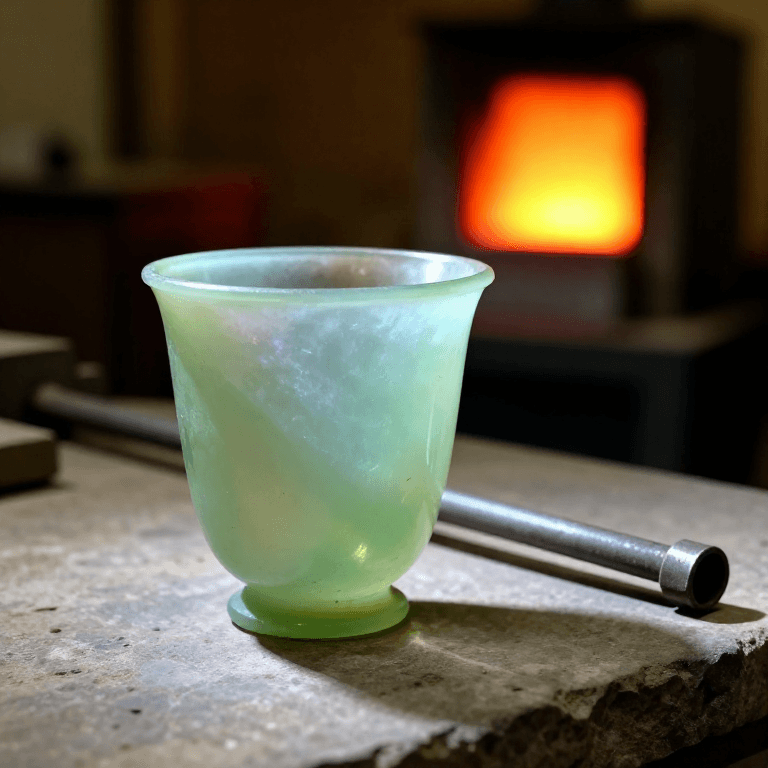


相关蓝图
这些蓝图共享知识——技术、材料或原理
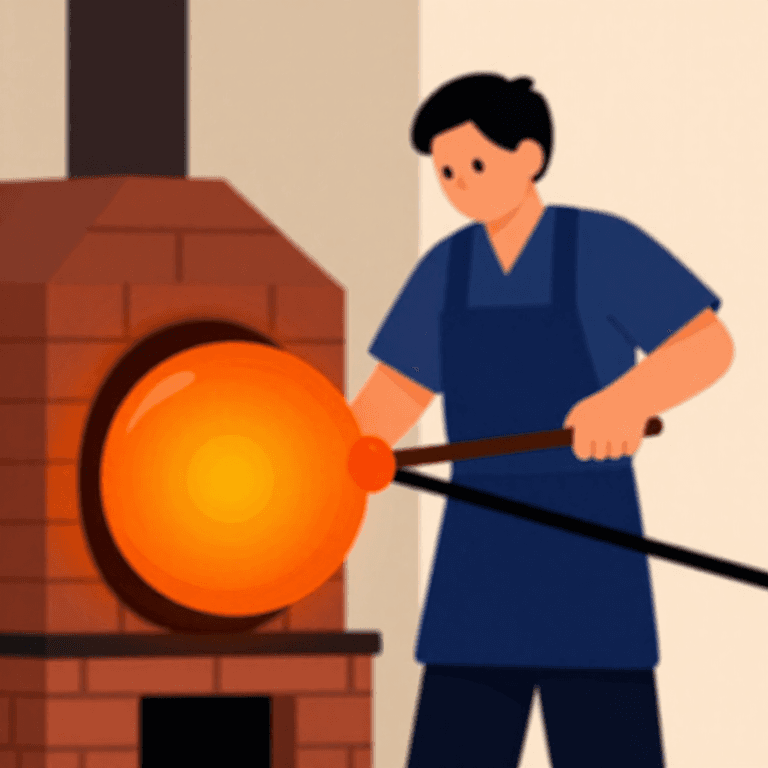
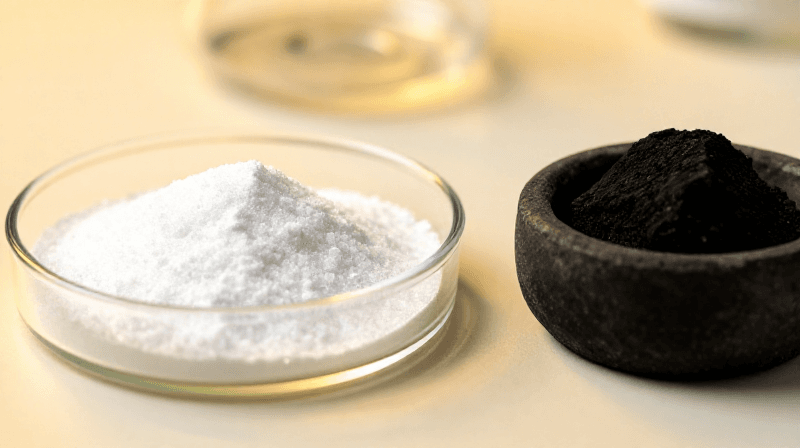

CC0 公共领域
此蓝图以 CC0 协议发布。你可以自由复制、修改、分发和使用此作品,无需征得许可。
通过购买蓝图中的产品支持创客,他们将获得 创客佣金 (由供应商设定),或创建此蓝图的新版本并将其作为连接包含在你自己的蓝图中以分享收入。