艺术
美容与健康
工艺
文化与历史
娱乐
环境
食品与饮料
逆向工程
科学
体育
技术
可穿戴设备


Temperature: The Biggest Lever on Flavour, and It Is Not the Room
Fermentation is exothermic. A vigorously fermenting vessel can sit several degrees above the room it is standing in, and the temperature that matters is the one INSIDE the liquid, not the one on the wall.
That gap is why so many home ferments taste hotter and fruitier than intended. A room at 20 °C can easily mean a fermenter at 24 °C at peak activity, which for most ale yeasts is past the top of its range.
And the flavour consequences are large and one-directional. Warm fermentation produces more esters and more fusel alcohols, and once they are made they do not go away. Cool fermentation is slower and cleaner, and the choice between them is the main flavour decision available after the recipe.
中级
3 hours
说明
1
1
Measure the liquid, not the air
Measure the liquid, not the air
Stick a thermometer strip on the side of the fermenter, or better, use a probe in a thermowell in the liquid. The difference between the two is exactly the measurement error this rung is about.
Expect 2 to 4 °C above ambient at the peak of a vigorous ale fermentation, and more in a large volume — a bigger vessel has less surface area relative to its contents and sheds heat more slowly.
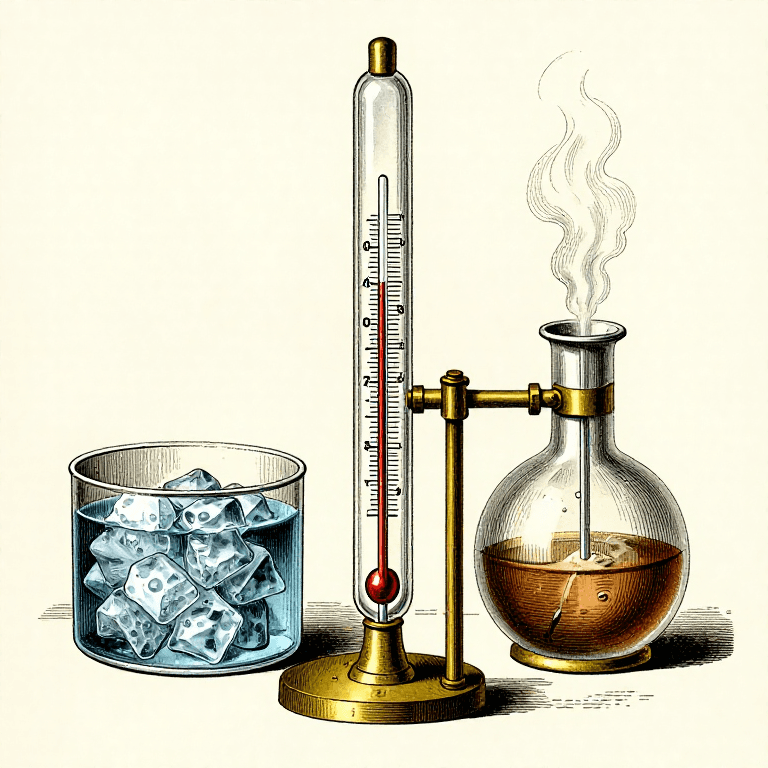
Calibrate the thermometer once against ice water and boiling water, as the Celsius rung sets out. A brewing thermometer reading two degrees high will have you fermenting warm for years without knowing.
此步骤所需材料:
 水1 升
水1 升所需工具:
 速读温度计
速读温度计 烹饪温度计
烹饪温度计 玻璃发酵瓶
玻璃发酵瓶2
2
Cool the first three days hardest
Cool the first three days hardest
Most of the heat and nearly all of the flavour compounds are produced in the first 48 to 72 hours, while the yeast is growing. Temperature control during that window is worth far more than control afterwards.
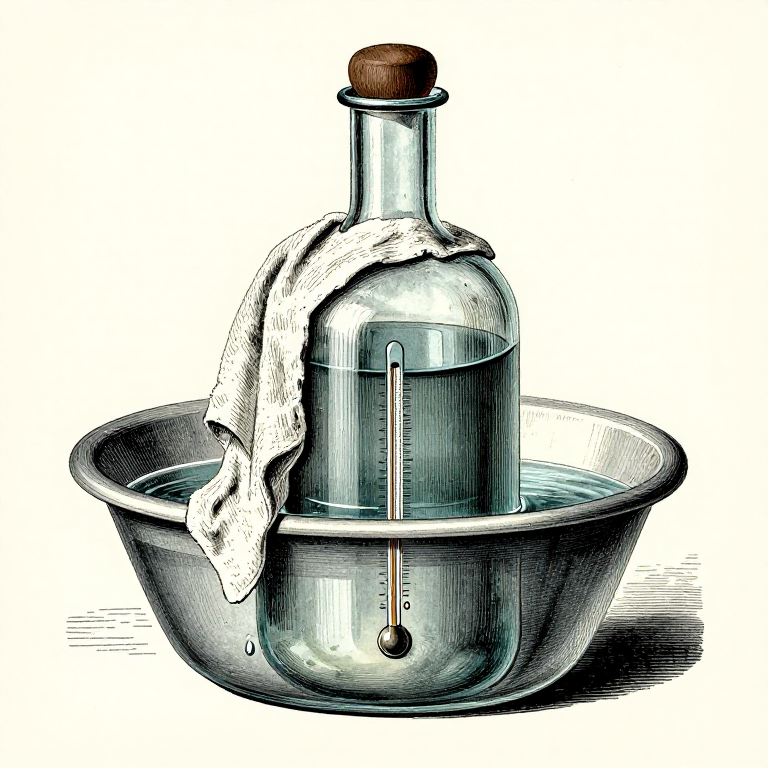
The cheapest effective method is a water bath: the fermenter standing in a tub of water with a wet towel over it. Water's heat capacity buffers the swings and evaporation from the towel cools it a degree or two below ambient.
Many brewers deliberately RAISE the temperature at the end instead, once the bulk of the sugar is gone. That encourages the yeast to clean up diacetyl and acetaldehyde without producing new esters, because growth has already finished — which is the same reasoning read backwards.
此步骤所需材料:
水2 升所需工具:
玻璃发酵瓶速读温度计3
3
Every yeast has a range, and it is on the packet
Every yeast has a range, and it is on the packet
Ale yeasts generally work between about 18 and 22 °C, lager yeasts between 9 and 13, and some strains — Belgian, saison, kveik — are bred for much warmer conditions and are perfectly happy at 30 °C or beyond.
Within a strain's range, the temperature is a dial. The same yeast at the bottom of its range gives a clean neutral result and at the top gives a fruity, spicy one, and many classic styles are the same strain used at different ends.
Above the range the yeast makes fusel alcohols — heavy, solventy, headache-inducing — and below it, it goes dormant and leaves the ferment stalled. Both limits are hard, and the packet states them because they matter.
此步骤所需材料:
 啤酒酵母1 个
所需工具:
速读温度计烹饪温度计4
4
Change one thing, and brew the same recipe twice
Change one thing, and brew the same recipe twice
Split a batch between two vessels, ferment one warm and one cool, and taste them side by side. That single experiment teaches more about yeast than any amount of reading, and it costs one extra fermenter.
It is also a proper controlled experiment: same wort, same yeast, same pitching rate, one variable. Changing the recipe and the temperature together is what makes most home brewing un-learnable.
Log the temperature daily, not just at the start. A ferment that spiked to 26 °C on day two and settled back is indistinguishable at the end from one that never did — except in the glass, and by then the record is the only way to know.
此步骤所需材料:
啤酒酵母1 个 干麦芽浸膏1 个
所需工具:
玻璃发酵瓶速读温度计 酿酒比重计与量筒
相关蓝图
这些蓝图共享知识——技术、材料或原理

CC0 公共领域
此蓝图以 CC0 协议发布。你可以自由复制、修改、分发和使用此作品,无需征得许可。
通过购买蓝图中的产品支持创客,他们将获得 创客佣金 (由供应商设定),或创建此蓝图的新版本并将其作为连接包含在你自己的蓝图中以分享收入。