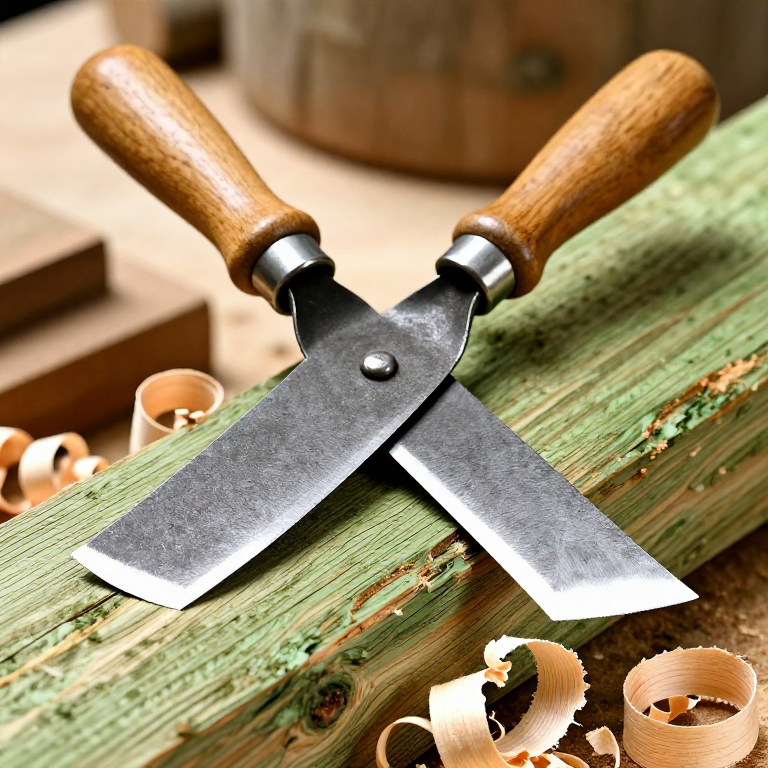


Using a Drawknife — Shaping Riven Timber by Drawing a Blade Toward You
The drawknife is one of the oldest and most efficient woodworking tools: a wide blade with a handle at each end, drawn toward the body to shave wood in long, controlled strokes. It removes material faster than any plane and follows curves that no flat-soled tool can reach. Every piece of riven timber — every chair leg, every barrel stave, every roof shingle — was brought to its final shape with a drawknife.
The technique depends on reading the grain. Pull with the grain and the blade glides through the wood, lifting a clean shaving. Pull against the grain and the blade digs in, tearing the surface and jamming. The worker reads the fibres at the edge of each cut and adjusts the angle and direction constantly. Bevel up gives a light, controlled cut for finishing. Bevel down gives an aggressive cut for roughing, letting the blade dig into the wood under its own weight.
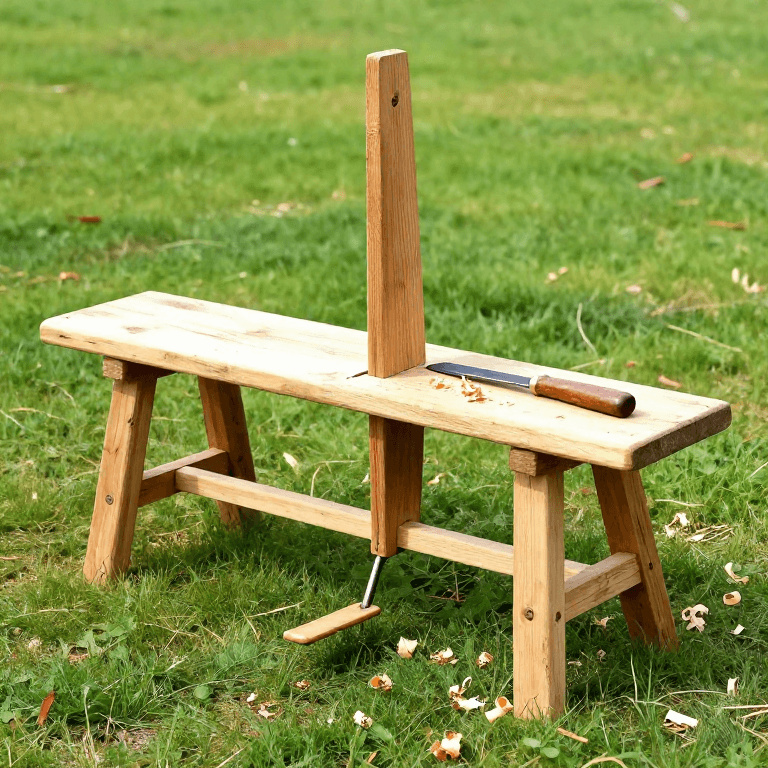
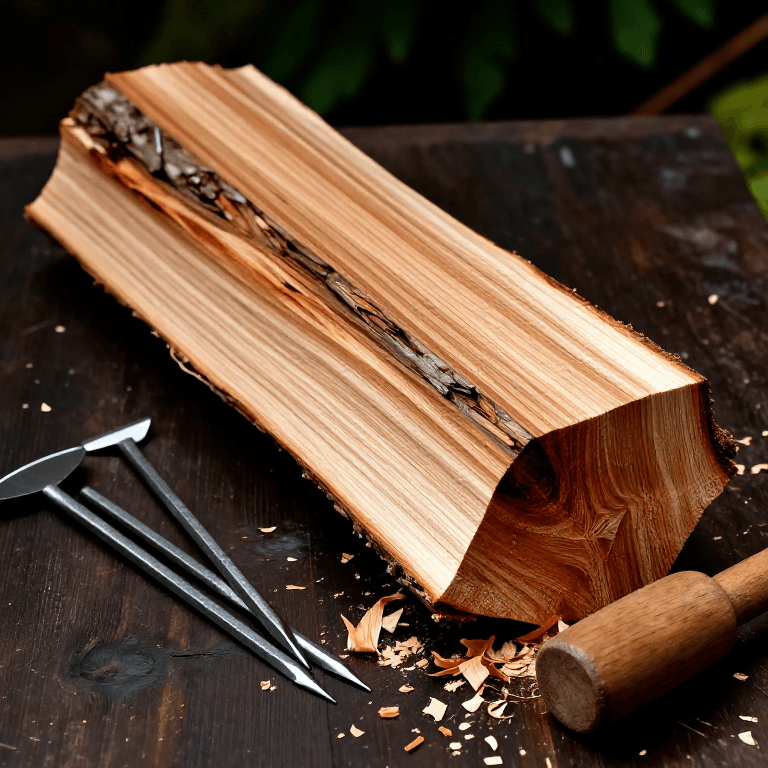
The drawknife works best on green (freshly cut) wood, which shaves cleanly and requires less effort than seasoned timber. Combined with a shave horse for clamping, a drawknife turns a rough riven billet into a smooth, shaped component in minutes — faster than any powered tool for one-off shaping work.
说明
Secure the workpiece in a shave horse or vise
Secure the workpiece in a shave horse or vise
Read the grain direction
Read the grain direction
Rough shaping — bevel down
Rough shaping — bevel down
所需工具:
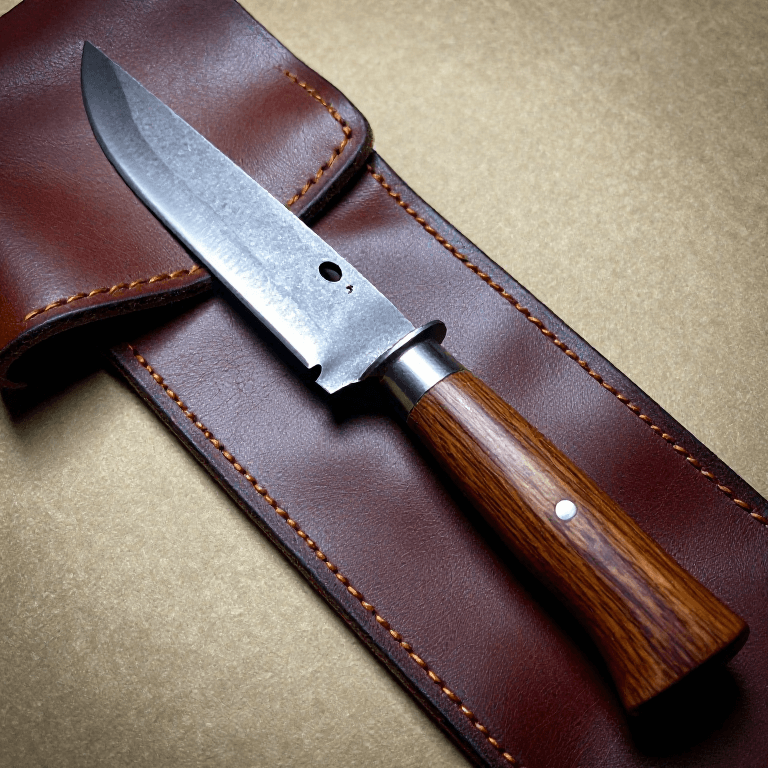
 双柄刮刀
双柄刮刀Finish shaping — bevel up
Finish shaping — bevel up
Work green wood for best results
Work green wood for best results
Sharpen and maintain the drawknife
Sharpen and maintain the drawknife
相关蓝图
这些蓝图共享知识——技术、材料或原理
CC0 公共领域
此蓝图以 CC0 协议发布。你可以自由复制、修改、分发和使用此作品,无需征得许可。
通过购买蓝图中的产品支持创客,他们将获得 创客佣金 (由供应商设定),或创建此蓝图的新版本并将其作为连接包含在你自己的蓝图中以分享收入。