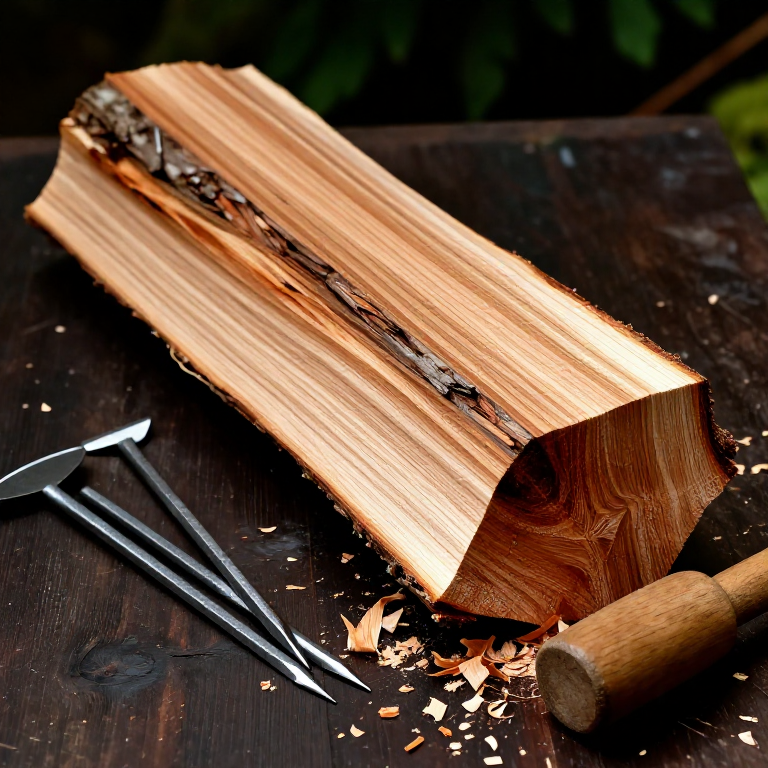


Riving Planks from a Log — Splitting Timber Along the Grain with Wedges
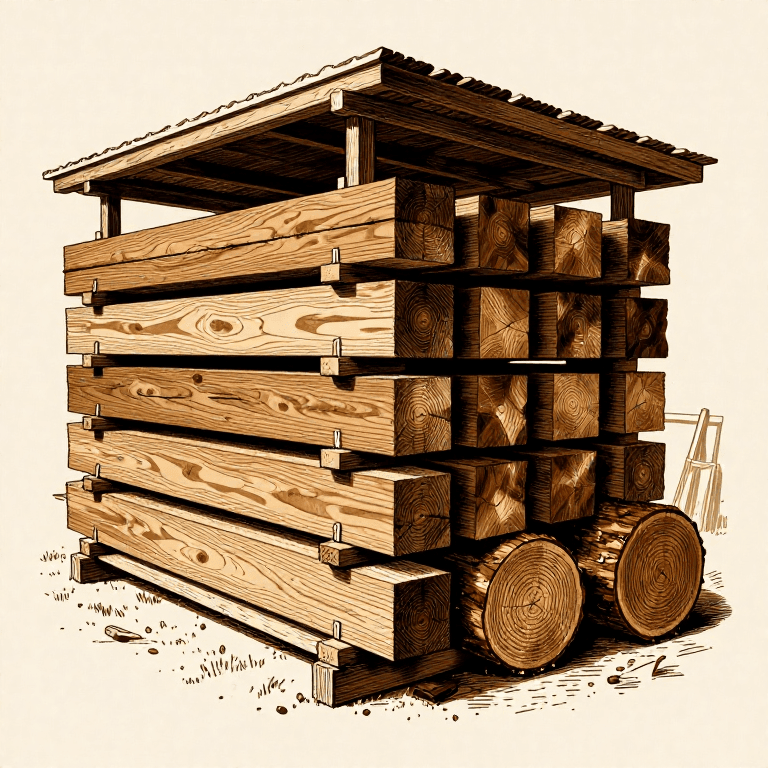
Before sawmills, every plank was riven — split from a log using wedges and mallets. Riving exploits the natural grain of the wood: a wedge driven into the end grain propagates a crack that follows the fibres, producing a plank that is stronger than any sawn board because no fibres are cut across. Every Viking longship, every medieval roof, and every Iron Age door was built from riven timber.
The technique is simple but requires reading the wood. A straight-grained log splits cleanly into halves, quarters, and eighths. Each successive split reduces the section until planks of the desired thickness are reached. Crooked grain, knots, or spiral growth cause the split to run off-line, ruining the plank. Selecting the right log is half the skill.
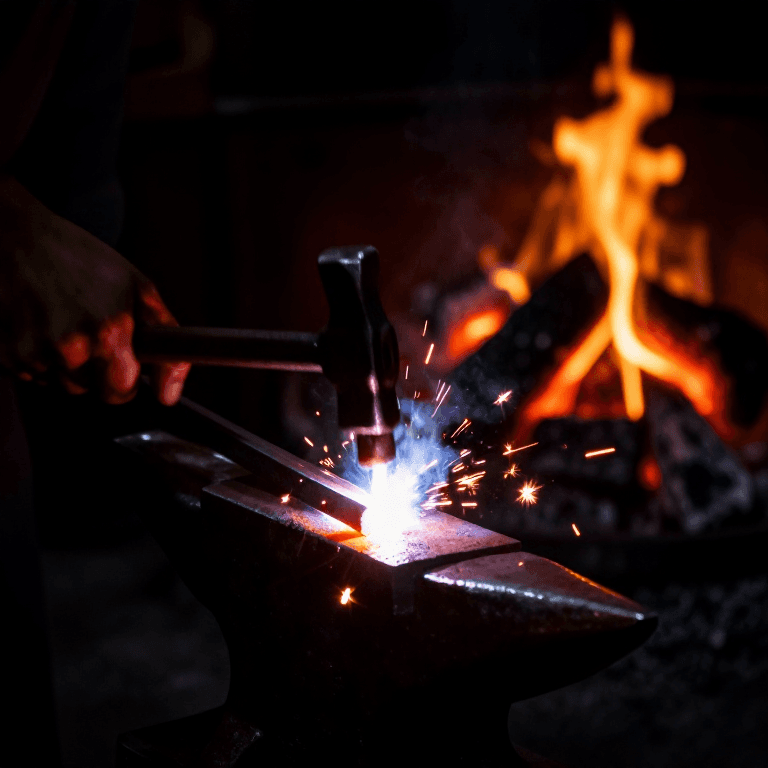
Iron wedges transformed riving from a slow stone-age process into an efficient production method. A smith's iron wedge driven by a wooden maul splits a log in minutes. Combined with an iron drawknife for smoothing, riving produces finished planks faster than pit-sawing and with superior strength.
说明
Select a straight-grained log
Select a straight-grained log
此步骤所需材料:
 红橡木材1 个
Split the log in half
Split the log in half
所需工具:
 锻打锤
锻打锤 钢楔套装
钢楔套装 大锤
大锤Quarter each half
Quarter each half
Rive planks from the quarters
Rive planks from the quarters
所需工具:
 劈刀(froe)
 木槌
木槌Correct wandering splits
Correct wandering splits
Smooth the riven surface
Smooth the riven surface
所需工具:
 双柄刮刀
双柄刮刀 削木凳
削木凳 锛子
锛子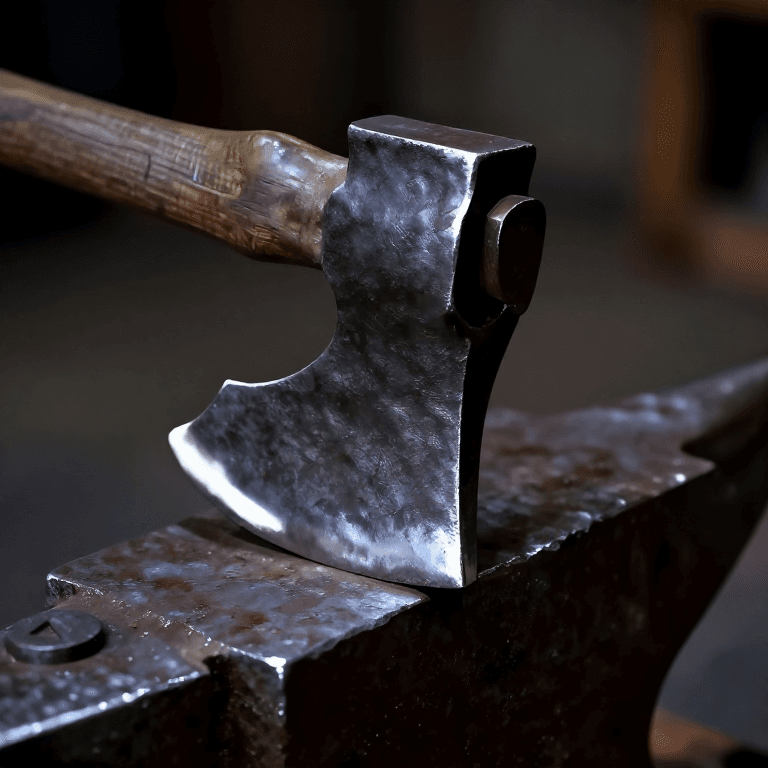


相关蓝图
这些蓝图共享知识——技术、材料或原理
CC0 公共领域
此蓝图以 CC0 协议发布。你可以自由复制、修改、分发和使用此作品,无需征得许可。
通过购买蓝图中的产品支持创客,他们将获得 创客佣金 (由供应商设定),或创建此蓝图的新版本并将其作为连接包含在你自己的蓝图中以分享收入。