
กรีดยางพารา — การเก็บน้ำยางธรรมชาติจากต้นยางพารา
คู่มือการกรีดยางพาราและการเก็บน้ำยางธรรมชาติอย่างละเอียด ประเทศไทยเป็นผู้ผลิตยางธรรมชาติรายใหญ่ที่สุดของโลก ผลิตประมาณ 4.5-5 ล้านตันต่อปี (ประมาณ 35% ของผลผลิตโลก) ต้นยางพารา (Hevea brasiliensis) มีถิ่นกำเนิดในลุ่มน้ำอเมซอน แต่ปัจจุบันปลูกอย่างแพร่หลายในเอเชียตะวันออกเฉียงใต้ น้ำยาง (latex) คือน้ำเลี้ยงสีขาวขุ่นที่มีอนุภาคยาง (cis-1,4-polyisoprene) ประมาณ 30-40% แขวนลอยในน้ำ คู่มือนี้ครอบคลุมตั้งแต่การทำความเข้าใจชีววิทยาของต้นยาง การเลือกต้นที่พร้อมกรีด การกรีดแบบครึ่งลำต้น การเก็บน้ำยาง การจับตัว (coagulation) ด้วยกรดฟอร์มิก การรีดเป็นแผ่น การอบแห้งหรือรมควัน และการจัดเกรดตามมาตรฐาน RSS (Ribbed Smoked Sheet)
说明
ทำความเข้าใจชีววิทยาของต้นยางพารา
ทำความเข้าใจชีววิทยาของต้นยางพารา
ต้นยางพารา (Hevea brasiliensis) เป็นไม้ยืนต้นในวงศ์ Euphorbiaceae มีถิ่นกำเนิดในป่าฝนอเมซอน ต้นยางสูงได้ถึง 25-30 เมตร มีอายุการให้ผลผลิตน้ำยาง 25-30 ปี น้ำยาง (latex) ผลิตในท่อน้ำยาง (laticifer vessels) ที่อยู่ในเปลือกชั้นใน น้ำยางประกอบด้วยอนุภาคยาง (cis-1,4-polyisoprene) 30-40% แขวนลอยในน้ำ พร้อมกับโปรตีน น้ำตาล เกลือแร่ และลิปิด น้ำยางมีหน้าที่ปกป้องต้นไม้จากแมลงและเชื้อโรค เมื่อเปลือกถูกตัด น้ำยางจะไหลออกและจับตัวเป็นก้อนปิดแผล
เลือกต้นยางที่พร้อมกรีด
เลือกต้นยางที่พร้อมกรีด
ต้นยางพาราเริ่มกรีดได้เมื่ออายุ 5-7 ปี เมื่อเส้นรอบวงลำต้นที่ระดับ 150 ซม. จากพื้นดินมีขนาดไม่น้อยกว่า 50 ซม. (ประมาณ 16 ซม. เส้นผ่านศูนย์กลาง) วัดเส้นรอบวงด้วยสายวัดที่ระดับ 150 ซม. จากพื้น ต้นที่เปลือกหนาพอจะทนต่อการกรีดซ้ำได้โดยไม่ทำลายเนื้อไม้ ต้นยางที่เล็กเกินไปจะให้น้ำยางน้อยและเสี่ยงต่อความเสียหายถาวร สวนยางในภาคใต้ของไทย (สุราษฎร์ธานี นครศรีธรรมราช สงขลา ตรัง) เป็นพื้นที่ปลูกยางหลักของประเทศ
所需工具:
 原木测量卷尺
เตรียมมีดกรีดยาง
เตรียมมีดกรีดยาง
มีดกรีดยาง (มีดกรีดยาง/tapping knife) เป็นเครื่องมือเฉพาะทาง มีใบมีดโค้งสั้นที่ออกแบบมาเพื่อตัดเปลือกได้ตื้นและสม่ำเสมอ ใบมีดต้องคมเสมอ — มีดทื่อทำให้แผลกรีดไม่เรียบ เปลือกฉีกขาด และต้นยางเสียหาย ลับมีดด้วยหินลับมีดก่อนออกกรีดทุกครั้ง ตรวจสอบด้ามจับให้แน่นหนา มีดกรีดยางแบบไทยมักมีที่กันลึก (depth guard) เพื่อป้องกันการตัดลึกเกินไปจนถึงเนื้อไม้ (cambium)
所需工具:
 割胶刀
割胶刀 磨刀石
磨刀石กรีดรอยเฉือนเกลียว
กรีดรอยเฉือนเกลียว
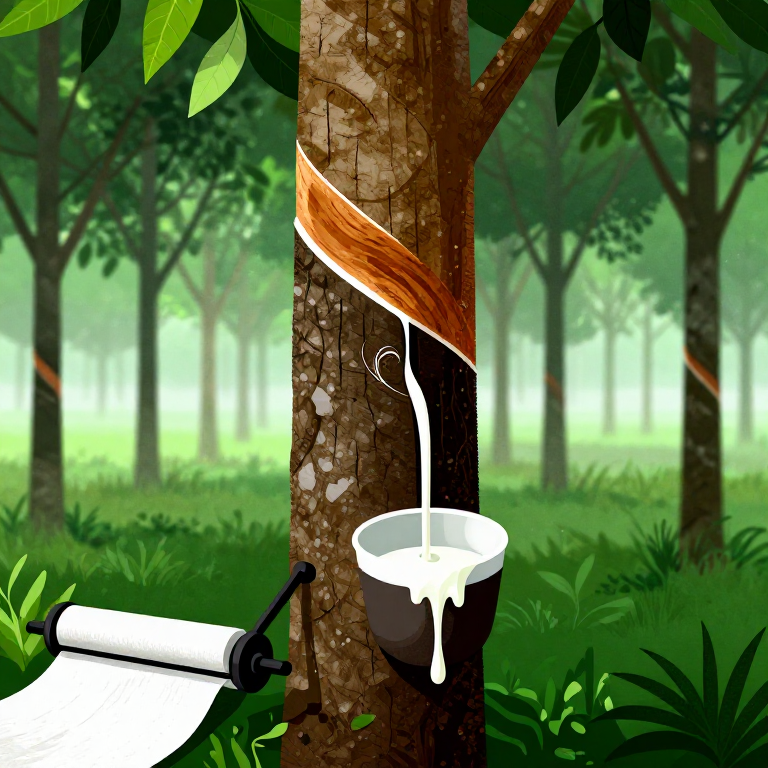
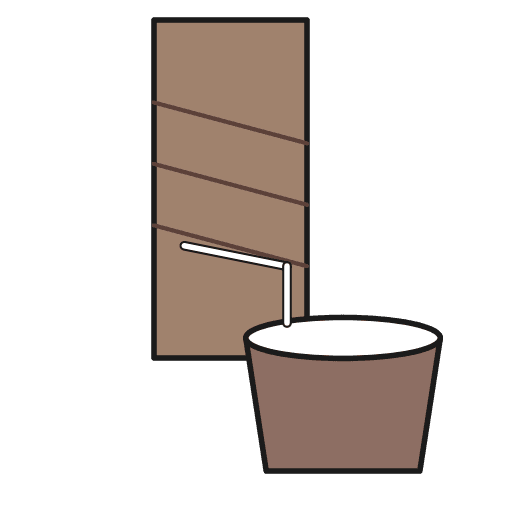
รอยกรีดมาตรฐานคือครึ่งรอบลำต้น (half-spiral) ทำมุม 30 องศาจากแนวนอน เอียงจากซ้ายบนลงไปขวาล่าง (สำหรับคนถนัดขวา) เริ่มกรีดที่ระดับ 150 ซม. จากพื้นดิน ตัดเปลือกชั้นนอกลึกประมาณ 1.5-2 มม. เพื่อเปิดท่อน้ำยาง (laticifer vessels) ห้ามตัดลึกถึงเนื้อไม้ (cambium) เพราะจะทำให้ต้นเสียหายถาวรและเปลือกไม่งอกใหม่ มุม 30 องศาสำคัญเพราะท่อน้ำยางเรียงตัวเอียงจากขวาไปซ้าย — การกรีดมุมนี้ตัดผ่านท่อน้ำยางได้มากที่สุด แต่ละครั้งที่กรีด จะเฉือนเปลือกบางๆ ออก (shaving) เพื่อเปิดท่อน้ำยางใหม่
所需工具:
割胶刀ติดตั้งรางน้ำยางและถ้วยรองรับ
ติดตั้งรางน้ำยางและถ้วยรองรับ
ที่ปลายล่างสุดของรอยกรีด (ด้านขวาล่าง) ติดตั้งรางน้ำยาง (spout) แบบโลหะหรือพลาสติก ปักเข้าไปในเปลือกเพื่อนำทางน้ำยางไหลลงถ้วย แขวนถ้วยรองรับน้ำยาง (latex cup) ไว้ใต้รางด้วยลวดยึดกับลำต้น ถ้วยควรสะอาดและแห้ง — น้ำยางที่ปนเปื้อนจะจับตัวเร็วก่อนเวลาอันควร ถ้วยขนาด 300-500 มล. เพียงพอสำหรับน้ำยางจากการกรีดหนึ่งครั้ง
此步骤所需材料:
 胶乳收集杯1 个
 金属引流嘴1 个
所需工具:
 金属丝杯架
金属丝杯架เติมสารกันจับตัว
เติมสารกันจับตัว
ก่อนกรีด ใส่สารกันจับตัว (anti-coagulant) ลงในถ้วยรองรับ สารที่ใช้คือสารละลายแอมโมเนีย (ammonia solution) หรือสารละลายโซเดียมซัลไฟต์ (sodium sulfite) ปริมาณ 2-5 มล. ต่อถ้วย สารนี้จะป้องกันไม่ให้น้ำยางจับตัวเป็นก้อนในถ้วยก่อนที่จะเก็บ หากไม่ใส่สารกันจับตัว น้ำยางจะเริ่มจับตัวภายใน 2-4 ชั่วโมงหลังไหลออกจากต้น สวนยางขนาดใหญ่จะเตรียมสารละลายแอมโมเนียไว้ในขวดฉีดเพื่อความสะดวก
此步骤所需材料:
 稀氨水5 ml per cup
所需工具:
 玻璃滴管瓶(琥珀色)
กรีดยางในรอบเช้ามืด
กรีดยางในรอบเช้ามืด
การกรีดยางทำในช่วงเช้ามืด ตั้งแต่ตี 2 ถึงตี 4 เนื่องจากช่วงนี้แรงดันเต่ง (turgor pressure) ในต้นยางสูงที่สุด ทำให้น้ำยางไหลมากกว่าช่วงกลางวัน ใช้ไฟฉายคาดหัวเพื่อส่องสว่างขณะกรีด กรีดโดยเฉือนเปลือกบางๆ (ประมาณ 1.5-2 มม.) ตามรอยกรีดเดิม น้ำยางจะเริ่มไหลทันทีหลังกรีด — หยดสีขาวขุ่นจะไหลตามรอยเฉือนลงสู่รางและถ้วย ชาวสวนยางที่ชำนาญกรีดได้ 400-600 ต้นต่อรอบ กรีดทุก 2-3 วัน (ไม่กรีดทุกวัน) เพื่อให้เปลือกมีเวลางอกใหม่
所需工具:
 头灯割胶刀
头灯割胶刀เก็บน้ำยาง
เก็บน้ำยาง
น้ำยางจะไหลต่อเนื่อง 2-4 ชั่วโมงหลังกรีด จากนั้นจะหยุดไหลเนื่องจากน้ำยางจับตัวปิดแผล กลับมาเก็บน้ำยางจากถ้วยในช่วงเช้า (6-9 โมง) เทน้ำยางจากถ้วยลงถังรวม (latex bucket) ต้นยางหนึ่งต้นให้น้ำยางประมาณ 30-50 มล. ต่อการกรีดหนึ่งครั้ง (ประมาณ 10-15 กรัมยางแห้ง) เก็บยางก้นถ้วย (cup lump) ที่จับตัวเกาะถ้วยแยกต่างหาก — ยางก้นถ้วยมีคุณภาพต่ำกว่าน้ำยางสด ล้างถ้วยให้สะอาดเพื่อใช้ในรอบถัดไป
所需工具:
 胶乳收集桶
胶乳收集桶กรองน้ำยาง
กรองน้ำยาง
น้ำยางที่เก็บมาอาจมีสิ่งเจือปน เช่น เศษเปลือกไม้ ใบไม้ แมลง หรือฝุ่น กรองน้ำยางผ่านตะแกรงสแตนเลส (40-60 mesh) หรือผ้ากรอง เทน้ำยางลงในถังรวมที่สะอาด น้ำยางที่กรองแล้วจะสะอาด สีขาวขุ่นสม่ำเสมอ ไม่มีก้อนหรือสิ่งเจือปน น้ำยางที่สะอาดจะให้แผ่นยางคุณภาพสูงเมื่อจับตัว
所需工具:
 不锈钢滤网
不锈钢滤网จับตัวน้ำยางด้วยกรดฟอร์มิก
จับตัวน้ำยางด้วยกรดฟอร์มิก
เทน้ำยางที่กรองแล้วลงในถาดจับตัว (coagulation tray) — ถาดสี่เหลี่ยมอะลูมิเนียมหรือสแตนเลส เติมกรดฟอร์มิก (formic acid) เข้มข้น 1-2% ในอัตราส่วน 5-10 มล. ต่อน้ำยาง 1 ลิตร คนให้เข้ากันแล้วปล่อยทิ้งไว้ 4-8 ชั่วโมง (หรือค้างคืน) กรดฟอร์มิกจะทำลายสถานะแขวนลอยของอนุภาคยาง ทำให้อนุภาคยางรวมตัวเป็นก้อนขาว (rubber curds) แยกตัวออกจากน้ำเซรุ่ม (serum) ห้ามใช้กรดเข้มข้นเกินไปเพราะจะทำให้ยางสีเข้มและคุณภาพลดลง
此步骤所需材料:
 甲酸 1-2 % 溶液50 毫升
 过滤后的乳胶10 升
所需工具:
 凝固盘
凝固盘 搅拌棒
搅拌棒รีดยางผ่านลูกกลิ้ง
รีดยางผ่านลูกกลิ้ง
ก้อนยางที่จับตัวแล้ว (coagulum) นำมารีดผ่านเครื่องรีดยาง (sheeting roller) เครื่องรีดมีลูกกลิ้ง 2 ลูกหมุนสวนทางกัน ลูกกลิ้งชุดสุดท้ายมีลายร่อง (ribbed) เพื่อสร้างลวดลายบนแผ่นยาง ทำให้พื้นที่ผิวเพิ่มขึ้นสำหรับการอบแห้ง รีดซ้ำ 3-5 ครั้ง ค่อยๆ ลดระยะห่างระหว่างลูกกลิ้งเพื่อให้แผ่นยางบางลง (ประมาณ 3-4 มม.) แผ่นยางที่รีดแล้วจะเป็นสีขาวอมเหลือง ยืดหยุ่น มีลายร่องสม่ำเสมอ ล้างแผ่นยางด้วยน้ำสะอาดเพื่อขจัดกรดที่เหลือ
此步骤所需材料:
 清洁水(用于漂洗)20 升
所需工具:
 压片机
压片机อบแห้งหรือรมควันแผ่นยาง
อบแห้งหรือรมควันแผ่นยาง
แผ่นยางที่รีดแล้วนำไปตากผึ่งลมในร่มเงา 1-2 วันก่อน จากนั้นนำเข้าโรงรมควัน (smokehouse) รมควันที่อุณหภูมิ 40-60 องศาเซลเซียส เป็นเวลา 4-7 วัน ควันจากไม้ (ไม้ยางพาราเก่าหรือไม้อื่น) ทำหน้าที่ฆ่าเชื้อรา แบคทีเรีย และให้สีน้ำตาลอำพันแก่แผ่นยาง แผ่นยางรมควัน (Ribbed Smoked Sheet - RSS) เป็นรูปแบบยางธรรมชาติที่ซื้อขายมากที่สุดในโลก ทางเลือก: ตากแดดหรือตากลมจนแห้ง (air-dried sheet) แต่คุณภาพต่ำกว่าแผ่นรมควัน
此步骤所需材料:
 薪柴10 公斤
所需工具:
 熏制房
熏制房 碗碟沥水架
碗碟沥水架จัดเกรดคุณภาพ
จัดเกรดคุณภาพ
แผ่นยางรมควันจัดเกรดตามมาตรฐาน RSS (Ribbed Smoked Sheet) ที่กำหนดโดย International Rubber Quality and Packing Conference โดยตรวจสอบด้วยตาเปล่าและแสงส่องผ่าน เกรด RSS1 คือคุณภาพสูงสุด: สีอำพันอ่อนสม่ำเสมอ ไม่มีฟองอากาศ ไม่มีจุดด่าง ไม่มีสิ่งเจือปน ยืดหยุ่นดี เกรด RSS2-RSS3 อนุญาตให้มีจุดด่างเล็กน้อยหรือสีเข้มขึ้น เกรด RSS4-RSS5 มีคุณภาพต่ำกว่า มีจุดดำ ฟองอากาศ หรือสิ่งเจือปน ราคายางแตกต่างกันมากตามเกรด — RSS1 ราคาสูงที่สุด
所需工具:
 灯箱
灯箱จัดเก็บและเตรียมจำหน่าย
จัดเก็บและเตรียมจำหน่าย
แผ่นยางที่จัดเกรดแล้ว มัดรวมเป็นก้อน (bale) ก้อนละ 100-113 กก. ตามมาตรฐานสากล ห่อด้วยแผ่นยางเกรดเดียวกันเพื่อป้องกันการเปื้อน จัดเก็บในโรงเก็บที่แห้ง อากาศถ่ายเทดี ไม่ถูกแสงแดดโดยตรง ความชื้นสูงทำให้ยางขึ้นรา ยางธรรมชาติจากไทยส่งออกไปยังจีน ญี่ปุ่น สหรัฐอเมริกา และยุโรปเป็นหลัก ใช้ในการผลิตยางรถยนต์ ถุงมือยาง ยางยืด และผลิตภัณฑ์ยางอื่นๆ ต้นยางหนึ่งต้นให้ผลผลิตได้ 25-30 ปี โดยเปลือกจะงอกใหม่ให้กรีดครั้งต่อไปทุก 2-3 วัน
所需工具:
 打包压机
打包压机 称重秤
称重秤材料
8- 1 个占位符
- 1 个占位符
- 5 ml per cup占位符
- 50 毫升占位符
- 10 升占位符
- 20 升占位符
- 10 公斤占位符
- 20 升占位符
此蓝图制作
CC0 公共领域
此蓝图以 CC0 协议发布。你可以自由复制、修改、分发和使用此作品,无需征得许可。
通过购买蓝图中的产品支持创客,他们将获得 创客佣金 (由供应商设定),或创建此蓝图的新版本并将其作为连接包含在你自己的蓝图中以分享收入。