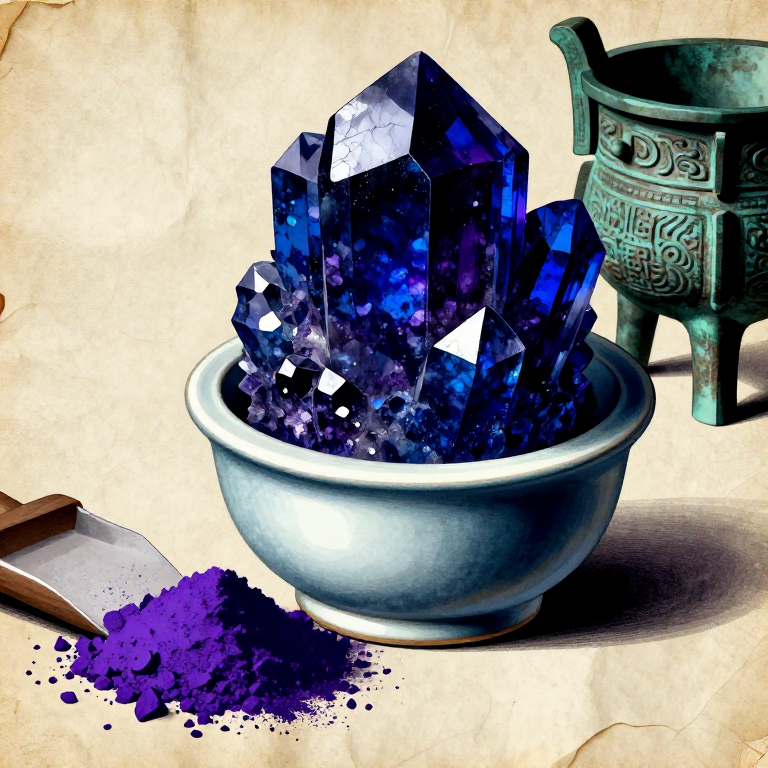

Making Han Purple — Ancient China's Synthetic Barium Copper Silicate Pigment
Han purple (BaCuSi₂O₆) is a synthetic barium copper silicate pigment produced in China from approximately 800 BC through the Han dynasty (206 BC–220 AD). Along with the closely related Han blue (BaCuSi₄O₁₀), it represents one of the earliest and most sophisticated examples of synthetic pigment chemistry — developed independently from Egyptian blue and using a fundamentally different flux chemistry based on lead rather than sodium.
The pigment was used to paint terracotta warriors, ceremonial bronzes, lacquerware, and tomb murals. Modern analysis of the Terracotta Army at Xi'an shows extensive use of both Han purple and Han blue. The chemistry requires barium carbonate (from the mineral witherite), a copper source (malachite), quartz sand, and lead oxide as a flux. These are ground together and fired at 900–1000°C for many hours. The lead oxide reduces the melting point and promotes the crystallisation of the barium copper silicate phase.
Han purple has a distinctive warm reddish-purple hue — deeper and more violet than Tyrian purple, with a crystalline sparkle when coarsely ground. It is reasonably lightfast but less stable than Egyptian blue — it slowly degrades in strongly acidic conditions.
SAFETY WARNING: This process involves HIGHLY TOXIC materials. Lead oxide (litharge) is extremely poisonous — it can be absorbed through skin and causes cumulative lead poisoning. Barium carbonate is toxic if ingested. The process requires kiln temperatures of 900–1000°C. Wear chemical-resistant gloves, goggles, and a P100 respirator. Work outdoors or in a fume hood. Never eat, drink, or smoke near lead compounds.
此蓝图制作

相关蓝图
这些蓝图共享知识——技术、材料或原理
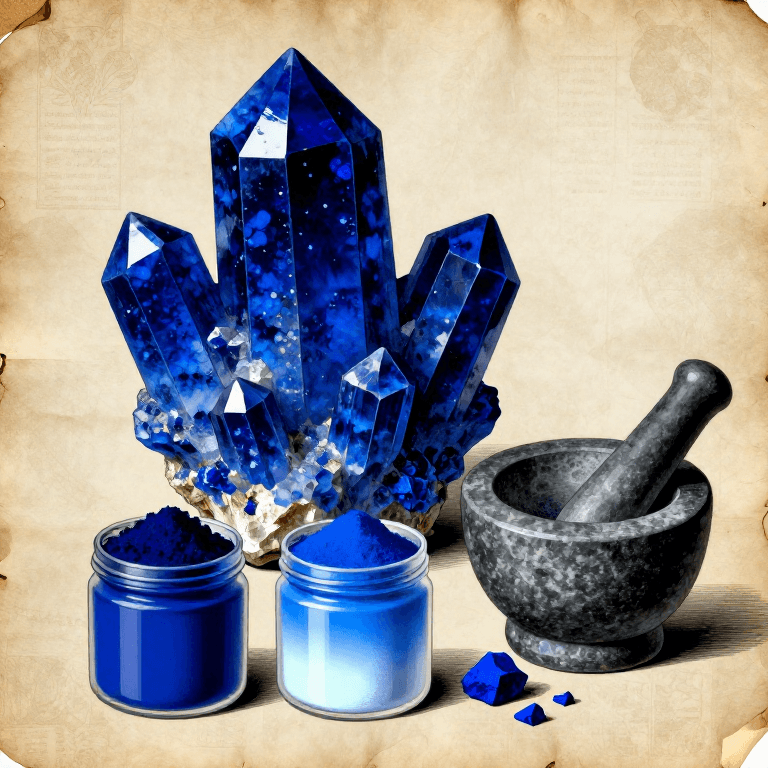
Making Azurite Blue Pigment — Grinding the Copper Mineral into the Blue of Medieval Painting
Charlie 创作
艺术
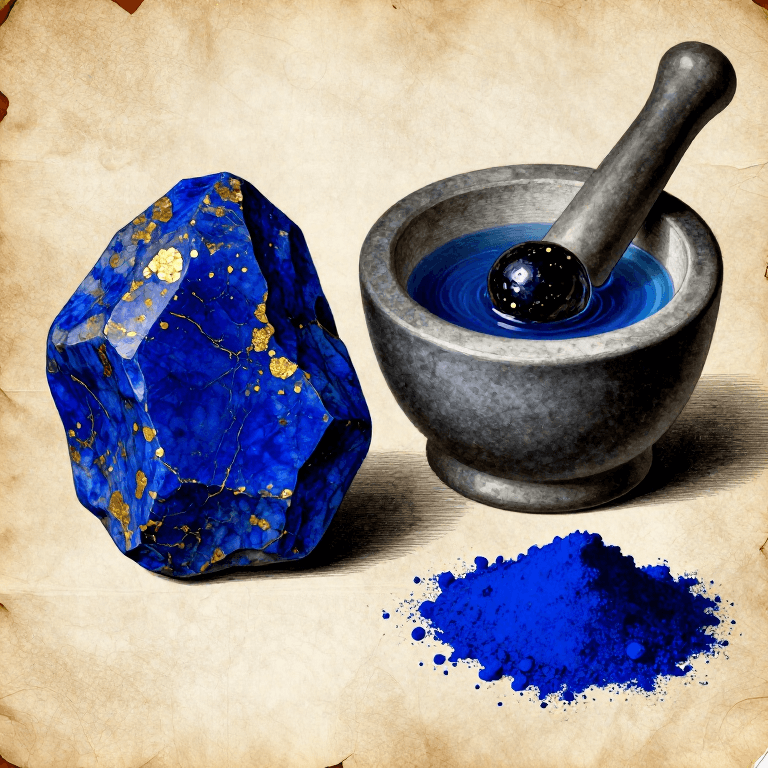
Making Ultramarine from Lapis Lazuli — Extracting the Most Precious Pigment in History
Charlie 创作
艺术
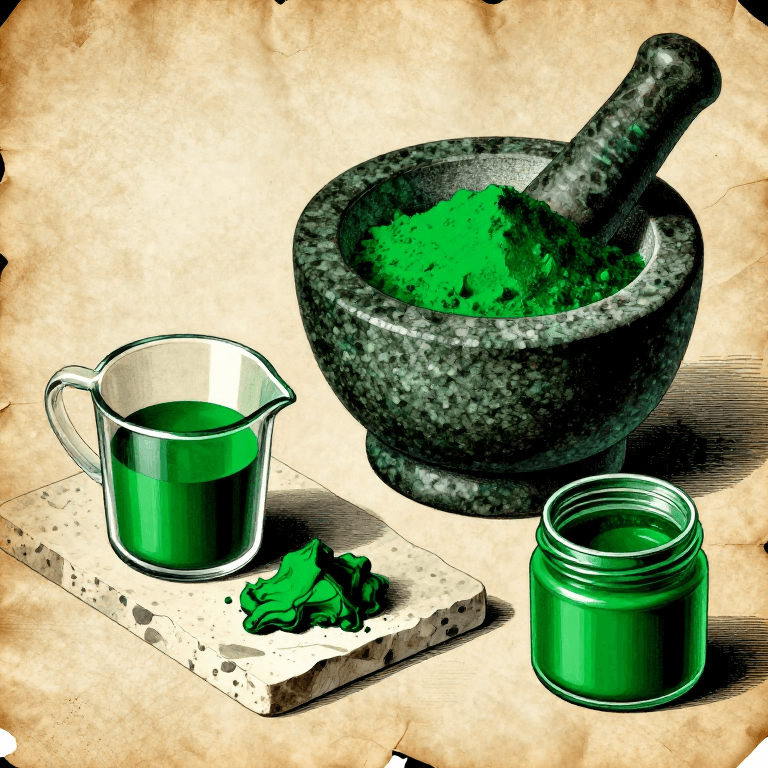
Making Malachite Green Pigment — Grinding the Copper Mineral into Painter's Green
Charlie 创作
艺术
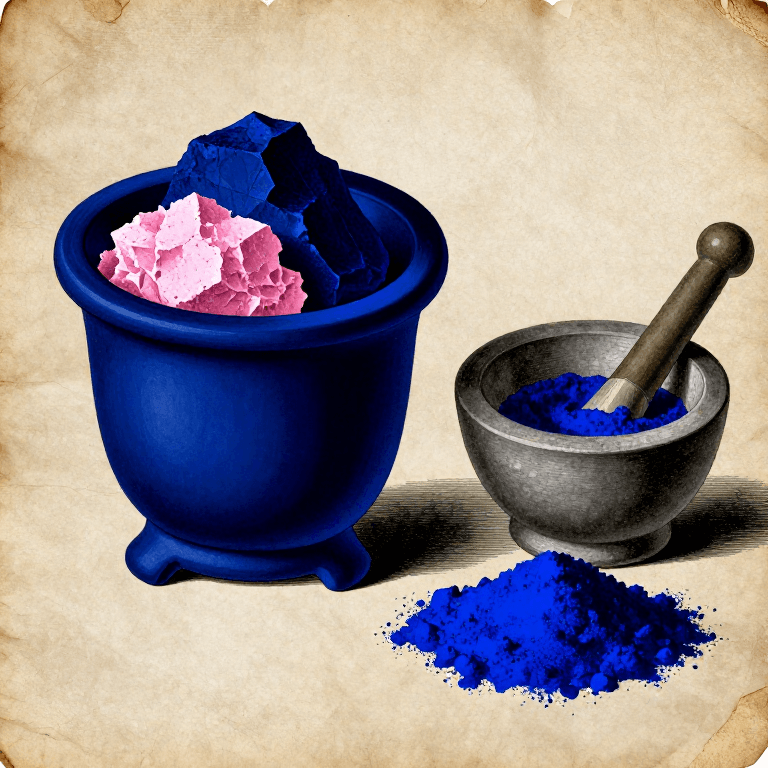
Making Cobalt Blue (Thénard's Blue) — The First Modern Synthetic Blue Pigment
Charlie 创作
艺术
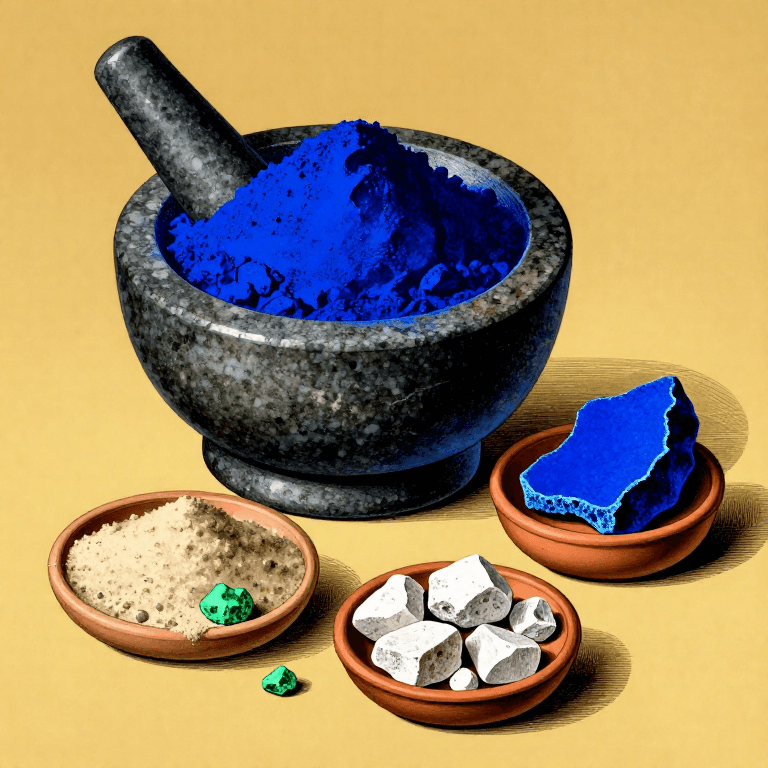
Egyptian Blue Pigment — Grinding Egyptian Blue from Copper Silicate
Charlie 创作
化学
CC0 公共领域
此蓝图以 CC0 协议发布。你可以自由复制、修改、分发和使用此作品,无需征得许可。
通过购买蓝图中的产品支持创客,他们将获得 创客佣金 (由供应商设定),或创建此蓝图的新版本并将其作为连接包含在你自己的蓝图中以分享收入。