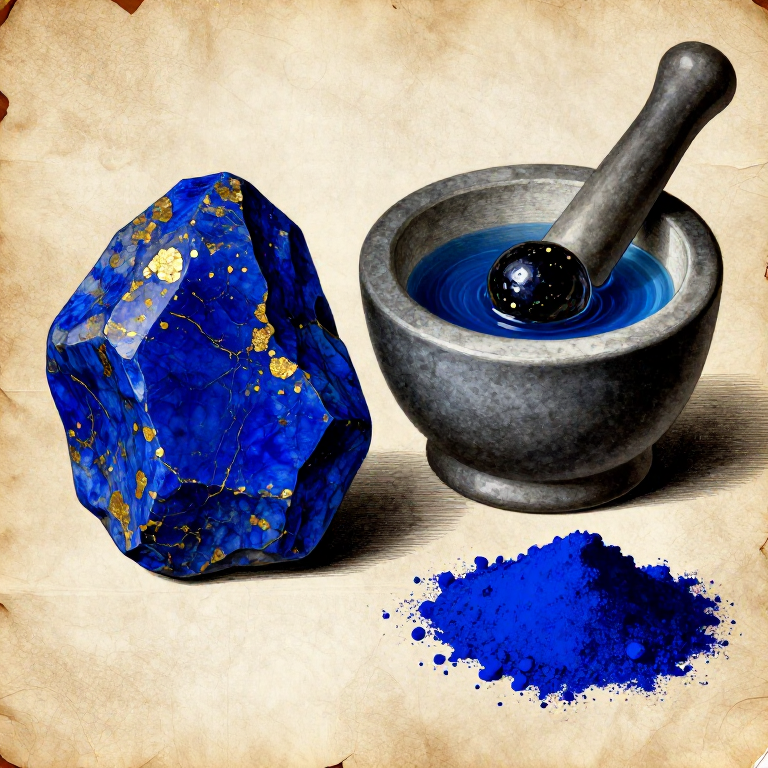

Making Ultramarine from Lapis Lazuli — Extracting the Most Precious Pigment in History
Natural ultramarine — the true blue pigment extracted from lapis lazuli stone — was the most expensive and sought-after pigment in the history of art. From the 6th century through the 19th century, ultramarine was literally worth more than gold by weight. The name comes from the Latin 'ultramarinus' (beyond the sea), because the stone was imported to Europe from the mines of Badakhshan in present-day Afghanistan — the only significant source in the ancient world. The finest grade of ultramarine was reserved for the most sacred subjects in medieval and Renaissance painting: the Virgin Mary's blue robe was almost always painted with ultramarine.
The challenge of making ultramarine is that lapis lazuli is not a single mineral — it is a rock containing lazurite (the blue mineral, a sodalite-family tectosilicate), calcite (white), pyrite (gold metallic specks), and various grey silicate impurities. Simply grinding the rock produces a dull, greyish-blue because the white and grey minerals dilute the blue. The breakthrough, developed by medieval craftsmen (first described by Cennino Cennini in his Libro dell'Arte, c. 1390), was the 'pasta' method: the ground stone is mixed into a kneadable paste of melted pine resin, beeswax, and linseed oil, then kneaded under warm alkaline water. The blue lazurite particles wash out of the paste while the impurities remain trapped in the sticky matrix.
The first kneading produces the finest, most vivid ultramarine ('ultramarino fino'). Subsequent kneadings yield progressively paler grades ('secondi', 'ceneri'). Even the palest grade was valuable. This process is laborious, wasteful (much blue is lost), and requires expensive raw material — which is why ultramarine was so costly and why its synthetic replacement (invented in 1826 by Jean-Baptiste Guimet) was one of the most celebrated achievements of 19th-century chemistry.
说明
Grind the lapis lazuli to a fine powder
Grind the lapis lazuli to a fine powder
Start with 50-100 g of lapis lazuli stone. Choose pieces with the most vivid blue and least white calcite. Crush into small fragments with a hammer, then grind to a fine powder in a stone mortar and pestle — the finer the grind, the better the extraction. The powder will be a dull, greyish-blue at this stage because of the calcite and other impurities mixed with the lazurite. This grinding takes 30-60 minutes of hard work. The powder should pass through a fine mesh sieve.
此步骤所需材料:
 青金石100 克
所需工具:
 石制研钵与研杵
 细目筛
细目筛Prepare the resin-wax paste
Prepare the resin-wax paste
Melt together 60 g of pine resin, 30 g of beeswax, and 30 g of linseed oil in a pot over low heat. Stir until fully combined into a smooth, sticky mass. This is the 'pasta' — the sticky matrix that will trap the impurities while releasing the blue lazurite. The proportions can vary but the resin must dominate — it provides the stickiness that holds the calcite and grey minerals. Let the mixture cool until it is warm but still soft enough to knead — roughly 40-50°C.
此步骤所需材料:
 松脂60 克
 蜂蜡颗粒30 克
 亚麻籽油30 毫升
所需工具:
 高汤锅
高汤锅 数字厨房秤
数字厨房秤Mix the lapis powder into the paste
Mix the lapis powder into the paste
While the paste is still warm and pliable, work the ground lapis lazuli powder into it. Knead thoroughly for 10-15 minutes until the blue powder is uniformly distributed throughout the sticky mass. The paste will turn a dull blue-grey. Shape it into a ball. Let the paste rest for 3 days at room temperature — this 'resting' period allows the resin to fully penetrate the mineral particles and bond with the calcite and impurities, making the separation more effective.
Knead under warm alkaline water
Knead under warm alkaline water
Prepare a solution of warm water (40°C) with 10 g of sodium carbonate (soda ash) per litre — a mild alkaline solution that helps release the blue particles. Place the rested paste ball in a large bowl and pour over the warm alkaline water. Begin kneading the paste under the water — squeeze, fold, press. The water will turn vivid blue as lazurite particles wash out of the paste while the white calcite and grey minerals remain trapped in the sticky resin matrix. Continue kneading for 10-15 minutes until the water is deeply coloured.
此步骤所需材料:
 碳酸钠(纯碱)10 克
Collect the first extraction — the finest grade
Collect the first extraction — the finest grade
Pour the blue water into a clean glass container, being careful to leave the paste behind. This first extraction contains the finest, most vivid ultramarine — 'ultramarino fino'. Let the blue water stand undisturbed for several hours or overnight. The blue pigment will settle to the bottom. Pour off the clear water above. The sediment is pure ultramarine pigment. Repeat the kneading with fresh warm alkaline water 2-3 more times — each extraction yields a paler grade. The second wash is 'secondi' (good quality), the third is 'ceneri' (ash-blue, still usable).
所需工具:
 玻璃罐
玻璃罐Dry and store the ultramarine pigment
Dry and store the ultramarine pigment
Pour off the last of the clear water from each settled grade. Spread the wet pigment on a clean glass surface to dry completely. The finest grade will be a vivid, deep blue — the true ultramarine that medieval painters prized above all other pigments. The second grade is a lighter, still beautiful blue. The third grade is pale but useful for skies and light areas. Store each grade separately in sealed glass jars. Natural ultramarine is lightfast, chemically stable, and compatible with all binders. From 100 g of good-quality lapis lazuli, expect 10-25 g of combined ultramarine pigment.
已连接蓝图材料
Egyptian Blue Pigment — Grinding Egyptian Blue from Copper Silicate
Charlie 创作
化学
Making Natural Earth Pigments from Soil and Rocks — Collecting and Processing
Mary 创作
艺术
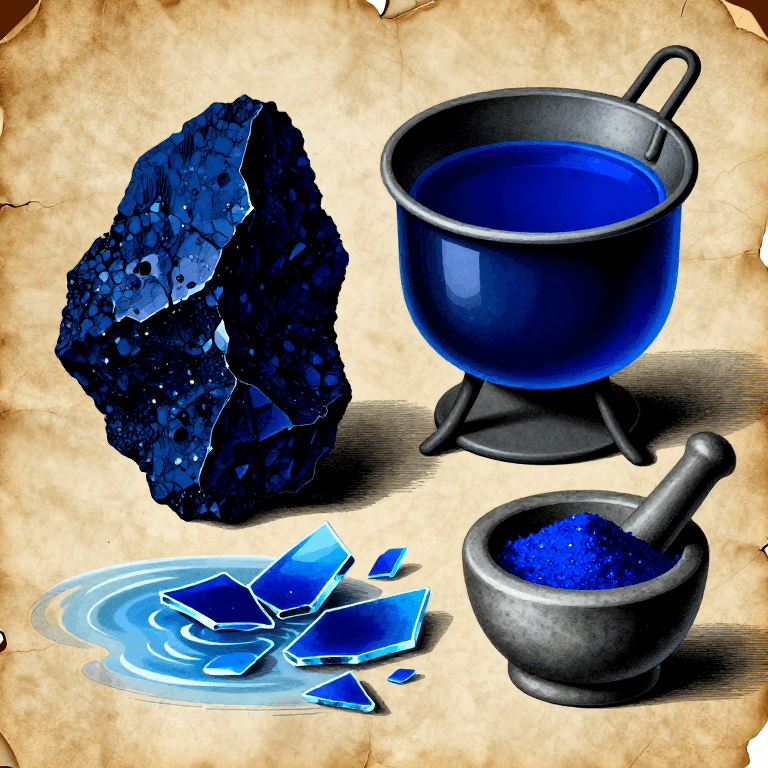
Making Smalt — Grinding Cobalt Blue Glass into the Renaissance Painter's Blue Pigment
Charlie 创作
艺术
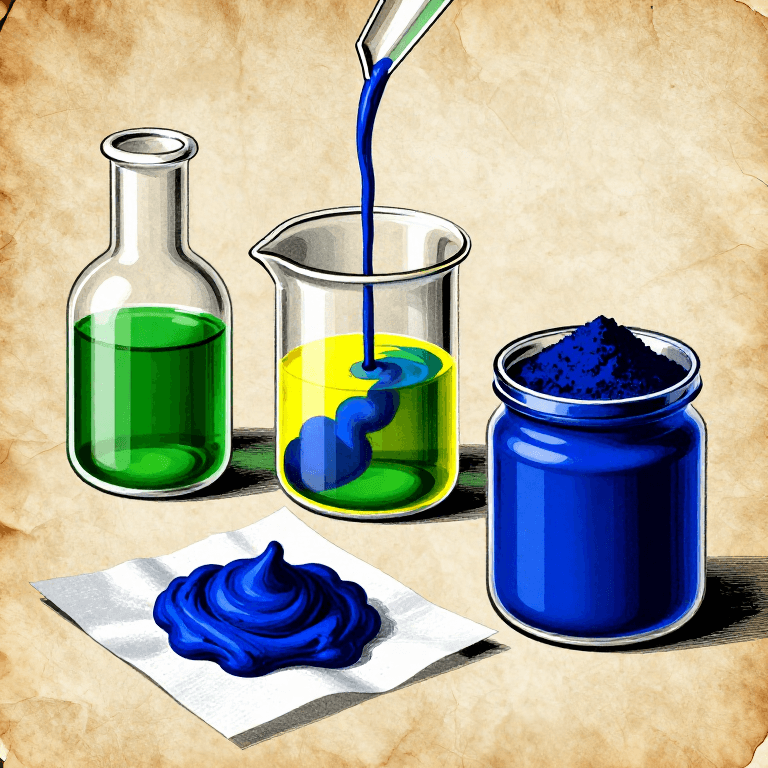
Making Prussian Blue — The First Modern Synthetic Pigment (Berlin, 1704)
Charlie 创作
艺术
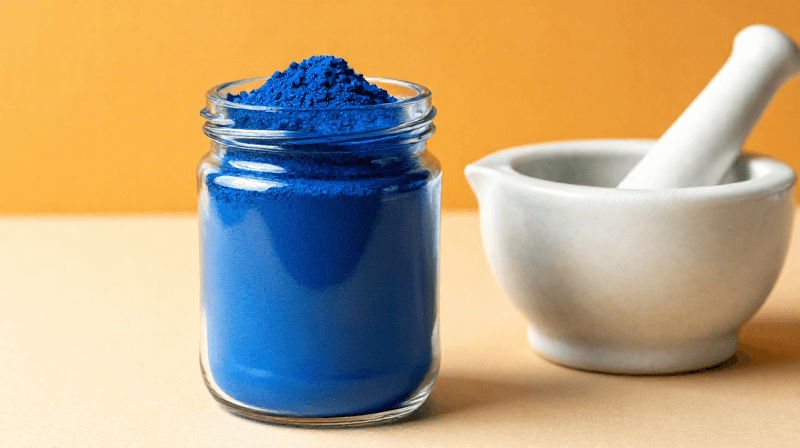
Making Phthalocyanine Blue — The Copper Complex That Became the World's Most Used Blue Pigment
Charlie 创作
艺术
此蓝图制作

相关蓝图
这些蓝图共享知识——技术、材料或原理
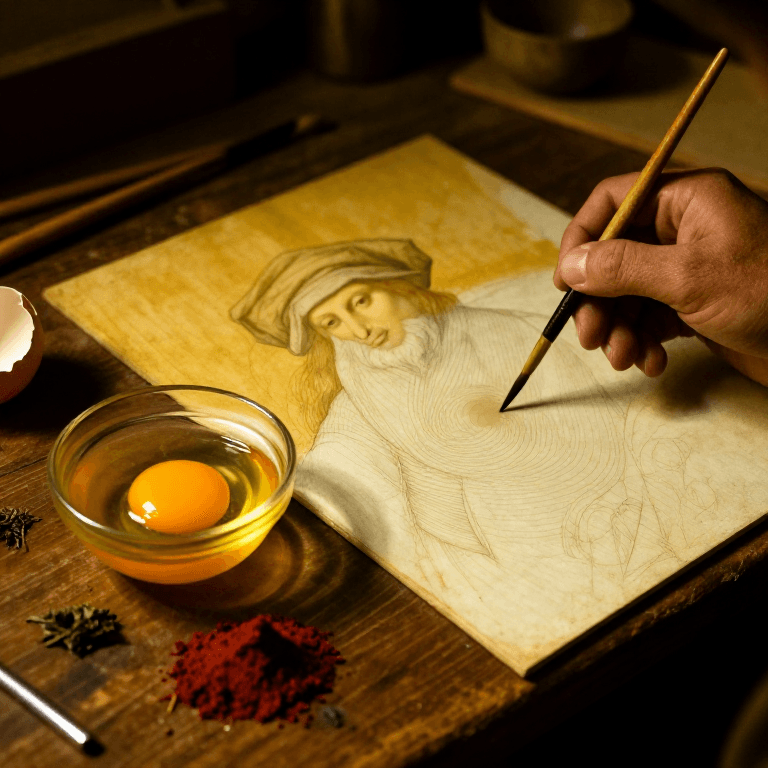
Making Egg Tempera Paint — The Medieval Panel Painting Medium
Charlie 创作
艺术
Making Malachite Green Pigment — Grinding the Copper Mineral into Painter's Green
Charlie 创作
艺术
Making Bone Black Pigment — Calcining Animal Bones into the Warm Black of Old Master Painters
Charlie 创作
艺术
Making Vine Black Pigment — Charring Grape Vines into the Cool Blue-Black of Classical Painters
Charlie 创作
艺术
Making Green Earth Pigment (Terra Verte) — The Soft Green of Celadonite and Glauconite
Charlie 创作
艺术
Making Cinnabar Red Pigment — Grinding Mercury Sulfide into the Most Vivid Red of the Ancient World
Charlie 创作
艺术
Making Traditional Gesso — The White Ground That Prepared Every Panel Painting in History
Charlie 创作
艺术
Making Dammar Varnish — The Clear Picture Varnish for Oil Paintings
Charlie 创作
艺术
CC0 公共领域
此蓝图以 CC0 协议发布。你可以自由复制、修改、分发和使用此作品,无需征得许可。
通过购买蓝图中的产品支持创客,他们将获得 创客佣金 (由供应商设定),或创建此蓝图的新版本并将其作为连接包含在你自己的蓝图中以分享收入。