艺术
美容与健康
工艺
文化与历史
娱乐
环境
食品与饮料
逆向工程
科学
体育
技术
可穿戴设备
危险


Ruben Mercury Cell
The Weston cell holds a voltage beautifully and will not power anything - draw a milliamp and you have moved the number you came to read. Every dry cell of the same era will power things and holds no number at all: a Leclanche starts at 1.5 V and is somewhere near 1.0 V by the end, sliding the whole way.
Samuel Ruben's cell is the first that does both. It sits at **1.35 V** and stays within one per cent of it for years at light load, holding that plateau until roughly the last five per cent of its life and only then falling away. It will also give you real current for real work.
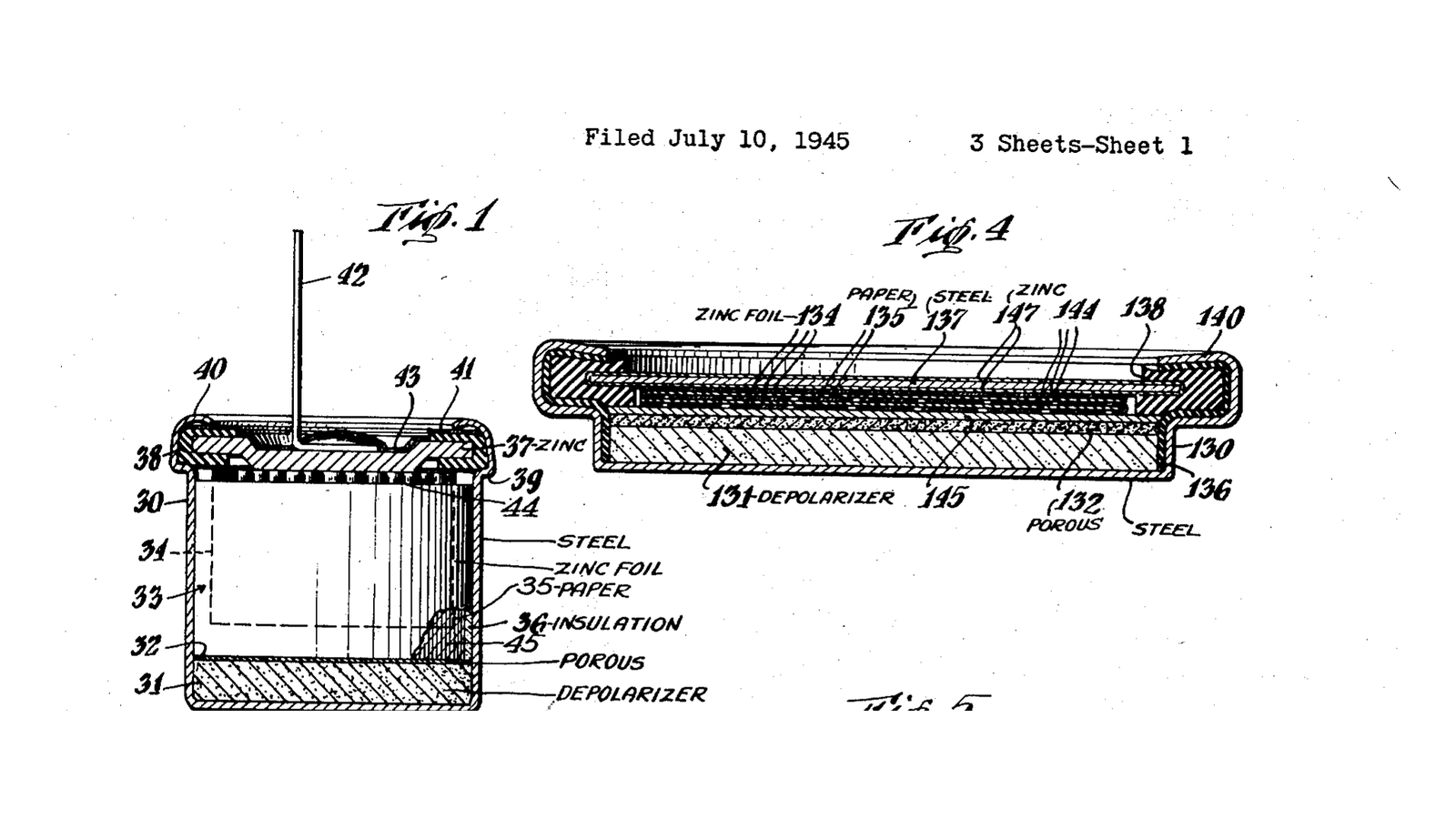
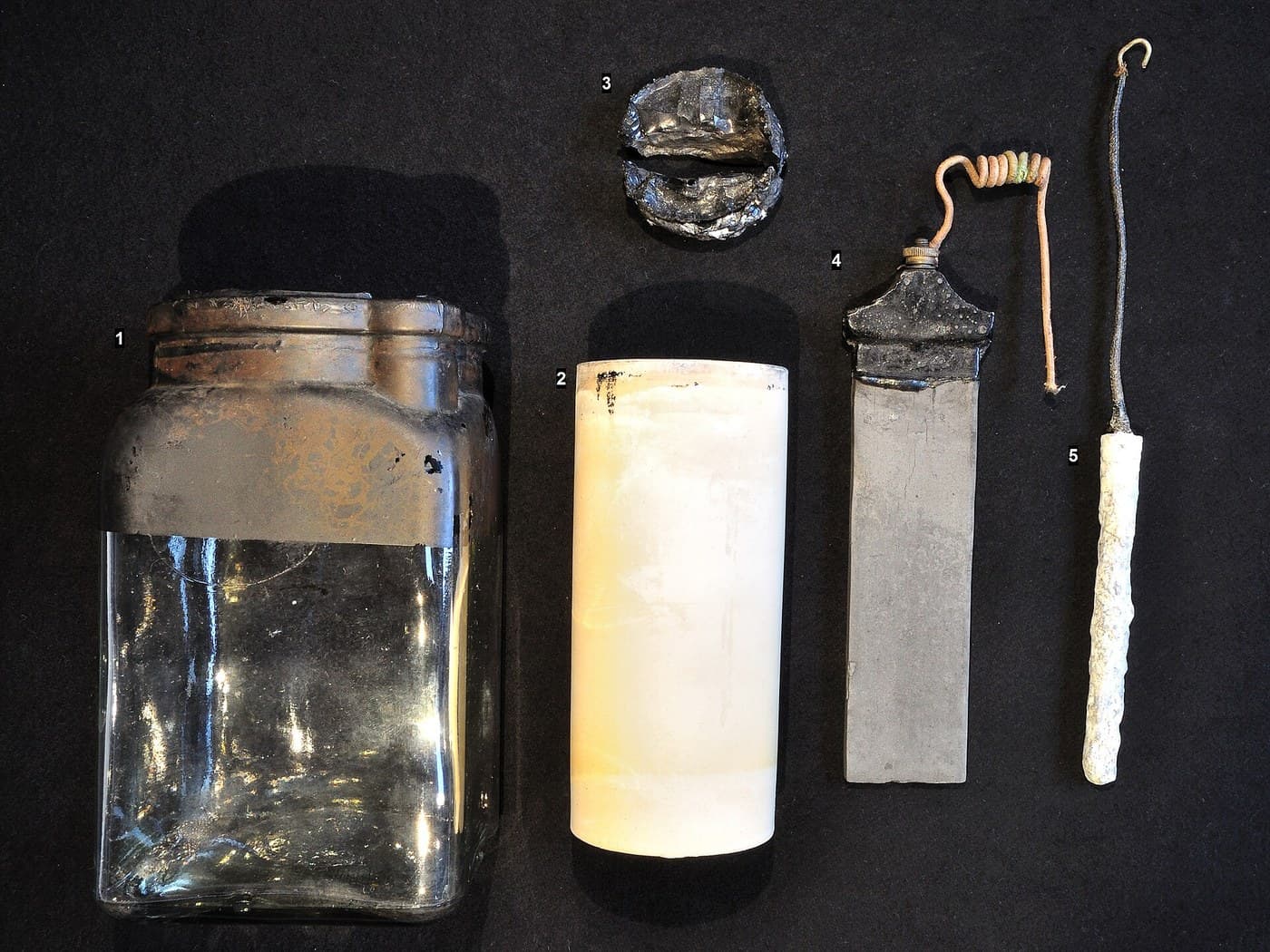
**US 2,422,045** "Alkaline dry cell", Samuel Ruben of New Rochelle, New York, filed 10. July 1945 and granted 10. June 1947. The cell is zinc against mercuric oxide in a caustic alkali: HgO + H2O + 2 e- gives Hg + 2 OH- at the cathode, Zn + 2 OH- gives ZnO + H2O + 2 e- at the anode, and the whole of it is simply Zn + HgO -> ZnO + Hg. Count the water and the hydroxide on both sides - neither is consumed, which is the same trick Jungner used and the reason this cell is as steady as it is.
The patent is specific where it matters: the cathode is "mercurio oxide mixed with ten per cent graphite", because mercuric oxide on its own barely conducts, and the anode is **amalgamated** zinc, because bare zinc corrodes in alkali and gasses hydrogen.
Ruben developed it in 1942 for the American military - metal detectors and walkie-talkies that had to work after months in a crate - and after the war it went into light meters, hearing aids, watches, calculators and cardiac pacemakers. Anything that needed a voltage it could trust.
It is now banned almost everywhere, and the last step says exactly where and why. Mercuric oxide is acutely toxic and the alkali is caustic; this one is gated for the first reason.
高级
3 hours
相关蓝图
这些蓝图共享知识——技术、材料或原理


CC0 公共领域
此蓝图以 CC0 协议发布。你可以自由复制、修改、分发和使用此作品,无需征得许可。
通过购买蓝图中的产品支持创客,他们将获得 创客佣金 (由供应商设定),或创建此蓝图的新版本并将其作为连接包含在你自己的蓝图中以分享收入。