艺术
美容与健康
工艺
文化与历史
娱乐
环境
食品与饮料
逆向工程
科学
体育
技术
可穿戴设备
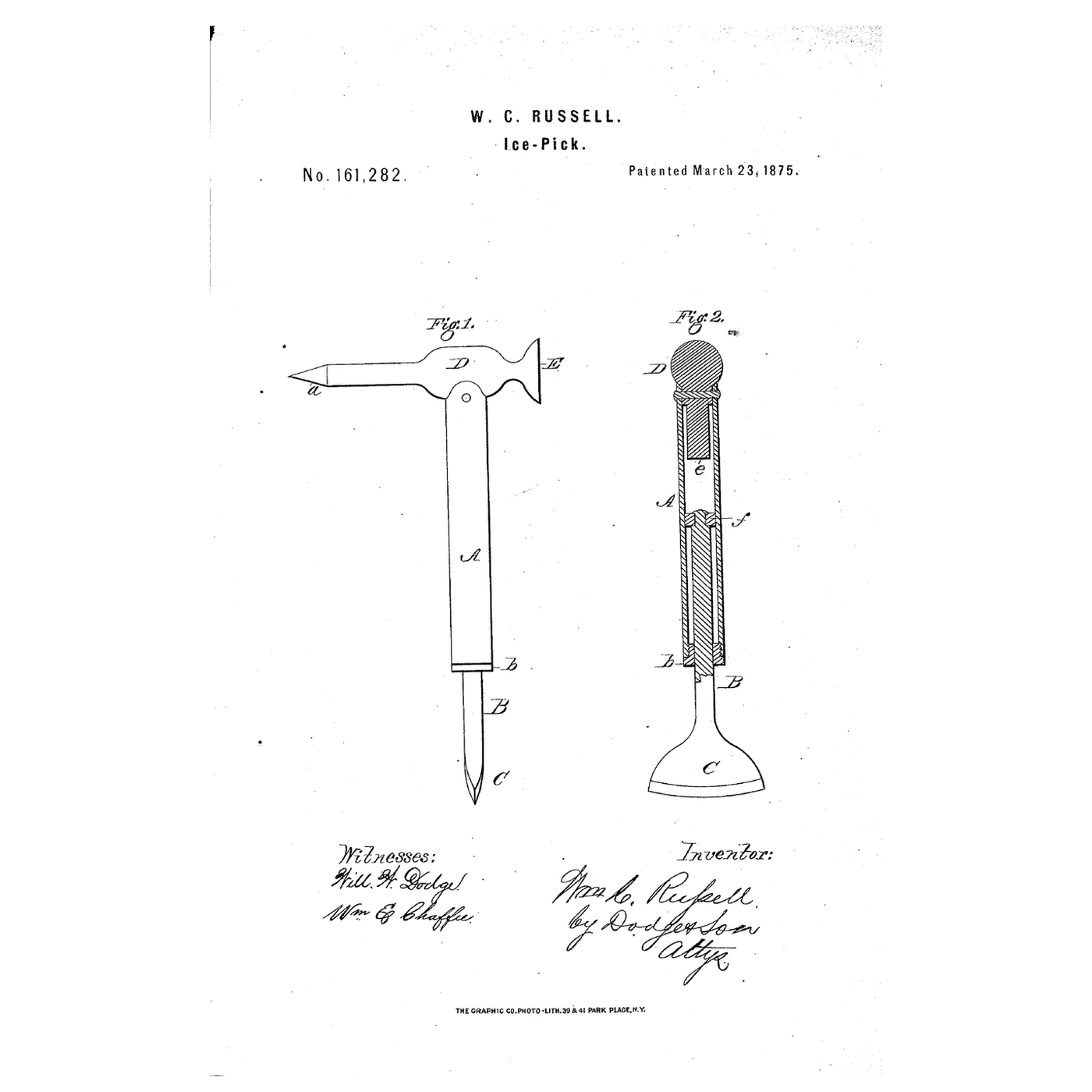


The Ice Pick: A Chisel, a Point and a Sliding Weighted Handle
Ice came to the house in blocks, cut from frozen lakes and delivered by the iceman. It had to be split into pieces for the icebox and the glass, and a household needed several tools for that.
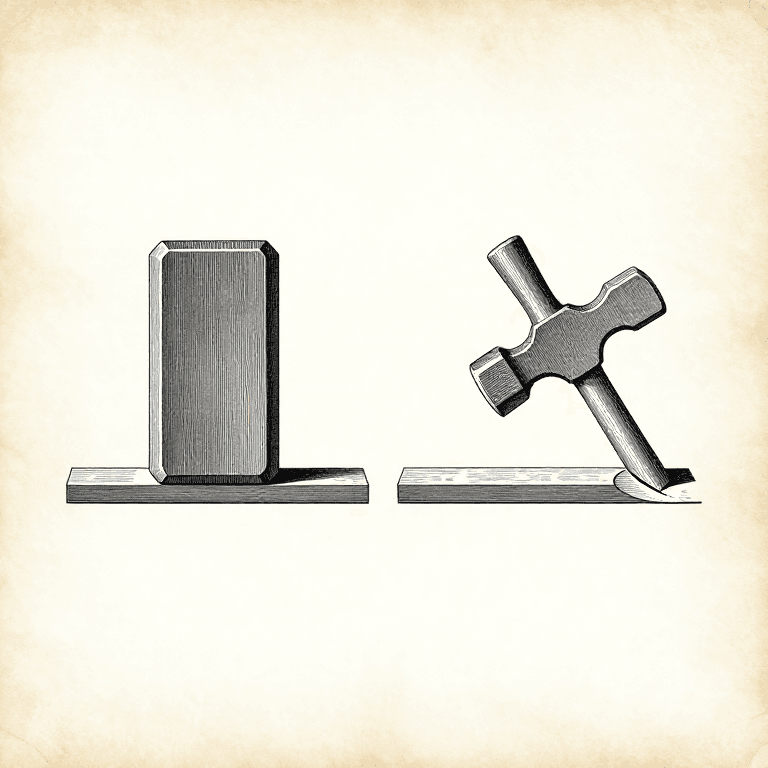
William C. Russell of Philadelphia received US 161,282, dated 23 March 1875 (filed 9 September 1874), for a tool that combines "an ice-chisel, with a sliding handle and weight for operating it, a hammer, and a pick or point". The blade is held on the ice "and struck with the weighted handle, the blade C being moved along without raising it from the ice"; the point breaks ice into lumps and the flat face pulverizes it.
This rung works out the energy of a blow and how little ice needs to crack, then splits a frozen block.
初学者
About 1 hour plus freezing
说明
1
1
Blow energy and brittle ice
Blow energy and brittle ice
正在加载 Jupyter 笔记本…
2
2
Where the block came from
Where the block came from
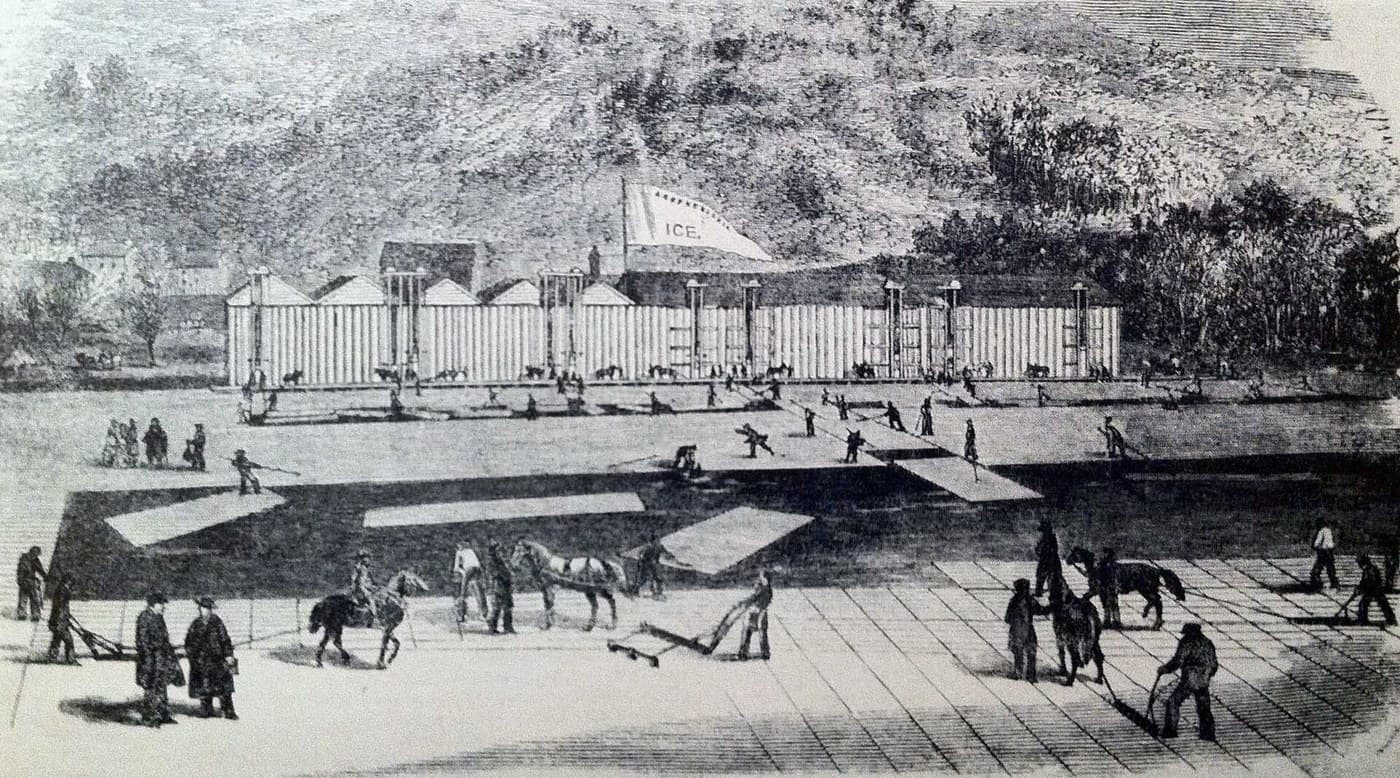
The blocks this tool split were sawn from frozen lakes. The embedded blueprint harvests ice.
3
3
Read US 161,282
Read US 161,282
"My invention relates to ice-picks; and it consists in constructing the tool in such a manner as to combine in one tool an ice-chisel, with a sliding handle and weight for operating it, a hammer, and a pick or point, all as hereinafter more fully set forth."
"To cut ice into regular-shaped pieces the blade C is held upon it and struck with the weighted handle, the blade C being moved along without raising it from the ice. The point a serves to break the ice into irregular lumps, while the flat face E serves to pulverize it when required, the implement thus serving all the various purposes for which, ordinarily, several tools are required."
"I am aware that a sliding weighted handle has been used on an ice-pick, and also that a flat cutting-blade has been used in various ways, and therefore I do not claim these features separately".
4
4
Split a frozen block
Split a frozen block
Freeze water in two loaf pans overnight and turn the blocks out onto a folded towel on a firm surface. Wear safety glasses and gloves: chips fly.
Score a line across the first block with the chisel end, moving it along without lifting as Russell describes, then tap along the line until it splits. Count the blows. Split the second block with the point alone, striking at random, and count those. Compare the pieces: regular along the scored line, irregular lumps from the point. Keep the free hand well away from the point.
此步骤所需材料:
 水2 升
水2 升所需工具:
 碎冰锥
碎冰锥 吐司模具
吐司模具 透明安全眼镜
 皮革工作手套
5
5
Ice that shatters, skids or will not split
Ice that shatters, skids or will not split
Ice pick troubleshooting.
Flow
Loading...
6
6
History and honest limits
History and honest limits
**William C. Russell** of Philadelphia filed US 161,282 on 9 September 1874; it is dated 23 March 1875. He did not claim the sliding weight or the flat blade separately, only the combination.
**Honest limits.** The patent gives no weights or sizes. Handle mass, speeds, edge size and blow force are examples; the ice fracture values are order-of-magnitude figures, and the textbook minimum is far below what splitting really takes.
此蓝图制作
相关蓝图
这些蓝图共享知识——技术、材料或原理
CC0 公共领域
此蓝图以 CC0 协议发布。你可以自由复制、修改、分发和使用此作品,无需征得许可。
通过购买蓝图中的产品支持创客,他们将获得 创客佣金 (由供应商设定),或创建此蓝图的新版本并将其作为连接包含在你自己的蓝图中以分享收入。