艺术
美容与健康
工艺
文化与历史
娱乐
环境
食品与饮料
逆向工程
科学
体育
技术
可穿戴设备
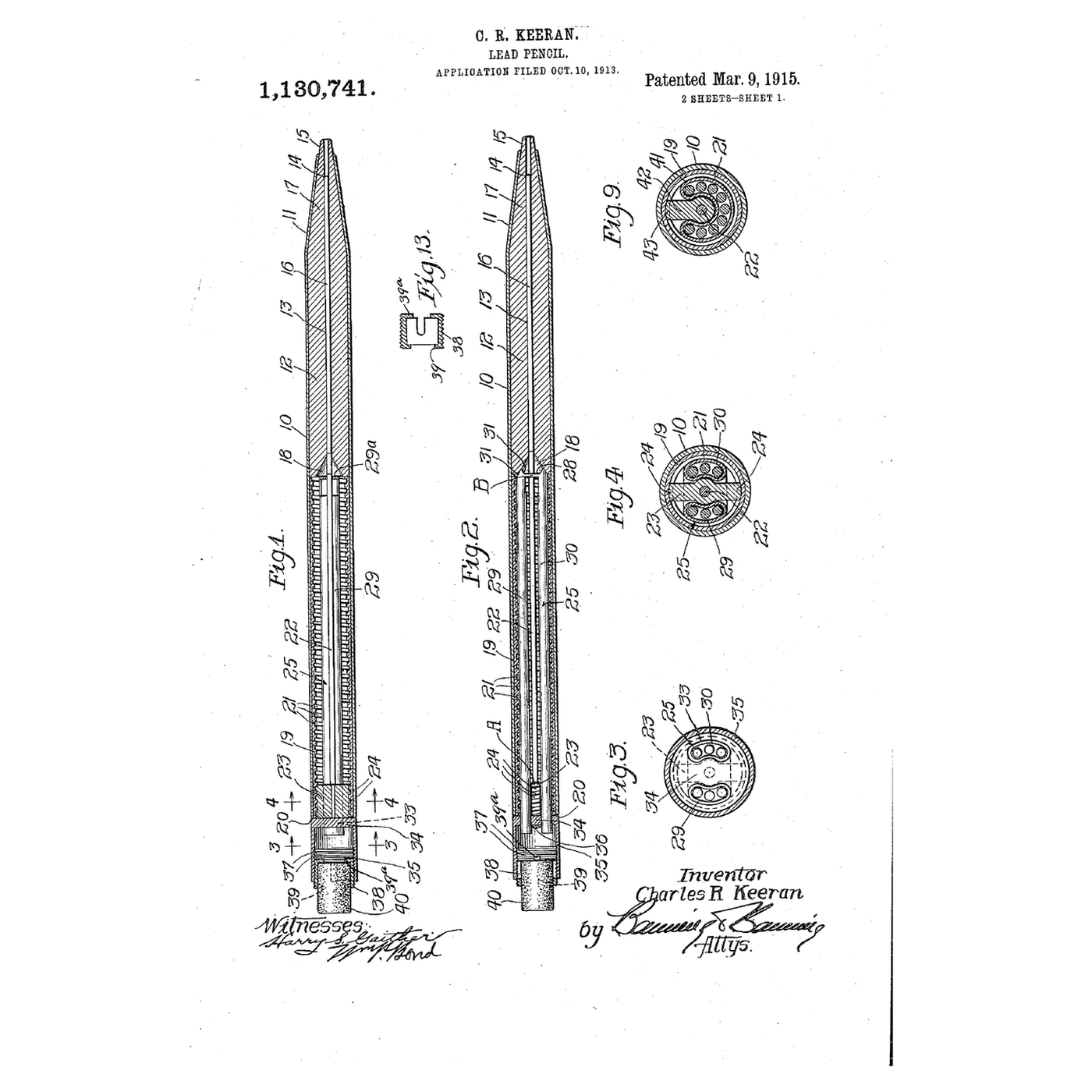


The Mechanical Pencil: Feeding a Thin Lead by a Screw
A wooden pencil gets shorter every time it is sharpened. A pencil with a permanent body needs only new leads, fed out as they wear, and a thin lead never needs sharpening.
Charles R. Keeran of Bloomington, Illinois, filed US 1,130,741 on 10 October 1913; it was granted on 9 March 1915. A thin metal shell holds a fibrous core with a bore that grips the lead at its tip. A stiff wire follower with a threaded head runs in a threaded sleeve; turning a magazine that carries spare leads turns the head and pushes the lead out, and the follower's position shows how much lead is left.
This rung works out how far a thin lead can stick out before it snaps, and takes a mechanical pencil apart to find each part.
初学者
About 2 hours
说明
1
1
Lead projection and feed per turn
Lead projection and feed per turn
正在加载 Jupyter 笔记本…
2
2
The pencil it replaces
The pencil it replaces
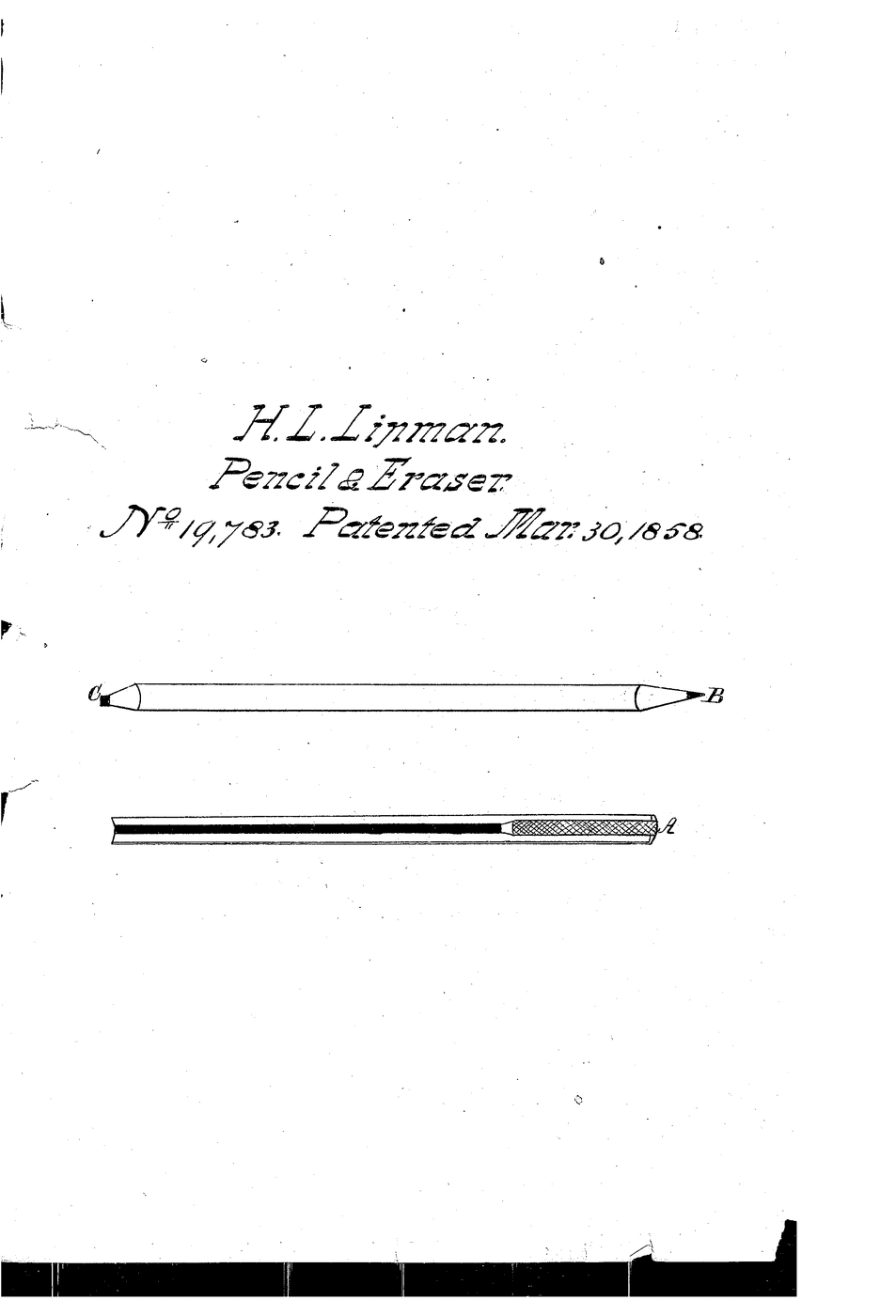
The wooden pencil with an eraser in its end is what the mechanical pencil set out to improve. The embedded blueprint covers it.
3
3
Read US 1,130,741
Read US 1,130,741
Keeran's pencil is of "that form of pencil employing a permanent body or casing into which individual leads are inserted from time to time as may be desired". Among his aims: "to provide a magazine for extra leads which will be contained within the body of the pencil", to prevent the lead breaking when a new one is put in, and "to provide an indicator for determining the length of lead left within the pencil".
The shell 10 is drawn to a taper at the front and may be thin gold or silver. Inside, a core or filler 12 "of some suitable fibrous material" has a bore 13 contracted at its front end 14, giving the lead a sliding fit along most of the bore and a clutching grip at the tip. A threaded sleeve 19 behind the filler receives the follower 22, "a stiff wire" with an enlarged head 23 of elongated cross-section, threaded on its outside to run in the sleeve.
The magazine is a tube rolled flat with a slot that the follower passes through; turning the magazine turns the head and feeds the lead. A funnel-shaped depression in the magazine centres a newly dropped lead on the follower so it is not bent sideways and broken.
4
4
Take one apart and break some leads
Take one apart and break some leads
Take a mechanical pencil apart over a sheet of paper. Identify the parts that do Keeran's jobs: the grip on the lead at the tip, the feed, the reservoir for spare leads, and anything that shows how much lead is left. Draw each part.
Then, on graph paper, write with 1 mm, 2 mm and 3 mm of lead showing, tilting the pencil to about 40°, and note the length at which the lead breaks. Compare with the notebook and estimate the lead's bending strength from your results.
此步骤所需材料:
 自动铅笔1 个
 坐标纸1 个
所需工具:
 6 英寸数显卡尺
 10 倍手持放大镜
 量角器
量角器 直尺
直尺5
5
A mechanical pencil that misbehaves
A mechanical pencil that misbehaves
Mechanical pencil troubleshooting.
Flow
Loading...
6
6
History and honest limits
History and honest limits
**Charles R. Keeran** of Bloomington, Illinois, filed US 1,130,741 on 10 October 1913; it was granted on 9 March 1915. Screw-feed pencils with a permanent body were older; his patent covers the follower, magazine, filler and centring arrangement described above.
**Honest limits.** Lead strength, writing force and thread pitch in the notebook are examples, not Keeran's figures.
相关蓝图
这些蓝图共享知识——技术、材料或原理


CC0 公共领域
此蓝图以 CC0 协议发布。你可以自由复制、修改、分发和使用此作品,无需征得许可。
通过购买蓝图中的产品支持创客,他们将获得 创客佣金 (由供应商设定),或创建此蓝图的新版本并将其作为连接包含在你自己的蓝图中以分享收入。