
艺术
美容与健康
工艺
文化与历史
娱乐
环境
食品与饮料
绿色未来
逆向工程
科学
体育
技术
可穿戴设备
Drawing Wire Through a Drawplate — Reducing Iron Rod to Fine Wire
Forge

创建者

Forge

26. 五月 2026NO
2
0
0
0
0

Drawing Wire Through a Drawplate — Reducing Iron Rod to Fine Wire

Wire drawing is the process of pulling a metal rod through a series of progressively smaller holes in a hardened steel plate (a drawplate) to reduce its diameter. Known since at least the Viking age and refined in medieval Europe, this technique produces wire of consistent gauge for chainmail, jewellery, pins, needles, musical instrument strings, and countless other uses. The metal is pointed, fed through a hole, gripped with draw tongs, and pulled through with steady force. Between passes the wire is annealed (softened by heating) to prevent it from becoming brittle. This blueprint covers drawing iron wire from a 6 mm rod down to approximately 2 mm — the same method scales to any ductile metal.

中级
3-4 hours

说明

1

Select the starting stock

Begin with a straight rod of wrought iron or mild steel approximately 6 mm in diameter and 30-50 cm long. The metal must be ductile — wrought iron or low-carbon steel works well. High-carbon steel is too hard to draw without cracking.

此步骤所需材料:

Mild Steel Rod (6mm)Mild Steel Rod (6mm)1
2

Prepare the drawplate

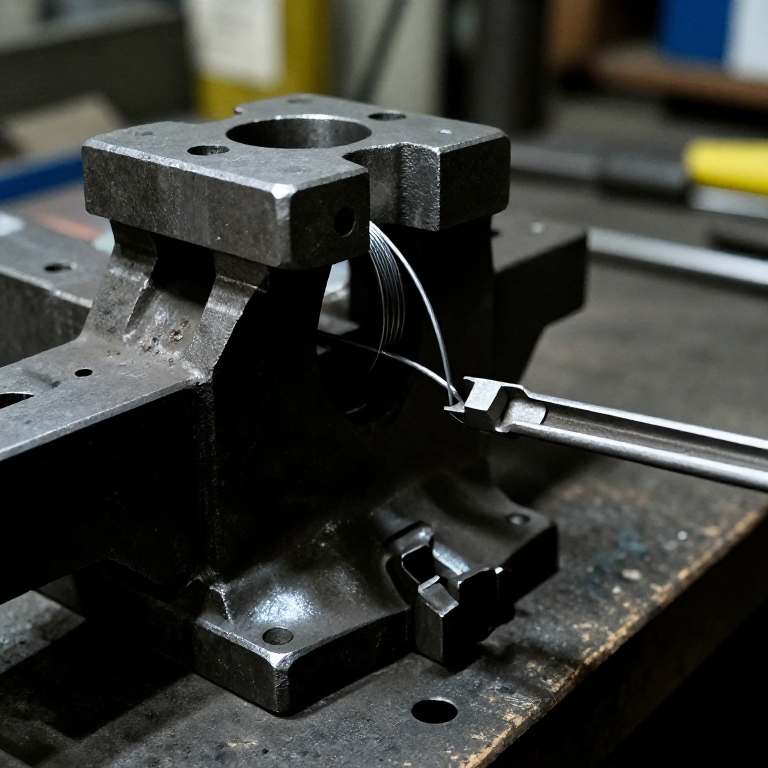
A drawplate is a thick plate of hardened tool steel drilled with a series of tapered holes in decreasing sizes. Mount the drawplate securely in a sturdy vice or bolt it to a heavy bench. The holes should be accessible from both sides — the rod enters from the back (wider end of the taper) and exits from the front.

所需工具:

Steel DrawplateSteel Drawplate
Heavy Bench ViceHeavy Bench Vice
3

Point the rod

Forge or file a tapered point on one end of the rod — about 3 cm long, tapering to a tip thin enough to poke through the first drawplate hole and protrude on the far side. The point needs only to be long enough for the draw tongs to grip.
4

Anneal the rod

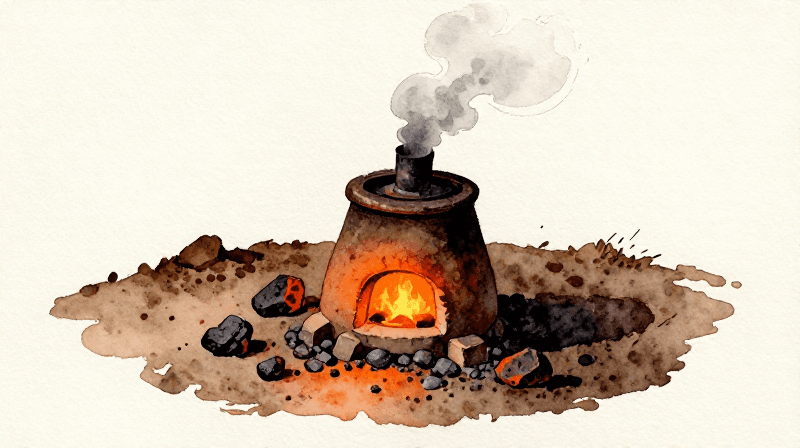
Heat the entire rod to a bright cherry red in the forge and allow it to cool slowly in the ash or in a bucket of vermiculite. This full anneal makes the iron as soft and ductile as possible before the first draw. Trying to draw unannealed or work-hardened metal risks snapping it.
5

Lubricate the rod

Apply a drawing lubricant to the rod and the drawplate hole. Traditional lubricants include beeswax, tallow, or a paste of tallow and graphite. Lubrication reduces friction, prevents scoring of the wire surface, and extends the life of the drawplate.

此步骤所需材料:

Beeswax BlockBeeswax Block1
6

Feed and grip the rod

Push the pointed end of the rod through the first hole in the drawplate — choose the hole closest in size to the rod, just slightly smaller. The point should protrude 3-4 cm on the front side. Grip the protruding point firmly with draw tongs (flat-jawed pliers with long handles).

所需工具:

Draw TongsDraw Tongs
7

Pull through the first hole

Brace yourself and pull the rod steadily through the hole with the draw tongs. Use a smooth, continuous motion — jerking causes uneven wire and can snap the metal. The rod compresses as it passes through the tapered hole, emerging slightly longer and thinner. Each hole typically reduces the diameter by about 0.5 mm.
8

Move to the next smaller hole

Re-lubricate the wire and feed it through the next smaller hole. Pull through as before. Never skip holes — jumping more than one size at a time overworks the metal and risks breaking it or cracking the drawplate.
9

Anneal between passes

After 3-4 reductions, the wire becomes noticeably stiffer and harder to pull — this is work hardening. Stop and anneal again: heat to cherry red and cool slowly. Without periodic annealing the wire will become brittle and snap during the next draw.
10

Continue drawing to final gauge

Repeat the cycle of lubricating, drawing through progressively smaller holes, and annealing every 3-4 passes. From a 6 mm rod to approximately 2 mm wire requires about 8-10 passes through the drawplate, with 2-3 annealing cycles.
11

Straighten the wire

The finished wire may have a slight curve from being pulled. To straighten it, grip one end in the vice and pull the other end firmly with pliers while twisting slightly. Alternatively, roll the wire under a flat board on a hard surface.
12

Final anneal or temper

For soft, bendable wire (jewellery, binding), do a final anneal. For spring wire or wire that needs to hold its shape (pins, hooks), leave it work-hardened from the last draw. Coil the finished wire for storage — drawn wire keeps indefinitely.

材料

2

所需工具

3

已连接蓝图材料

CC0 公共领域

此蓝图以 CC0 协议发布。你可以自由复制、修改、分发和使用此作品,无需征得许可。

通过购买蓝图中的产品支持创客,他们将获得 创客佣金 (由供应商设定),或创建此蓝图的新版本并将其作为连接包含在你自己的蓝图中以分享收入。

讨论

(0)

登录 加入讨论

加载评论中...