合作
艺术
美容与健康
工艺
文化与历史
娱乐
环境
食品与饮料
逆向工程
科学
体育
技术
可穿戴设备



The Rotary Tiller: Blades That Cut the Soil in Slices
A plough and harrow need several passes and a heavy tractor to pull them, and the wheels pack the soil they have just loosened. A rotary tiller drives its blades round from the engine: they chop down into the soil in slices, throw it back against a hood and leave it loose in one pass — and because the blades push backwards, they help drive the machine forwards instead of dragging on it.
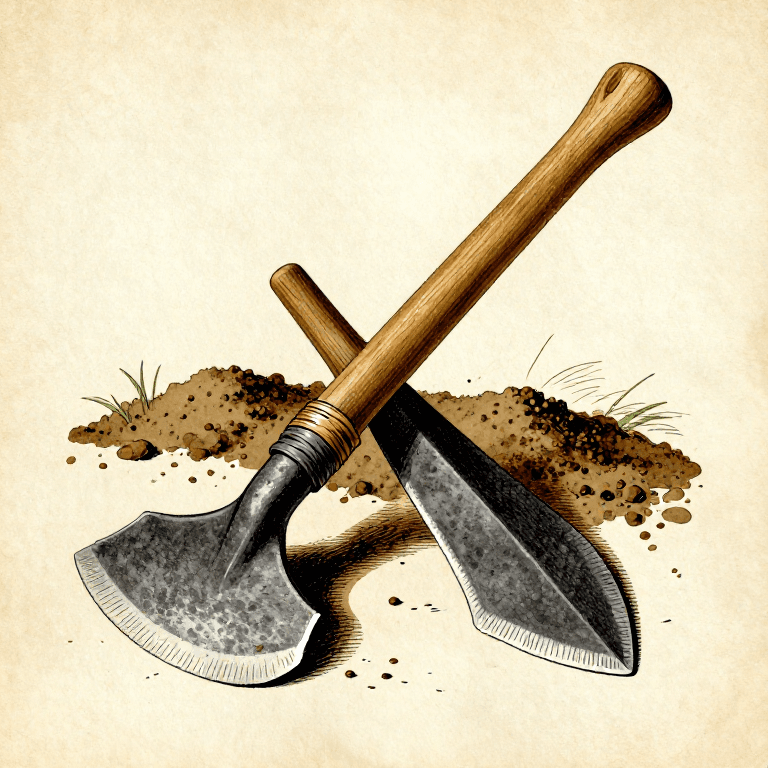
Arthur Clifford Howard began experimenting with rotary tillage on his father's farm at Gilgandra, New South Wales, in 1912, found that the ground could be tilled without packing it, and settled on L-shaped blades on widely spaced flanges on a small rotor. He patented a design with an internal combustion engine in 1920, and in 1922 formed Austral Auto Cultivators, later Howard Auto Cultivators.
This rung plots the blade paths, works out the bite length that sets the tilth, and builds a drill-driven rotor to check it in sand.
中级
About 4 hours
说明
1
1
Blade paths and bite length
Blade paths and bite length
正在加载 Jupyter 笔记本…
2
2
Build a bench rotor
Build a bench rotor
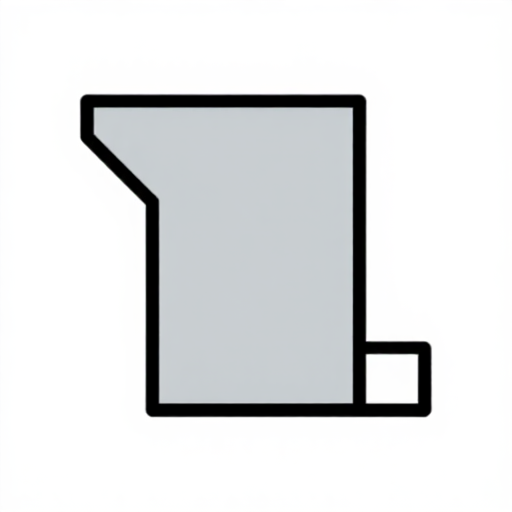
Cut six blades 120 mm long from 20 mm spring steel strip and bend each 40 mm from one end to a right angle — Howard's L-shape. Drill the long leg twice.
Bolt three blades to each of two plywood flanges 100 mm across, at 120 degrees apart, their bent tips all pointing the same way round. Fix the flanges 80 mm apart on a 10 mm threaded rod, the second flange turned 60 degrees from the first so the blades enter the soil alternately. Chuck the rod in a cordless drill.
Wear eye protection: blades spinning in sand throw it hard.
此步骤所需材料:
 弹簧钢带1 个
 胶合板1 个
 全螺纹杆1 个
 机螺钉12 个
 细砂20 kilogram
所需工具:
 充电式电钻
 钻头套装
 台虎钳
 活动扳手
 直尺
 安全眼镜
 皮革工作手套
3
3
Measure the bite
Measure the bite
Level damp sand in a long tray and mark a 500 mm run with pins. Measure the drill's speed under load with the tachometer. Lower the spinning rotor into the sand at the start mark and walk it to the end mark at a steady pace, timing it.
Each blade leaves a curved cut in the sand. Count the cuts over the 500 mm and divide: that is your bite length. Compare it with $60v/(nz)$ using your measured speed $v$, rotor speed $n$ and $z = 3$ blades per flange. Repeat at half the walking speed: the bites halve and the sand is left finer.
所需工具:
 数字转速表
 秒表
 测量旗与标桩套件直尺
4
4
A tiller leaving poor tilth
A tiller leaving poor tilth
Common rotary tiller problems.
Flow
Loading...
5
5
History and honest limits
History and honest limits
**Arthur Clifford Howard** of Gilgandra, New South Wales, began rotary tillage experiments in 1912, powered at first by his father's steam tractor; his earliest designs threw the soil sideways until he developed the L-shaped blade. He patented an engine-driven rotary hoe in 1920 and founded Austral Auto Cultivators in 1922; the Howard Rotavator became a byword for the machine.
**Honest limits.** Rotary tilling takes more energy per hectare than ploughing, pulverises soil structure if overused, and can leave a smeared pan at its working depth in wet soil. It is best for seedbeds, gardens and working residue in, not for every field every year.
相关蓝图
这些蓝图共享知识——技术、材料或原理

CC0 公共领域
此蓝图以 CC0 协议发布。你可以自由复制、修改、分发和使用此作品,无需征得许可。
通过购买蓝图中的产品支持创客,他们将获得 创客佣金 (由供应商设定),或创建此蓝图的新版本并将其作为连接包含在你自己的蓝图中以分享收入。