艺术
美容与健康
工艺
文化与历史
娱乐
环境
食品与饮料
逆向工程
科学
体育
技术
可穿戴设备
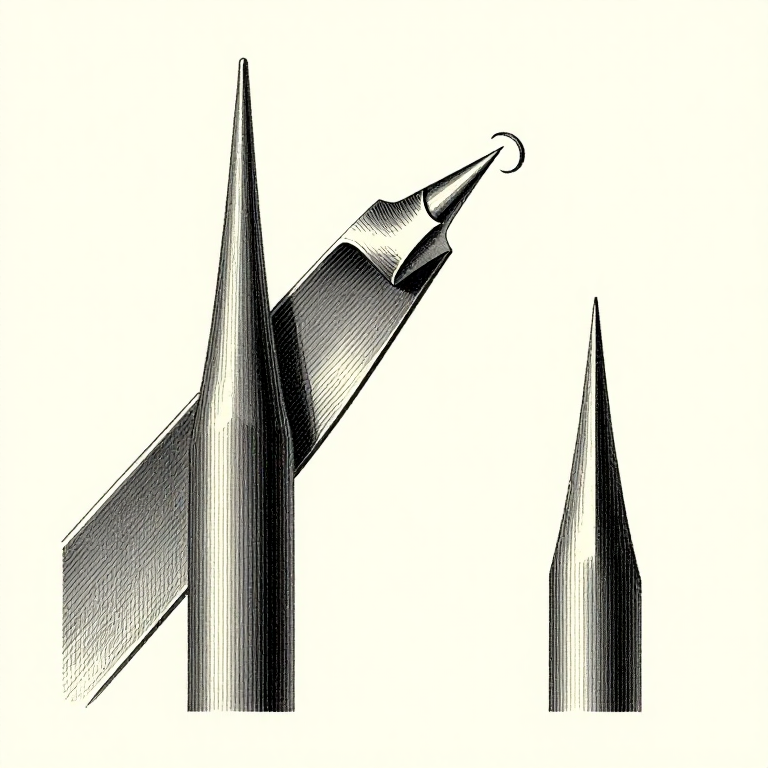


The Wire Edge: The Only Proof You Have Reached the Apex
The hardest question in sharpening is knowing when to stop. Grind too little and the two surfaces have not met yet; the edge is still rounded and no amount of polishing will fix it. Grind too long and you are wasting steel and time.
There is an unambiguous answer, and it is physical rather than visual: a WIRE EDGE — a thin ribbon of metal pushed over to the far side, running the whole length of the edge. It can only form once the bevel has reached the very apex, because there is nothing left to support the metal there.
So the rule is simple: raise a wire edge along the whole edge, then remove it. Everything before that is preparation, and everything after it is polish.
中级
2 hours
说明
1
1
Feel for it with a thumb, moving off the edge
Feel for it with a thumb, moving off the edge
Draw a thumb gently ACROSS the flat side, away from the edge — never along it. A wire edge catches as a faint roughness or a tiny lip you can feel but often cannot see.
Always move off the edge, never along it. A sharpened edge will open a thumb without any pressure at all, and drawing along it is exactly how that happens. This is the one genuinely sharp-object habit in the whole batch.
Check along the WHOLE length. A wire edge over two thirds of the blade means the other third has not reached the apex yet and is still blunt, which is why a freshly sharpened tool sometimes cuts beautifully at one corner and not at the other.
所需工具:
 斜边凿子套装
 放大目镜
放大目镜2
2
Raise it on purpose, then keep going until it runs the full length
Raise it on purpose, then keep going until it runs the full length
Work the bevel on the coarse stone until you can feel the wire along the entire edge, corner to corner. Do not move to a finer grit before then.
This is the discipline the whole process rests on. Moving up a grit early means the finer stone spends its time polishing a rounded edge, which is slow, satisfying and completely useless. Most disappointing sharpening is this mistake.
If one region refuses to raise a wire, that region is not being touched. Colour it with marker and look at where the stone actually lands — usually the blade is being held at a slightly different angle at that corner, or the stone is dished.
所需工具:
 磨刀石
磨刀石 油性记号笔斜边凿子套装
3
3
Remove it, do not tear it off
Remove it, do not tear it off
Take a few light strokes on the flat back, then a few more on the bevel, alternating and getting lighter, until the wire is gone. Finish on the strop.
Do not pull the wire off with your fingers or drag it through wood. It is attached to the apex, and tearing it away takes part of the edge with it, leaving a ragged line that looks sharp and fails in the first minute of work. That is why a tool can be 'sharp' on the bench and blunt after two cuts.
Each pass should be lighter than the last. The wire gets thinner, flips to the other side, gets thinner again, and eventually falls away on its own as the two polished surfaces finally meet.
所需工具:
磨刀石 皮革荡刀布斜边凿子套装
 抛光膏
抛光膏4
4
Three tests, in increasing order of honesty
Three tests, in increasing order of honesty
First the light test: edge-up under a lamp, no bright line anywhere along it. That rules out obvious bluntness in two seconds.
Then paper: a sharp edge slices clean through a hanging sheet without tearing or snagging. Then end grain — pare a thin curl across the end of a softwood offcut. End grain is the real test because the fibres are unsupported, and only a genuine apex severs them instead of crushing them.
A blade that passes paper and fails end grain has a wire edge still attached, or one corner that never came to the apex. That is a useful diagnosis rather than a disappointment, and it tells you exactly which step to return to.
此步骤所需材料:
 干燥软木板1 个
所需工具:
斜边凿子套装放大目镜相关蓝图
这些蓝图共享知识——技术、材料或原理
CC0 公共领域
此蓝图以 CC0 协议发布。你可以自由复制、修改、分发和使用此作品,无需征得许可。
通过购买蓝图中的产品支持创客,他们将获得 创客佣金 (由供应商设定),或创建此蓝图的新版本并将其作为连接包含在你自己的蓝图中以分享收入。