艺术
美容与健康
工艺
文化与历史
娱乐
环境
食品与饮料
逆向工程
科学
体育
技术
可穿戴设备
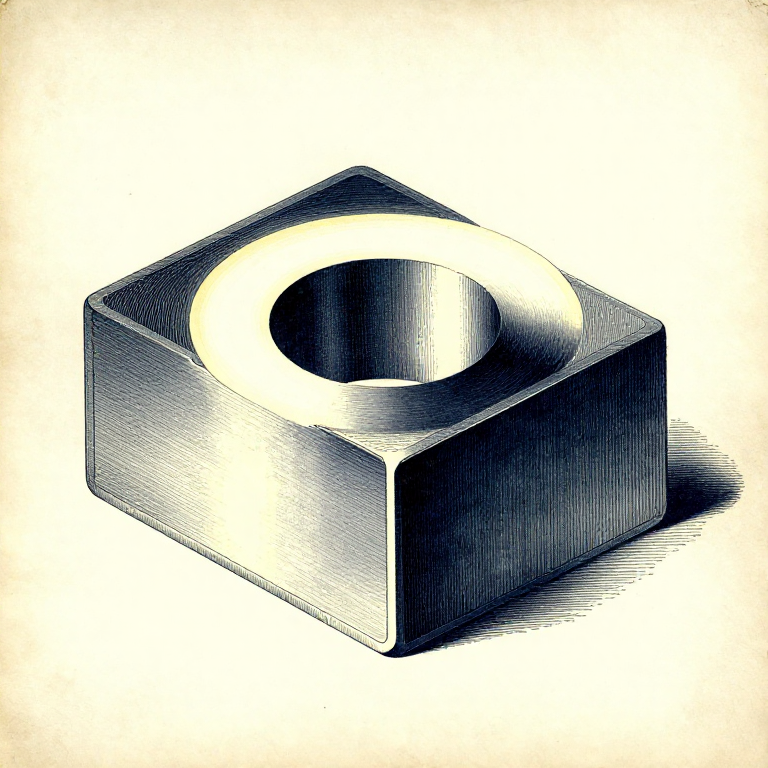


The Surface Is Not the Centre: Thermal Mass and Soak Time
A piece of steel that looks orange all over is orange on the OUTSIDE. The centre is cooler, and how much cooler depends on how thick it is and how long it has been in the fire.
That gap is the cause of a whole family of failures that look like something else: a blade that hardens at the edge and not the spine, a billet that cracks when forged, a pot that survives the kiln and shatters a week later. In each case the colour was right and the inside was not.
The fix is SOAK TIME — holding at temperature after it looks right — and how much you need is calculable rather than a matter of opinion.
中级
3 hours
说明
1
1
Heat travels at a finite speed, and it is slower than you think
Heat travels at a finite speed, and it is slower than you think
Heat spreads by conduction, and the rate depends on the material's thermal diffusivity. Copper and aluminium are fast; steel is several times slower; ceramic, glass and stone are slower again by a large factor.
The consequence is that time-to-centre grows with the SQUARE of the thickness. Double the bar and it takes four times as long, not twice. That single relationship explains most of what goes wrong here and it is worth internalising before any of the arithmetic.
It is also why thin sections in the same piece reach temperature long before thick ones — the subject of a later rung, because it is the reason points and edges burn off while the body is still coming up.
此步骤所需材料:
 低碳钢条2 个
所需工具:
 铁匠炉
铁匠炉 铁匠钳
铁匠钳2
2
How long to the centre
How long to the centre
正在加载 Jupyter 笔记本…
所需工具:
 计算器
计算器 带读数的热电偶
3
3
Soak at temperature, do not just reach it
Soak at temperature, do not just reach it
Once the surface is at the colour you want, HOLD it there. The fire should be maintaining the temperature rather than still driving it up, and the work should sit in it without being pushed hotter.
For hardening this matters most: the steel has to be fully austenitic through its section before quenching, and a piece quenched as soon as the surface reaches colour hardens only in a shell. The published heat-treatment blueprint depends on this being done properly.
Turn the work and move it in the fire during the soak. A piece lying still has a hot side and a cold side, so it is soaking unevenly even while the total time looks right.
此步骤所需材料:
低碳钢条1 个 木炭1 个
木炭1 个所需工具:
铁匠炉铁匠钳带读数的热电偶 长袖皮手套
长袖皮手套4
4
The same arithmetic runs kiln schedules
The same arithmetic runs kiln schedules
A kiln is fired slowly for exactly this reason. Clay and glass have diffusivities twenty to forty times lower than steel, so a pot wall that looks trivially thin takes minutes rather than seconds to equalise — and a thick foot or a heavy handle takes far longer than the wall beside it.
Heat it faster than the inside can follow and the temperature difference across the wall creates stress. That is why ware cracks on the way UP as often as on the way down, and why a firing schedule has soak periods at particular temperatures rather than simply climbing.
The same reasoning covers glass annealing, tempering a large casting, and warming a cold anvil before heavy work. Whenever a thing is thick and the material is slow, the schedule matters more than the peak.
所需工具:
 窑炉
窑炉 高温窑带读数的热电偶
相关蓝图
这些蓝图共享知识——技术、材料或原理


CC0 公共领域
此蓝图以 CC0 协议发布。你可以自由复制、修改、分发和使用此作品,无需征得许可。
通过购买蓝图中的产品支持创客,他们将获得 创客佣金 (由供应商设定),或创建此蓝图的新版本并将其作为连接包含在你自己的蓝图中以分享收入。