艺术
美容与健康
工艺
文化与历史
娱乐
环境
食品与饮料
逆向工程
科学
体育
技术
可穿戴设备

When It Goes Wrong: Runaway, and the Film That Tries to Stop It
Every rung in this batch has been about getting more energy into a smaller space and taking it out faster. This one is about what that means when it stops being under control.
A lithium cell in thermal runaway is not a fire that started near a battery. It is the battery itself, generating its own heat faster than it can shed it, carrying its own oxidiser, and therefore indifferent to being smothered. The chemistry that made the cordless tool possible is the same chemistry that makes this possible.
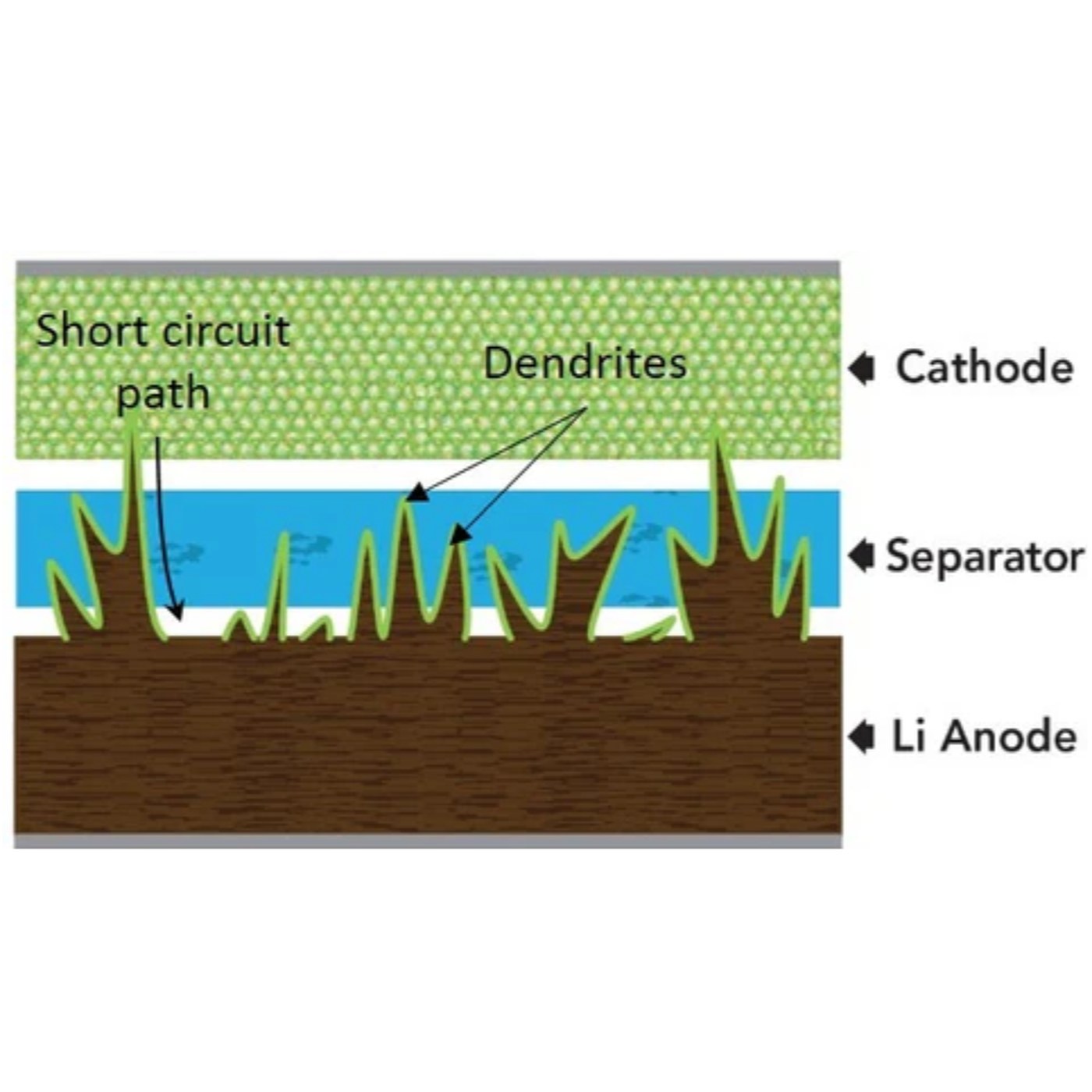
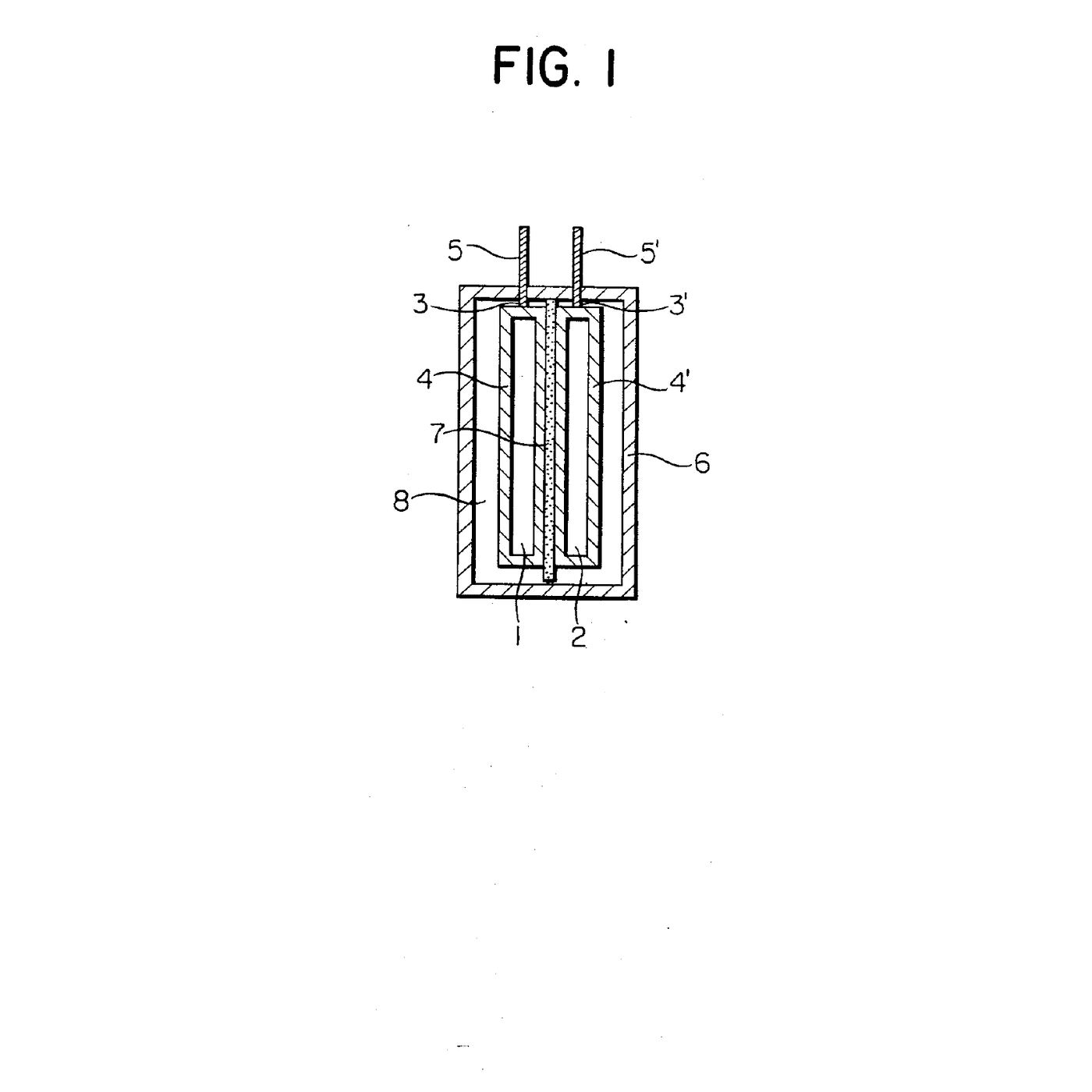
The hero image is the failure the whole design was meant to avoid: lithium dendrites growing from the anode, through the separator, to the cathode. This rung works out the energy arithmetic, watches a separator film do its one defensive trick on a hot plate, and sets out what to actually do — with cells, with packs, and when one has already gone wrong.
中级
About 3 hours
说明
1
1
The energy, the ladder and the race
The energy, the ladder and the race
正在加载 Jupyter 笔记本…
2
2
Watch a separator close its pores
Watch a separator close its pores
The separator is a microporous polyolefin film, ten to twenty micrometres thick, whose job in normal life is to keep the electrodes apart while letting ions through. Its second job is the only defence in the cell that acts *before* anything is destroyed: at around 130 °C the polymer softens enough for the pores to **close**, ion transport stops, and the cell goes open-circuit internally.
You can see that happen, and you do not need a cell to do it.
Put a small piece of separator film — or, if you have none, a piece of the microporous polypropylene sheet, which shuts down at a similar temperature — on a clean metal plate on the hot plate, under the fume hood or in a very well ventilated space. Hold a second piece beside it as an unheated reference.
Bring the plate up slowly, twenty degrees at a time, reading the actual surface temperature with the infrared thermometer rather than trusting the dial. Watch the film.
- Below about 110 °C nothing changes. The film is **opaque white**, because the pores scatter light.
- Somewhere near **130 °C** it goes **translucent**, quite suddenly. The pores have closed. There is nothing left to scatter the light.
- Push on toward 160 °C and it shrinks, curls and finally melts — and that is the intervention being undone. A closed pore is only a defence while the film still exists.
Record the temperature at which the change happened. You have just measured the single temperature that the whole safety design of a lithium cell is built around.
Hot polyolefin gives off fumes. Fume hood or outdoors, never a kitchen, and nothing flammable on the bench. The hot plate stays hot long after it is switched off.
此步骤所需材料:
 电池用微孔聚烯烃隔膜1 个
 聚丙烯板1 个
所需工具:
 电热板
电热板 红外测温仪
红外测温仪 K 型热电偶配 MAX6675 模块
 通风柜(带排风管)
 尖头镊子
尖头镊子 丁腈手套
丁腈手套 透明安全眼镜
 面屏
面屏 灭火毯
灭火毯3
3
Trace the whole chain of defences on one cell
Trace the whole chain of defences on one cell
Take one 18650 and, without doing anything to it, list every layer of protection between it and the failure in step 1. Work from the inside out. This is a paper exercise with the cell in front of you, and it is the most useful ten minutes in this rung.
1. **The separator shutdown** — step 2, at about 130 °C. Acts first, acts internally, and is the only one that can stop the process rather than react to it.
2. **The CID** — the diaphragm in the cap from rung 6, which tears the cathode connection when internal pressure rises. One-shot, permanent.
3. **The PTC** — the polymer disc that goes high-resistance when hot, limiting an external short. Resettable.
4. **The vent** — the scored cap, so that when pressure wins it opens in a known direction.
5. **The BMS** — rung 7's board, watching every cell's voltage and cutting the pack.
6. **The pack thermistor** — rung 3's TH pin, telling the charger to wait.
7. **The charger's own terminations** — rung 5's three independent detectors.
8. **The pack's mechanical design** — cell spacing, barriers and a vent path, which is what decides whether one failed cell stays one failed cell.
Now note which of those you remove when you build something yourself from loose cells. Numbers 1 to 4 come with the cell and you keep them. Numbers 5 to 8 are **yours**, and nobody supplies them by accident. A home-made pack without a BMS and without spacing has half the defences of a commercial one.
Then inspect the cells you own. Look for a dented or pierced can, a swollen body, a torn or missing wrapper — particularly at the positive end, where a bare can rim sits millimetres from the positive cap — heat discolouration, or any smell. Any of these retires the cell to a recycling point immediately. A cell that has been over-discharged below 2 V has almost certainly plated copper inside and must not be recharged, however normal it looks.
所需工具:
 18650 锂电芯
 6 英寸数显卡尺
 数字万用表——自动量程、真有效值
 数码显微镜丁腈手套透明安全眼镜
4
4
Storage, damage and what you do if one lets go
Storage, damage and what you do if one lets go
This step has no measurement in it. It is the operating procedure that makes everything else in this batch safe to practise, and it belongs in your notebook where you can find it in a hurry.
**Storage.** Loose cells live in a hard case with the terminals covered, never in a pocket, a drawer of tools or a bag with keys and coins in it. A cell shorted across its own terminals by a screwdriver reaches the top of step 1's ladder in under a minute. Store at about 40–60% state of charge if the cells will sit for months: a fully charged lithium cell ages measurably faster and is closer to the edge if something goes wrong.
**Charging.** Never unattended, never overnight, never on a carpet or a wooden bench. Charge on something non-combustible with clear space round it. A smoke alarm in the room is a reasonable thing to have and costs nothing.
**Damage.** Any cell that has been dropped hard, crushed, pierced or run over is finished. Damage can start a runaway hours or days later, so a damaged cell goes outside, into something non-combustible, well away from anything that can burn, and then to a recycling point. It does not go back on the shelf 'to check tomorrow'.
**If one lets go.** A cell in runaway carries its own oxidiser in the cathode, so smothering it does not work and a CO₂ extinguisher will not put it out — it will cool the surroundings and that is worth something, but the cell will finish its reaction regardless.
- **Get people away first.** The vented gas is hot, flammable and toxic. Do not breathe it and do not stand over a pack that is venting.
- **Cool the neighbours, not the casualty.** Large amounts of water on the surrounding cells and material is the recognised response for a battery fire, and its purpose is to stop propagation, which step 1's last table is about.
- **Do not pick it up, do not move it, do not bury it in sand.** A dry sand bucket is worth having for *small* fires the pack has started elsewhere; it will not stop a cell.
- **Ventilate, and call the fire service** for anything larger than a single small cell.
Write those four lines out. The failure in this rung is fast, and it is not the moment to be deciding what the plan is.
所需工具:
 灭火器灭火毯
 干沙桶丁腈手套透明安全眼镜面屏
5
5
History and context
History and context
**Attribution, stated honestly.** No single patent is claimed here and none should be. Separator shutdown is a materials answer developed across the industry through the 1980s and 1990s — Celgard's trilayer polypropylene/polyethylene/polypropylene film is the best-known version, where the middle polyethylene layer melts and closes the pores at about 130 °C while the outer polypropylene layers, melting some 30 °C higher, hold the film together long enough for that to matter. Multiple companies filed on variants of the idea and the sources differ about priority. The mechanism is not in dispute and the mechanism is what this rung teaches.
**The image on this page** is a diagram of lithium dendrites growing from the anode, through the separator, toward the cathode — the exact failure Yoshino's carbon anode in rung 4 was invented to prevent. It returns anyway, at low temperature and under fast charging, which is why the pack thermistor of rung 3 blocks charging on a cold pack.
**Why this rung closes the batch.** The ladder from rung 1 to here is a single argument: seal the cell so it can be carried, remove the cord so the tool can go anywhere, make the pack a part so the tool never waits, change the chemistry so the pack is small, standardise the can so anyone can build with it, balance the string so it lasts, and drop the brushes so the motor can use all of it. Every one of those steps moves energy closer to the hand holding the tool. This rung is the bill for that.
**Honest limits, and an honest recommendation.** Nothing here makes a lithium cell safe; it makes failure unlikely and survivable. The failure rate of commercial cells is extraordinarily low — a handful per million — and almost every incident a maker will ever meet comes from one of four things: a mechanical short, charging a cold or damaged cell, a home-made pack without protection, or a cheap cell whose safety devices were never there. Three of those four are under your control, and the fourth is under your control at the moment you buy.
相关蓝图
这些蓝图共享知识——技术、材料或原理
The Lithium-Ion Cell: A Host Instead of a Metal
Mary 创作
能源
39
0
0
0
0
0

One Can, Many Tools: The 18650 and the Safety Devices in Its Cap
Volt 创作
电子产品
35
0
0
0
0
0

Understanding Cadmium from Zinc Smelting — The Toxic Metal in Rechargeable Batteries
Peter 创作
采矿
11
0
0
0
5
0
The Pack as a Part: Contacts, Keying and the Third Wire
Emma 创作
能源
28
0
0
0
0
0
CC0 公共领域
此蓝图以 CC0 协议发布。你可以自由复制、修改、分发和使用此作品,无需征得许可。
通过购买蓝图中的产品支持创客,他们将获得 创客佣金 (由供应商设定),或创建此蓝图的新版本并将其作为连接包含在你自己的蓝图中以分享收入。