艺术
美容与健康
工艺
文化与历史
娱乐
环境
食品与饮料
逆向工程
科学
体育
技术
可穿戴设备
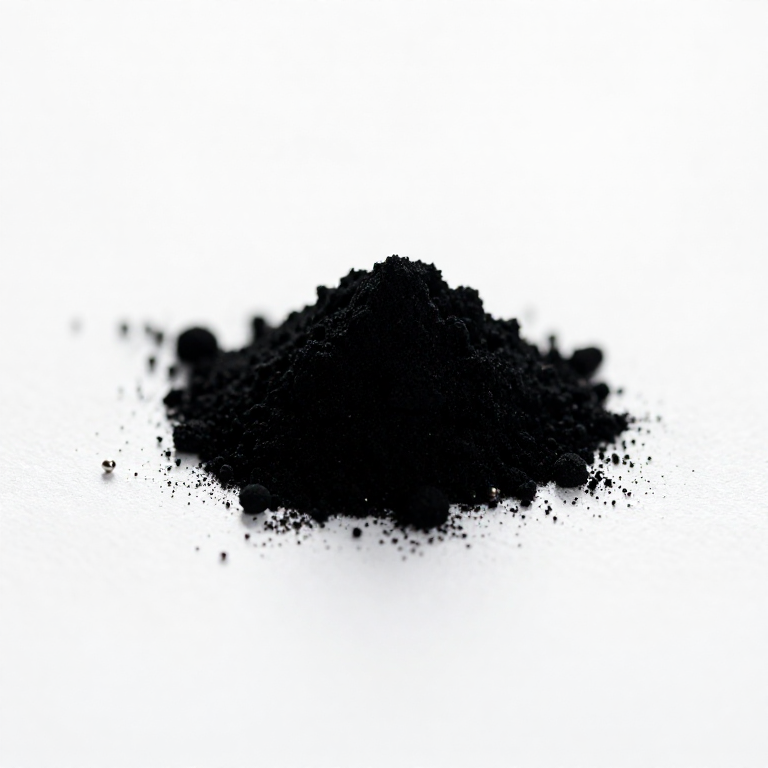


Toner and the Two-Component Developer
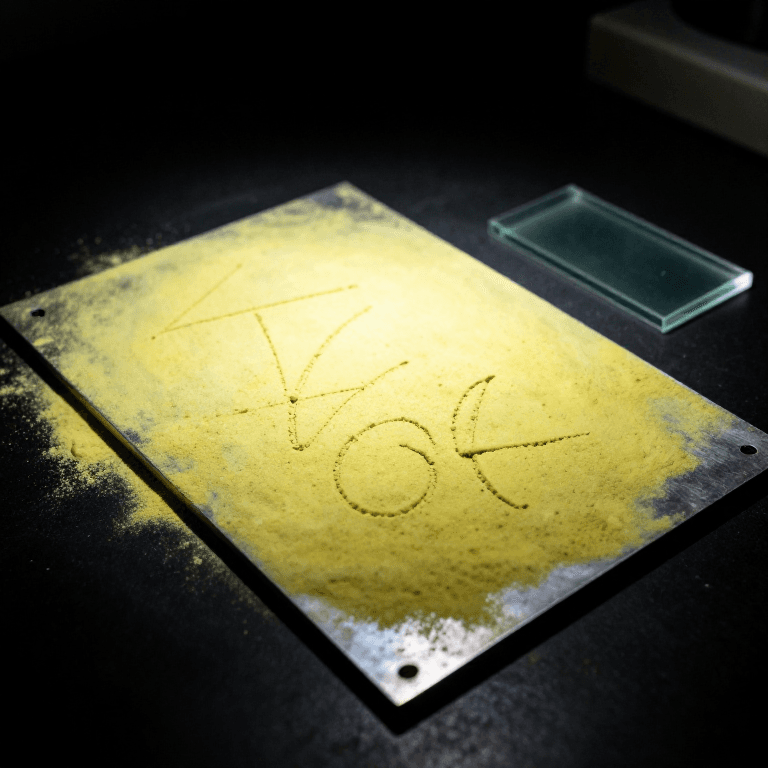
Carlson's first developer was lycopodium powder - fern spores - dusted onto a charged plate. It proved the principle and nothing else. A machine that has to make ten thousand identical pages needs a powder whose charge you can specify, hold, and get back again.
The answer, worked out at Battelle in the 1940s and refined ever since, is that the powder is never charged deliberately at all. Toner is mixed with much larger carrier beads and tumbled; the two materials sit at different places in the triboelectric series, so rubbing transfers charge from one to the other exactly as a balloon takes charge from a jumper. The beads then carry the toner to the drum on a magnetic brush, and the latent image's own field pulls the toner off.
What makes this hard is that the numbers are close together. Work out the electrostatic force on a charged eight-micrometre particle in the development field and it comes to a few nanonewtons - the same order as the van der Waals and image forces gluing that particle to the bead. There is no comfortable margin. Under-charge the toner and it will not leave the carrier; over-charge it and it holds onto the drum through transfer and prints hollow letters. A developer is an engineered mixture held inside a narrow band, not simply a black powder.
The particle size tells the rest of the story. Twelve micrometres was fine when a dot was eighty-five micrometres across. At 1200 dots per inch the dot is twenty-one micrometres and the particle IS the edge - which is what drove toner from ground-up resin to chemically grown particles of five or six micrometres, and eventually to suspending it in oil and giving up on powder altogether.
中级
3 hours
说明
1
1
Charge a powder by rubbing it
Charge a powder by rubbing it
Put a spoonful of iron powder and a pinch of toner in a dry jar and shake it for a minute. The toner disappears - it is now coating the iron.
Hold a neodymium magnet under the jar and lift out a brush of iron. Sweep it across a sheet of paper you have charged by rubbing with a cloth: the toner jumps off onto the charge and the iron stays on the magnet. That is a magnetic brush developer.
此步骤所需材料:
 雾化铁粉 99 %,0,45 千克50 克
 激光打印机碳粉(黑色)5 克
 纸5 张
纸5 张所需工具:
 钕磁铁套装
钕磁铁套装 金箔验电器
金箔验电器 密闭式护目镜
 防尘口罩
防尘口罩2
2
Weigh the charge, then fuse it
Weigh the charge, then fuse it
Weigh the developer, blow the toner off the beads into the electroscope's cup and read the deflection against the weight lost. That ratio - microcoulombs per gram - is the number the notebook says everything depends on.
Then press the developed sheet with a hot iron at 180 C. The binder melts into the fibres and the image stops being a powder. Rub it: nothing comes off.
此步骤所需材料:
纸10 张所需工具:
 精密数字天平金箔验电器
 电热板
电热板 放大镜
放大镜3
3
Particles per dot, force balance, and four developers
Particles per dot, force balance, and four developers
正在加载 Jupyter 笔记本…
所需工具:
 台式电脑
台式电脑4
4
Compendium: what is actually in the particle
Compendium: what is actually in the particle
By mass a toner particle is mostly binder - a styrene-acrylate or polyester chosen for a glass transition near 60 C, so it survives a warm warehouse, and a melt viscosity that flows at 120-180 C so a fuser roller can drive it into paper in milliseconds. Five to ten per cent is pigment. A charge control agent, a metal complex dye, sets where the particle sits in the triboelectric series - it exists purely to make the rubbing repeatable. A wax releases it from the hot roller. Finally a few tenths of a per cent of fumed silica is tumbled onto the OUTSIDE so the particles roll rather than cake; without it the powder will not flow at all.
Pulverised toner is melt-mixed, cooled and ground, giving sharp fragments and a wide size spread - the fines charge too high, the coarse too low, and both are classified out and wasted. Chemically prepared toner grows particles from emulsion instead: round, narrow in size, small enough for 1200 dpi, and with the wax and pigment placed INSIDE a shell rather than smeared through. That is how a modern toner fuses cooler and costs the printer less energy per page.
相关蓝图
这些蓝图共享知识——技术、材料或原理


CC0 公共领域
此蓝图以 CC0 协议发布。你可以自由复制、修改、分发和使用此作品,无需征得许可。
通过购买蓝图中的产品支持创客,他们将获得 创客佣金 (由供应商设定),或创建此蓝图的新版本并将其作为连接包含在你自己的蓝图中以分享收入。