合作
艺术
美容与健康
工艺
文化与历史
娱乐
环境
食品与饮料
逆向工程
科学
体育
技术
可穿戴设备
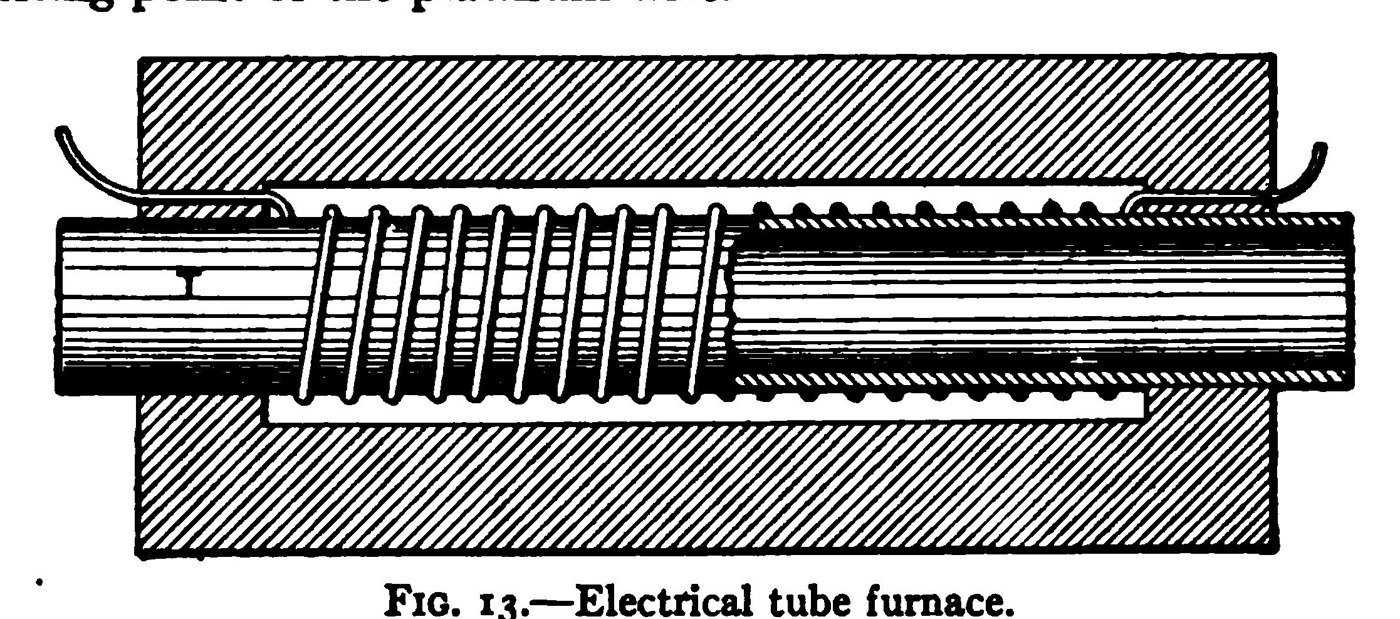


Tube Furnace: Porcelain Tube Wound with Platinum Wire in a Heat-Retaining Jacket (Stansfield, 1914)
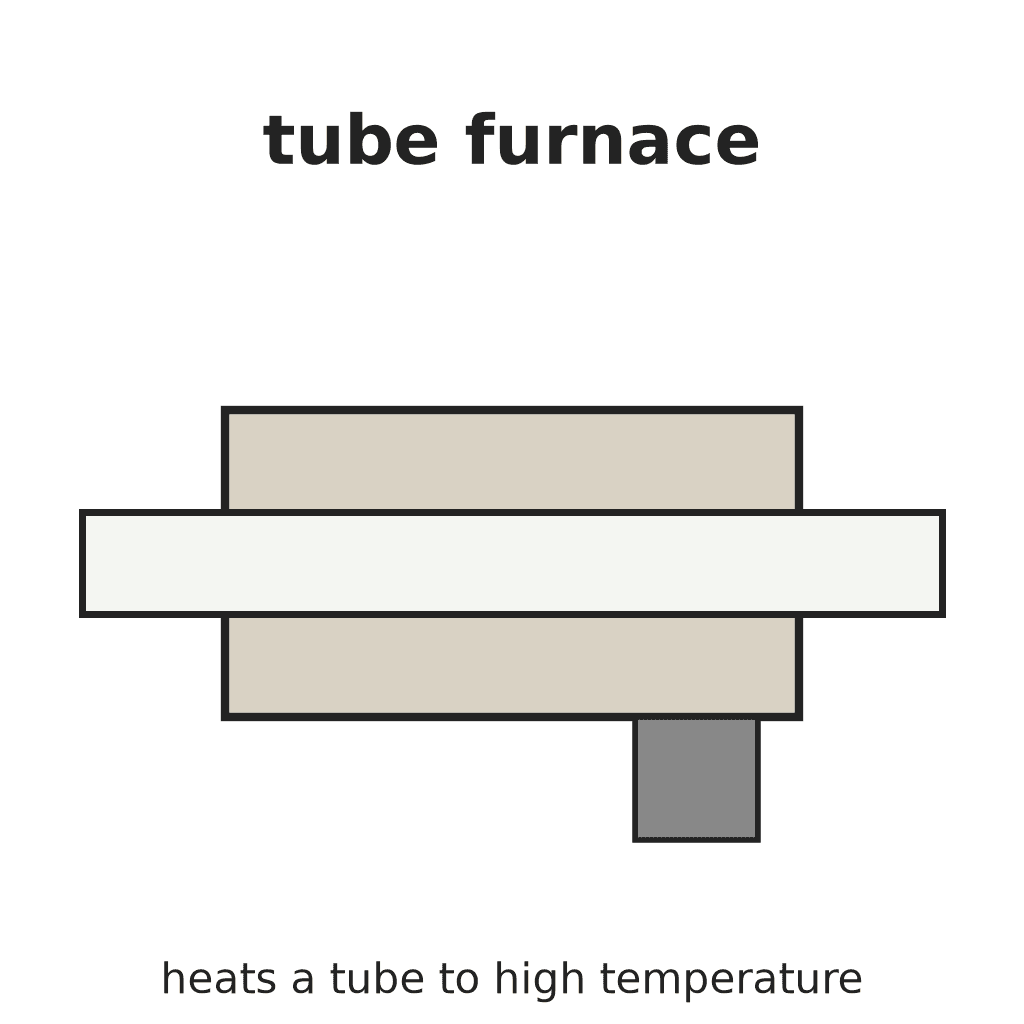
The laboratory tube furnace: a porcelain tube wound with a spiral of platinum wire and wrapped in a heat-retaining jacket. Current through the wire heats the tube and whatever is inside it. A gas can be passed through the tube, the work watched through windows at the ends, and the temperature read with a thermocouple pushed in from one end.
Result: a small furnace for heating a material in any chosen gas at moderate temperatures, well short of platinum's melting point.
Source: A. Stansfield, The Electric Furnace: Its Construction, Operation and Uses (2nd ed., 1914), pp. 24-25 and 154. Unknown: sizes, the jacket material, current and voltage. Picture: Stansfield, Fig. 13.
中级
2 days
说明
1
1
Wind the tube
Wind the tube
Take a tube of porcelain; fire-clay, silica or alundum also serve. Wind a spiral of platinum wire round it, leaving the leads free. Fix the turns so they cannot shift or touch each other when the wire expands with the heat, or they will short-circuit. Platinum foil can be wound instead of wire: its larger surface heats faster for the same weight of platinum. Not given: sizes, wire gauge, number of turns.
此步骤所需材料:
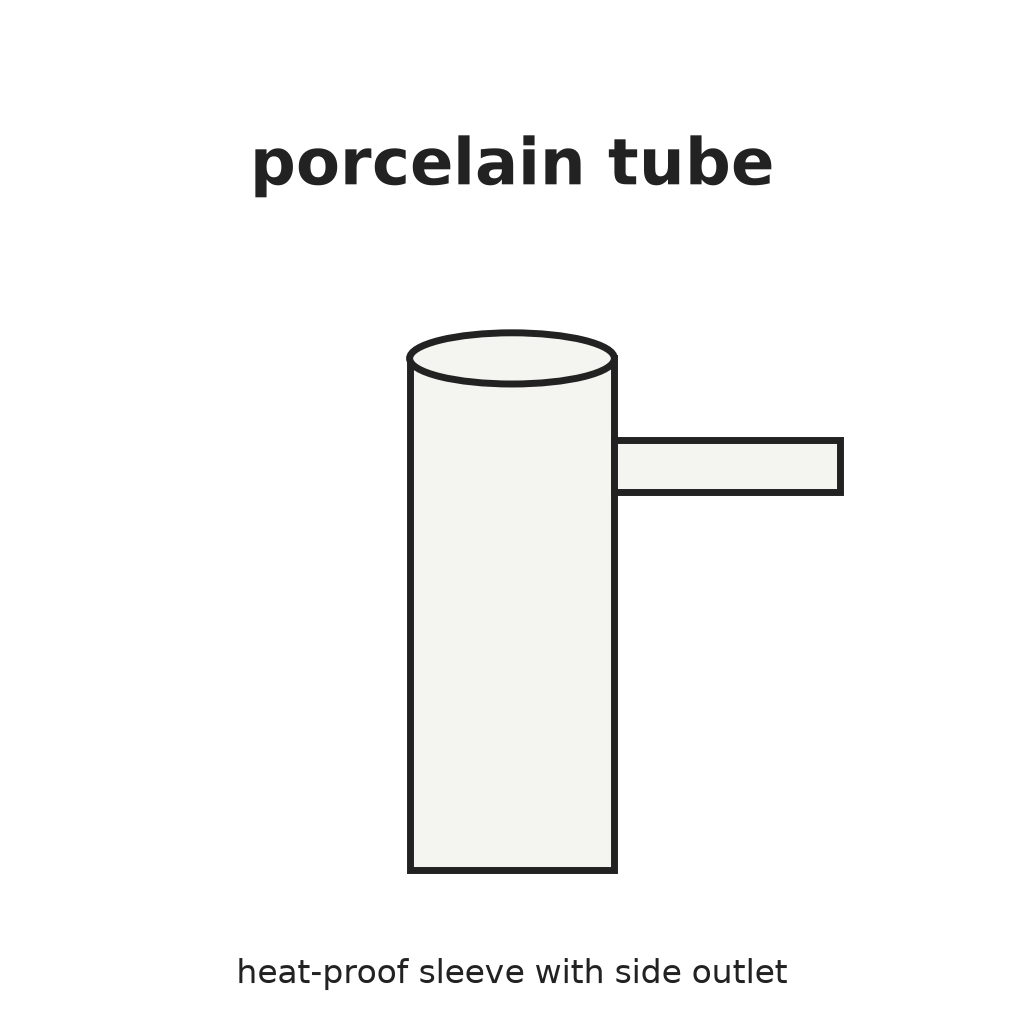 瓷管1 个
 铂丝1 as required
所需工具:
 钳子套装
 未知尺寸
2
2
Jacket it
Jacket it
Enclose the wound tube in a heat-retaining envelope, so the heat stays in the tube. The tube ends stick out through the envelope. Not given: the envelope material.
此步骤所需材料:
 未知材料1 heat-retaining envelope
所需工具:
未知尺寸3
3
Fit windows and the thermocouple
Fit windows and the thermocouple
Close the tube ends with windows of glass or mica to watch the work. Push a thermocouple pyrometer in from one end and watch from the other. Leave a way in and out at the ends when you want a stream of gas through the tube.
此步骤所需材料:
 云母片1 end windows
所需工具:
 带读数的热电偶
4
4
Heat
Heat
Put the material in the tube and pass current through the wire. The wire can run at any temperature below platinum's melting point (1,755 °C, 3,200 °F, as the book gives it). In practice the tube and envelope limit the furnace to temperatures far below that. Nickel or nichrome coils are cheaper, but they cannot go as hot and in time they oxidise. Not given: current and voltage.
所需工具:
带读数的热电偶 万用表

此蓝图制作
相关蓝图
这些蓝图共享知识——技术、材料或原理

CC0 公共领域
此蓝图以 CC0 协议发布。你可以自由复制、修改、分发和使用此作品,无需征得许可。
通过购买蓝图中的产品支持创客,他们将获得 创客佣金 (由供应商设定),或创建此蓝图的新版本并将其作为连接包含在你自己的蓝图中以分享收入。