艺术
美容与健康
工艺
文化与历史
娱乐
环境
食品与饮料
逆向工程
科学
体育
技术
可穿戴设备
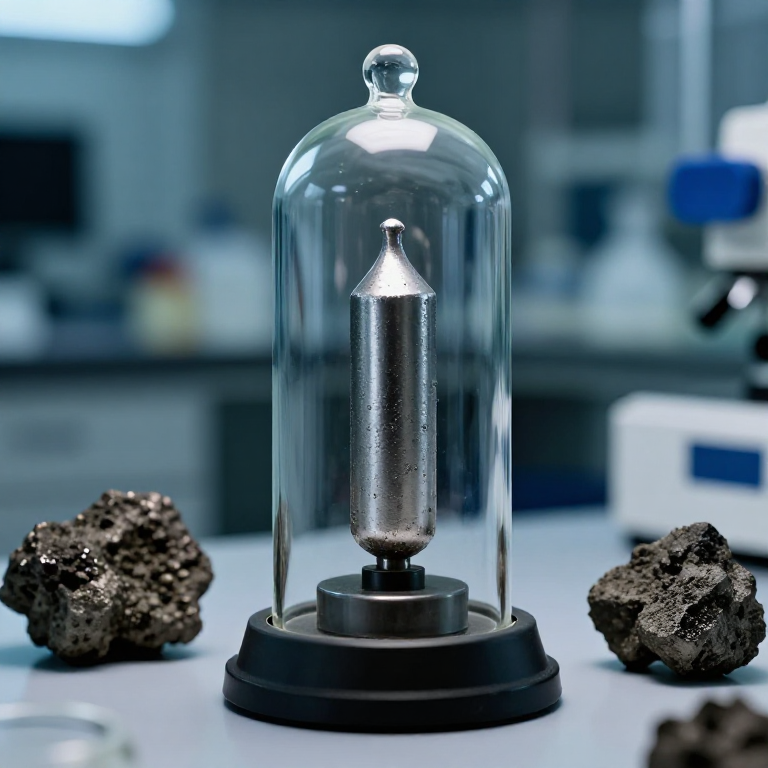
Understanding Protactinium from Uranium Ore — The Elusive Parent of Actinium
中级
说明
1
1
Understand Protactinium's Discovery
Understand Protactinium's Discovery
Kasimir Fajans and Oswald Helmuth Göhring discovered the short-lived isotope Pa-234 (half-life 1.17 minutes) in 1913, calling it 'brevium.' The long-lived isotope Pa-231 (half-life 32,760 years) was independently identified by Frederick Soddy and John Cranston in Britain and Otto Hahn and Lise Meitner in Germany in 1917. The name protactinium means 'parent of actinium' — Pa-231 decays by alpha emission to actinium-227. Aristid von Grosse isolated 2 mg of pure Pa₂O₅ in 1934.
2
2
Trace Protactinium in the Uranium Decay Chain
Trace Protactinium in the Uranium Decay Chain
Protactinium-231 is produced in the uranium-235 decay chain: U-235 →(alpha, 704 million years)→ Th-231 →(beta, 25.5 hours)→ Pa-231 →(alpha, 32,760 years)→ Ac-227. Uranium ores contain approximately 0.34 ppm of Pa-231 in secular equilibrium. Protactinium-233 is an important intermediate in the thorium fuel cycle: Th-232 absorbs a neutron to form Th-233, which beta-decays through Pa-233 (half-life 27 days) to fissile uranium-233.
3
3
Examine Extraction and Isolation
Examine Extraction and Isolation
The UK Atomic Energy Authority extracted 125 grams of protactinium-231 from 60 tonnes of uranium processing sludge in a 12-step process completed in 1961 — the world's only large-scale protactinium isolation. The chemistry is notoriously difficult because Pa⁵⁺ readily hydrolyzes, forming colloidal species that adsorb onto glass and container walls, causing 'missing' protactinium during analysis. This 'protactinium problem' plagued early radiochemists and makes protactinium one of the most challenging elements to work with.
4
4
Discover Ocean Circulation Dating
Discover Ocean Circulation Dating
The Pa-231/Th-230 ratio in ocean sediments is a powerful tool for measuring past changes in ocean circulation. Both isotopes are produced by uranium decay in seawater, but thorium is removed much faster by particle scavenging (residence time ~30 years) while protactinium stays dissolved longer (~200 years) and is transported by ocean currents before settling. Changes in the Pa/Th ratio in Atlantic sediment cores revealed that the Atlantic Meridional Overturning Circulation virtually shut down during the last Ice Age.
5
5
Understand the Thorium Fuel Cycle Role
Understand the Thorium Fuel Cycle Role
Protactinium-233 is the critical intermediate in converting thorium-232 to fissile uranium-233 in thorium-based nuclear reactors. After thorium absorbs a neutron, Pa-233 must survive its 27-day half-life without capturing another neutron (which would produce non-fissile Pa-234). In molten salt reactors, Pa-233 can be chemically removed from the reactor and stored until it decays to U-233. This protactinium separation step is a defining technical challenge of the thorium fuel cycle.
6
6
Examine Chemical Properties
Examine Chemical Properties
Protactinium occupies a unique position between the d-block and f-block transition. Its most stable oxidation state is +5, resembling tantalum and niobium (Group 5) rather than uranium. Pa₂O₅ is a white, high-melting oxide. In solution, Pa⁵⁺ forms complex fluoride species (PaF₇²⁻) that enabled its separation from other actinides. The +4 state also exists but is easily oxidized. Metallic protactinium is a bright, silvery metal with a tetragonal crystal structure, density 15.37 g/cm³.
7
7
Understand Nuclear Properties
Understand Nuclear Properties
Protactinium-231 is fissile with fast neutrons and has a critical mass estimated at 750-800 kg — large enough that criticality concerns are negligible for any conceivable accumulation. Pa-231 is a potent alpha emitter (5.1 MeV) and extremely radiotoxic — the maximum permissible body burden is only 0.03 micrograms. Pa-233's 27-day half-life makes it the strongest gamma emitter routinely encountered in thorium processing, requiring careful shielding during handling.
8
8
Survey Analytical Detection Methods
Survey Analytical Detection Methods
Protactinium is detected and measured by alpha spectrometry (Pa-231 emits characteristic 5.01 and 5.06 MeV alpha particles), gamma spectrometry (Pa-233 at 312 keV), and inductively coupled plasma mass spectrometry (ICP-MS) for non-radioactive trace analysis. For ocean sediment dating, Pa-231 is spike-calibrated with Pa-233 tracer added to dissolved sediment samples. The notorious hydrolysis and wall-adsorption behavior requires hydrofluoric acid to keep protactinium in solution during analysis.
9
9
Investigate Superconductivity and Physical Properties
Investigate Superconductivity and Physical Properties
Protactinium metal becomes superconducting below 1.4 K — the highest superconducting transition temperature of any naturally occurring element at the time of its measurement. This property was used to probe the electronic structure of early actinide metals. Protactinium's unusual body-centered tetragonal crystal structure (unique among the actinides) reflects the transitional nature of its 5f electron participation in bonding. The metal is malleable, ductile, and tarnishes slowly in air.
所需工具:
 精密天平
精密天平10
10
Document Findings and Scientific Significance
Document Findings and Scientific Significance
Record protactinium's key data: atomic number 91, density 15.37 g/cm³, melting point 1,568°C, silvery metallic luster. Protactinium is the element that bridges the periodic table's structure — its chemistry straddles the transition metals and actinides, its nuclear properties are central to the thorium fuel cycle, and its ocean geochemistry reveals past climate. From tracing ancient ocean currents to enabling a potential thorium energy future, protactinium quietly underpins both Earth science and nuclear engineering.
11
11
Half-life: what is left, and when
Half-life: what is left, and when
正在加载 Jupyter 笔记本…
已连接蓝图材料
危险
10% 归属
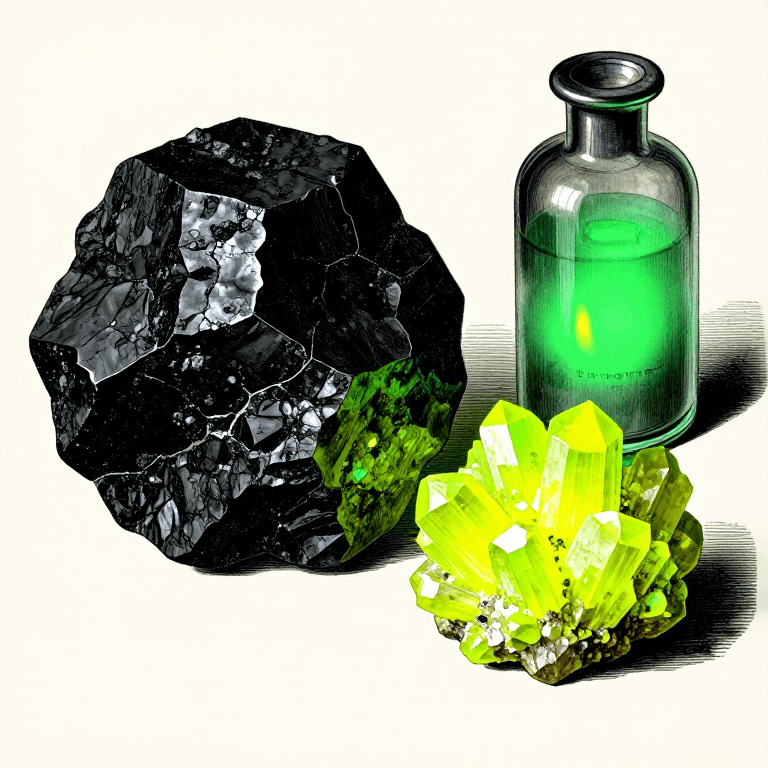
Understanding Uranium from Uraninite — The Element That Changed Everything
Peter 创作
采矿
74
0
0
0
8
0

危险
10% 归属
Understanding Thorium from Monazite — The Nuclear Fuel That Could Replace Uranium
Peter 创作
采矿
14
0
0
0
4
0
10% 归属
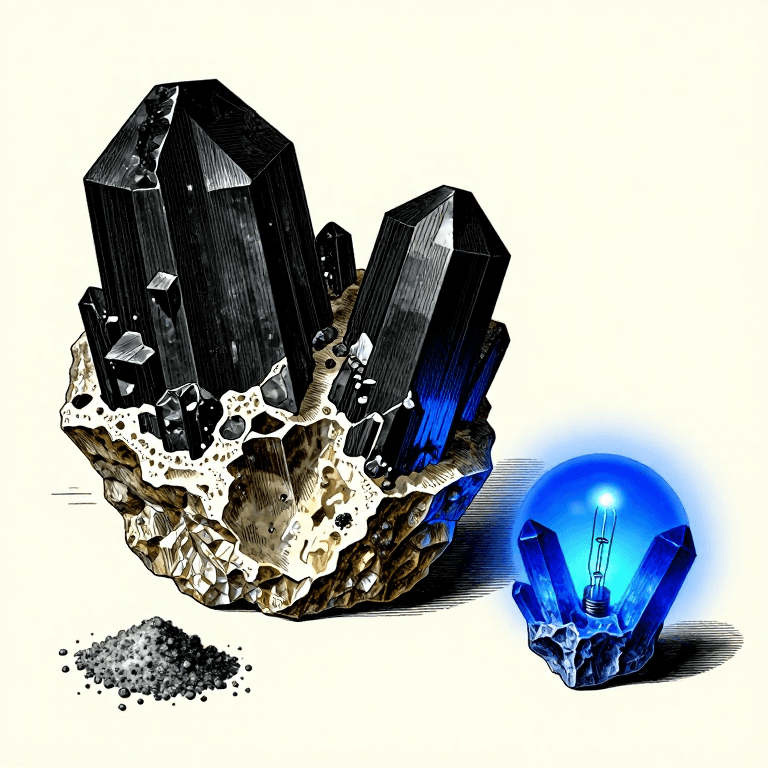
Extracting Tungsten from Wolframite — The Heaviest Practical Metal
Peter 创作
金属加工
84
0
0
0
4
0
10% 归属
Understanding Tantalum from Columbite-Tantalite — The Conflict Metal Inside Every Phone
Peter 创作
采矿
52
0
0
0
2
0

10% 归属
Understanding Niobium from Columbite — The Superconducting Steel Strengthener
Peter 创作
采矿
12
0
0
0
3
0
相关蓝图
这些蓝图共享知识——技术、材料或原理

CC0 公共领域
此蓝图以 CC0 协议发布。你可以自由复制、修改、分发和使用此作品,无需征得许可。
通过购买蓝图中的产品支持创客,他们将获得 创客佣金 (由供应商设定),或创建此蓝图的新版本并将其作为连接包含在你自己的蓝图中以分享收入。