艺术
美容与健康
工艺
文化与历史
娱乐
环境
食品与饮料
逆向工程
科学
体育
技术
可穿戴设备
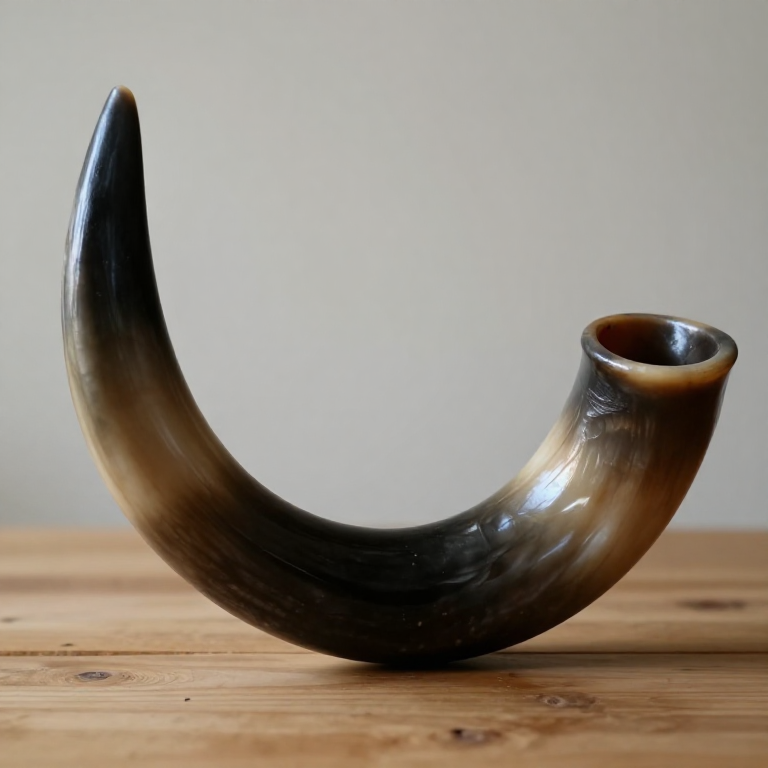


Making a Celebration Gjallarhorn — The Feast Horn
Build a large, deep-voiced Norse blowing horn for gatherings — feasts, weddings, Yule and victories. Hollow an ox horn, then carve a DEEP funnel mouthpiece that gives a warm, round, resonant tone made to fill a hall and welcome the guests. A serious maker build in the lip-reed horn and how a deep mouthpiece makes a warm voice.
中级
A few hours, plus a day to soak the horn
说明
1
1
The horn that gathers the hall
The horn that gathers the hall
A feast horn is a large, deep-voiced blowing horn. Its long warm notes open a gathering, welcome guests, mark a toast and call people together for celebration.
2
2
Choose a large horn
Choose a large horn
Pick the biggest, most curved ox horn you can find. The larger and longer the horn, the lower and warmer its celebratory voice.
此步骤所需材料:
 牛角1 个
牛角1 个3
3
Loosen the inner core
Loosen the inner core
Soak the horn in water for a day, or warm it gently, so the soft inner core loosens from the hard outer shell.
4
4
Hollow it out
Hollow it out
Pull and scrape out all the soft core until the horn is a clean hollow cone, open along its whole length for a full, resonant sound.
所需工具:
 斯洛伊德雕刻刀
5
5
Cut the tip
Cut the tip
Saw off the pointed tip to open a mouth hole into the hollow inside. A slightly wider hole suits the deep, easy notes of a feast horn.
所需工具:
 钢锯
钢锯6
6
Smooth the mouth hole
Smooth the mouth hole
File the rim smooth and rounded so it seals softly against your lips, ready for long, comfortable notes.
所需工具:
 金属锉
金属锉7
7
Clean, dry and oil
Clean, dry and oil
Wash the bore, dry it fully, and rub the outside with a little oil so the horn gleams for the feast.
8
8
Carve a DEEP mouthpiece cup
Carve a DEEP mouthpiece cup
Shape a mouthpiece from firm beeswax or a hardwood offcut with a DEEP, rounded, funnel-like cup, and fit it in the mouth hole. A deep cup is the secret to a warm voice.
此步骤所需材料:
 蜂蜡颗粒1 个
所需工具:
斯洛伊德雕刻刀9
9
Find the warm low note
Find the warm low note
Press your lips to the cup and buzz them loosely and slowly. The deep cup gives a dark, round, welcoming note that rolls out low and full.
10
10
Play long resonant calls
Play long resonant calls
Hold each note long and steady, letting it swell and fade. These broad, unhurried calls are the sound of welcome and celebration.
11
11
Sound the celebration signals
Sound the celebration signals
Open a feast with one long rising note; mark a toast with two; welcome an honoured guest with a slow triple call. Keep them broad and warm, never sharp.
12
12
Compendium — why a deep cup sings warm
Compendium — why a deep cup sings warm
The feast horn is a lip-reed instrument: your buzzing lips are the sound source and the hollow, roughly conical horn reinforces the harmonic series. What makes it warm is the mouthpiece. A DEEP, funnel-shaped cup damps the high harmonics and lets the low ones dominate, so the tone comes out dark, round and mellow — full of body but soft at the edges, exactly the voice you want to fill a hall and gather people without alarming them. A big, wide, long horn lowers the fundamental further and adds even more warmth. This is the same reason the mellow flugelhorn uses a deep, cone-like mouthpiece: deep cup, warm voice. Its opposite is the alarm horn, whose shallow cup does exactly the reverse to cut and pierce. In Norse halls, horns and lurs called folk to gather, opened feasts and marked ceremonies; stretched into bronze, the celebratory horn became the great Scandinavian lur, and its warm-voiced descendants are the French horn and the flugelhorn.
此蓝图制作

相关蓝图
这些蓝图共享知识——技术、材料或原理


CC0 公共领域
此蓝图以 CC0 协议发布。你可以自由复制、修改、分发和使用此作品,无需征得许可。
通过购买蓝图中的产品支持创客,他们将获得 创客佣金 (由供应商设定),或创建此蓝图的新版本并将其作为连接包含在你自己的蓝图中以分享收入。