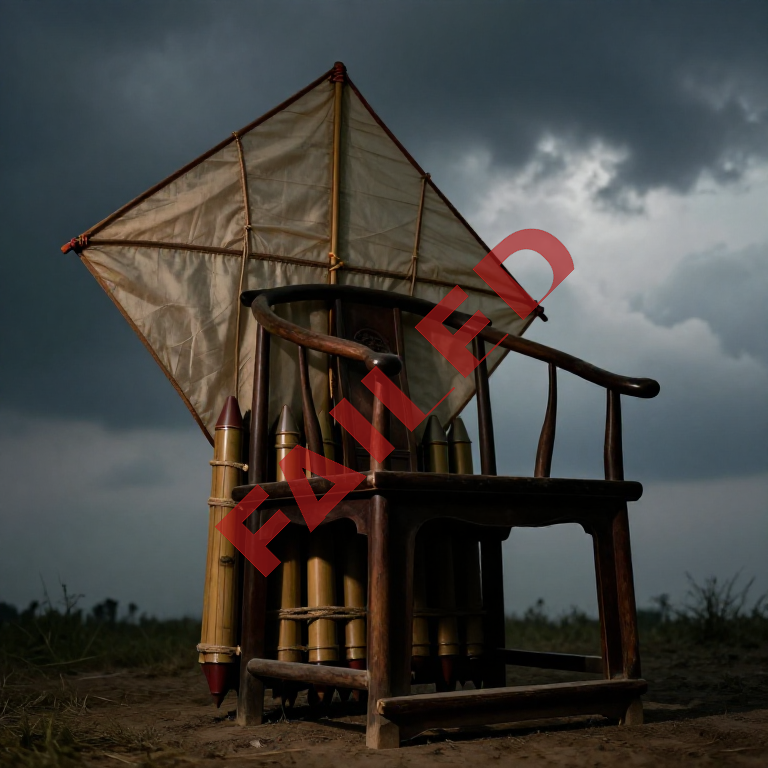


Wan Hu's Rocket Chair — The First Attempt at Human Rocket Flight
Around 1500 AD during the Ming dynasty, a Chinese official named Wan Hu (万户) conceived the boldest experiment in the history of rocketry: he would ride a chair propelled by 47 gunpowder rockets into the sky. According to the legend recorded in later Chinese accounts, Wan Hu had a large wooden chair fitted with 47 fire-arrow rockets strapped beneath and behind the seat, and held two large kites in his hands to assist with lift and control after the rockets burned out.
On the day of the test, Wan Hu seated himself in the chair and ordered 47 servants — one per rocket — to light all the fuses simultaneously. A tremendous roar and explosion followed, filling the air with fire and smoke. When the smoke cleared, both Wan Hu and his chair had vanished completely. He was never seen again.
Whether the legend is historically accurate or a cautionary tale assembled from fragments of real rocketry experiments, Wan Hu's story has endured for over five centuries. In 1970, the International Astronomical Union named a crater on the far side of the Moon 'Wan-Hoo' in his honour — a fitting memorial for a man who dreamed of reaching the heavens using the technology of his time. The experiment failed catastrophically, but the ambition was five centuries ahead of its era. Every astronaut who has ridden a rocket into space has succeeded where Wan Hu did not.
相关蓝图
这些蓝图共享知识——技术、材料或原理




CC0 公共领域
此蓝图以 CC0 协议发布。你可以自由复制、修改、分发和使用此作品,无需征得许可。
通过购买蓝图中的产品支持创客,他们将获得 创客佣金 (由供应商设定),或创建此蓝图的新版本并将其作为连接包含在你自己的蓝图中以分享收入。