艺术
美容与健康
工艺
文化与历史
娱乐
环境
食品与饮料
逆向工程
科学
体育
技术
可穿戴设备
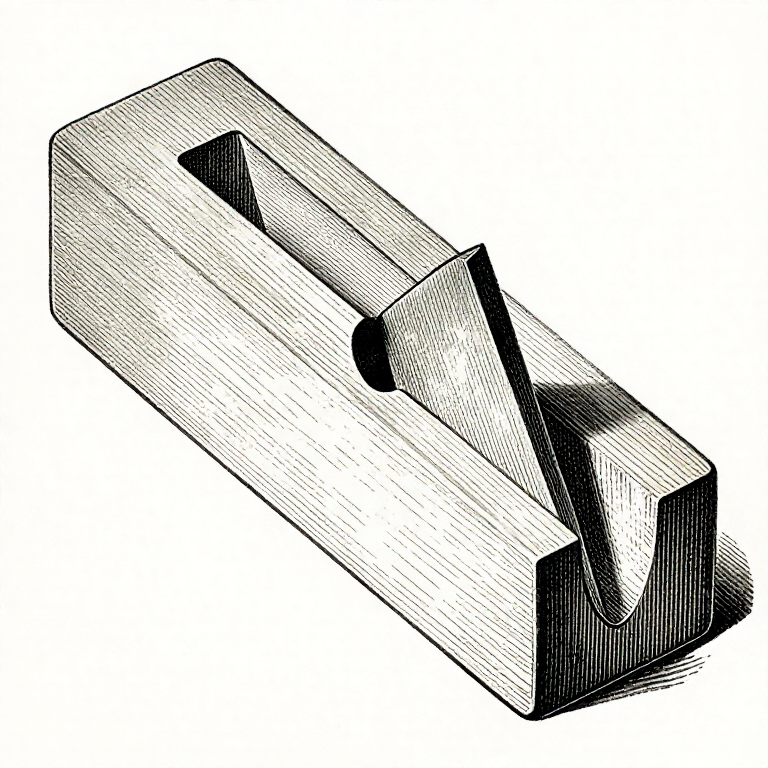


Dovetails: Why They Point One Way, and What That Buys You
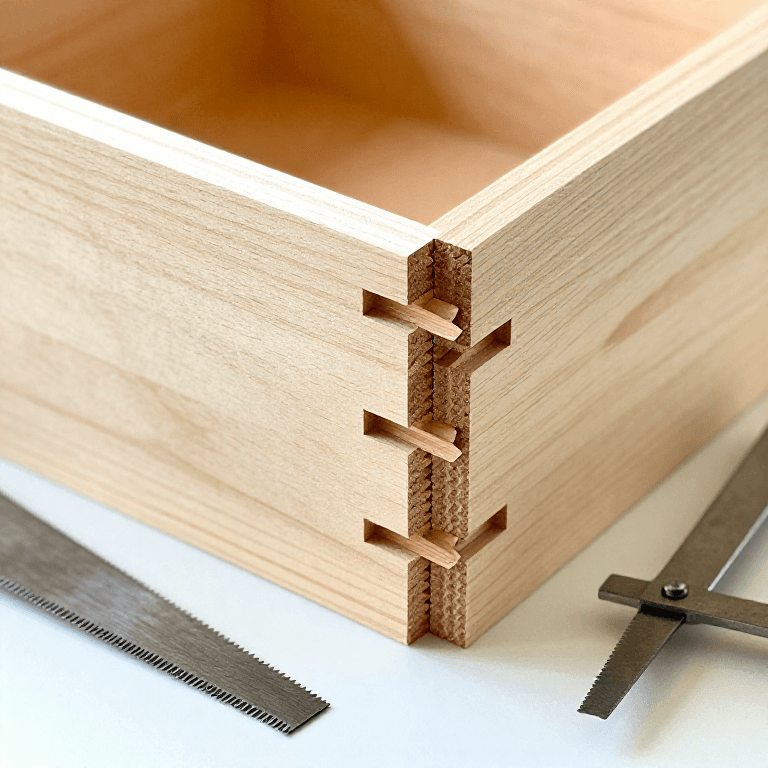
A dovetail is a wedge that can only come out one way. Pull the joint apart in the direction the tails are angled and the wedges jam; pull it the other way and it slides straight out.
That single-direction lock is the whole point, and it is why the joint is used where it is. A drawer front is pulled outward thousands of times, so the tails go on the SIDES and the pins on the front, and every pull tightens the joint instead of loosening it.
It also means a dovetailed corner survives its glue. Antique drawers routinely have completely dead hide glue and perfectly sound corners, because the geometry was doing the work all along.
高级
4 hours
说明
1
1
Work out which way the pull comes from
Work out which way the pull comes from
Before marking anything, decide which direction the joint will be pulled apart in service. The tails go on the piece that is being pulled, and they are angled so that pull drives them deeper into the pins.
A drawer: tails on the sides, pins on the front, because the front is pulled. A carcase: tails on the piece that the load hangs from. A box with no obvious direction: either, and then it is chosen for appearance.
Get it backwards and you have a joint that is beautiful, difficult, and no stronger than a rebate. It is the one decision in the whole joint that cannot be corrected afterwards.
此步骤所需材料:
 硬木板1 个
所需工具:
 划线规
划线规 组合角尺
组合角尺2
2
The angle, and what it is actually trading
The angle, and what it is actually trading
The usual angles are about 1:8 for hardwood and 1:6 for softwood — roughly 7 and 9.5 degrees. They are not arbitrary and they are not decoration.
A STEEPER angle (1:5 and beyond) gives a stronger mechanical lock but leaves the tips of the tails as very short, fragile, nearly-end-grain corners that break off during assembly. A SHALLOWER angle (1:10) gives robust tails and less lock, tending towards a finger joint, which has none at all.
Softwood gets the steeper angle because its fibres are weaker and it needs more mechanical interlock; hardwood gets the shallower one because it can hold a fine tip and does not need as much. Which is the same trade as chisel bevel angles: the angle follows the material.
此步骤所需材料:
硬木板1 个 干燥软木板1 个
所需工具:
划线规组合角尺 划线刀
划线刀3
3
Cut one, mark from it, cut the other
Cut one, mark from it, cut the other
Cut the tails first, then stand them on the pin board and knife round them to mark the pins. Never measure both independently — the second set is transferred from the first, so any error in the first is copied rather than added to.
That is the same principle as measuring everything from one face side: share a reference and errors stop compounding. A dovetail cut from two independent measurements is the cumulative-error rung producing gaps.
Saw on the WASTE side of every knife line, and leave the line itself. The line is where the joint closes, and a saw kerf taken out of it is a gap that has to be filled.
此步骤所需材料:
硬木板1 个所需工具:
 夹背锯划线刀
 凿子
凿子 台虎钳
台虎钳4
4
One dry test fit, and no more
One dry test fit, and no more
Push the joint together by hand until it is about a third home, look at where it is binding, and pare THAT. Do not drive it fully home to see whether it fits: wood compresses, and a joint assembled dry is looser every time afterwards.
Pare the pins rather than the tails when correcting. A pared pin is hidden inside the joint; a pared tail shows on the outside face.
A dovetail is also almost pure long-grain glue surface on the tail cheeks, so a well-fitted one is both mechanically locked and properly glued. That is why it is worth the difficulty — it is the only common joint that solves the end-grain problem twice over.
此步骤所需材料:
硬木板1 个 PVA 木工胶1 个
所需工具:
凿子 木槌
木槌 F 夹(滑动夹)
相关蓝图
这些蓝图共享知识——技术、材料或原理
CC0 公共领域
此蓝图以 CC0 协议发布。你可以自由复制、修改、分发和使用此作品,无需征得许可。
通过购买蓝图中的产品支持创客,他们将获得 创客佣金 (由供应商设定),或创建此蓝图的新版本并将其作为连接包含在你自己的蓝图中以分享收入。