Zusammenarbeit
KUNST
SCHÖNHEIT & WELLNESS
HANDWERK
KULTUR & GESCHICHTE
UNTERHALTUNG
UMFELD
ESSEN & GETRÄNKE
REVERSE ENGINEERING
WISSENSCHAFTEN
SPORT
TECHNOLOGIE
WEARABLES
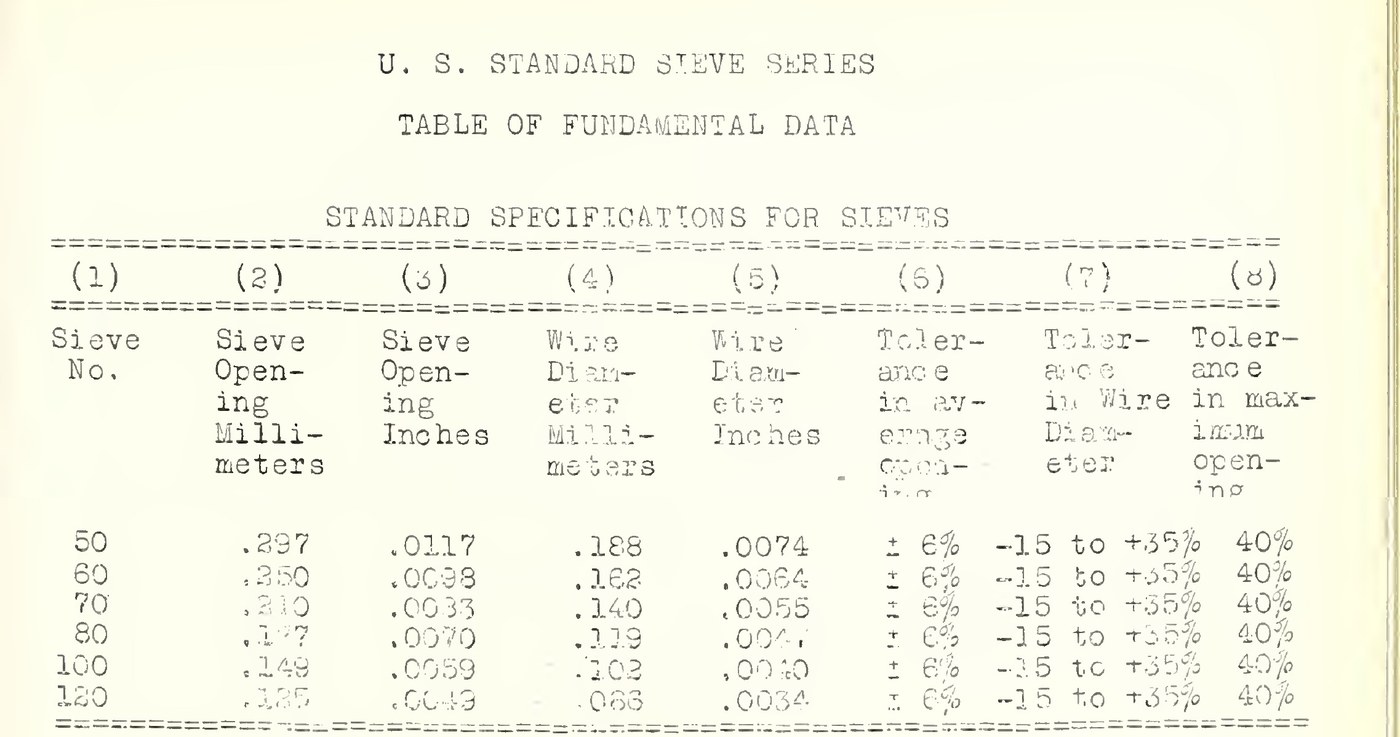


120-Mesh Sieve: U.S. Standard Sieve No. 120 (Bureau of Standards, 1924)
The standard testing sieve No. 120: plain-woven brass or bronze wire cloth with 0.125 mm (0.0049 in) openings and 0.086 mm (0.0034 in) wire, soldered smoothly into a round frame about 20 cm (8 in) across.
Result: a sieve that passes grains under 0.125 mm and holds back larger ones, made to the Bureau of Standards tolerances.
Source: Bureau of Standards, Letter Circular 74, Standard Specifications for Sieves (revised 1924). Unknown: the frame metal and the weaving. Picture: the Bureau's table.
Fortgeschritten
Unknown
Anweisungen
1
1
Weave the wire cloth
Weave the wire cloth
Weave plain (not twilled) cloth from brass, bronze or other suitable wire 0.086 mm (0.0034 in) thick, so the openings between adjacent wires are 0.125 mm (0.0049 in) each way, about 120 wires to the inch. Ours: bronze wire. Not given: how it is woven.
Materialien für diesen Schritt:
 Bronzedraht1 warp and shoot wires
Benötigte Werkzeuge:
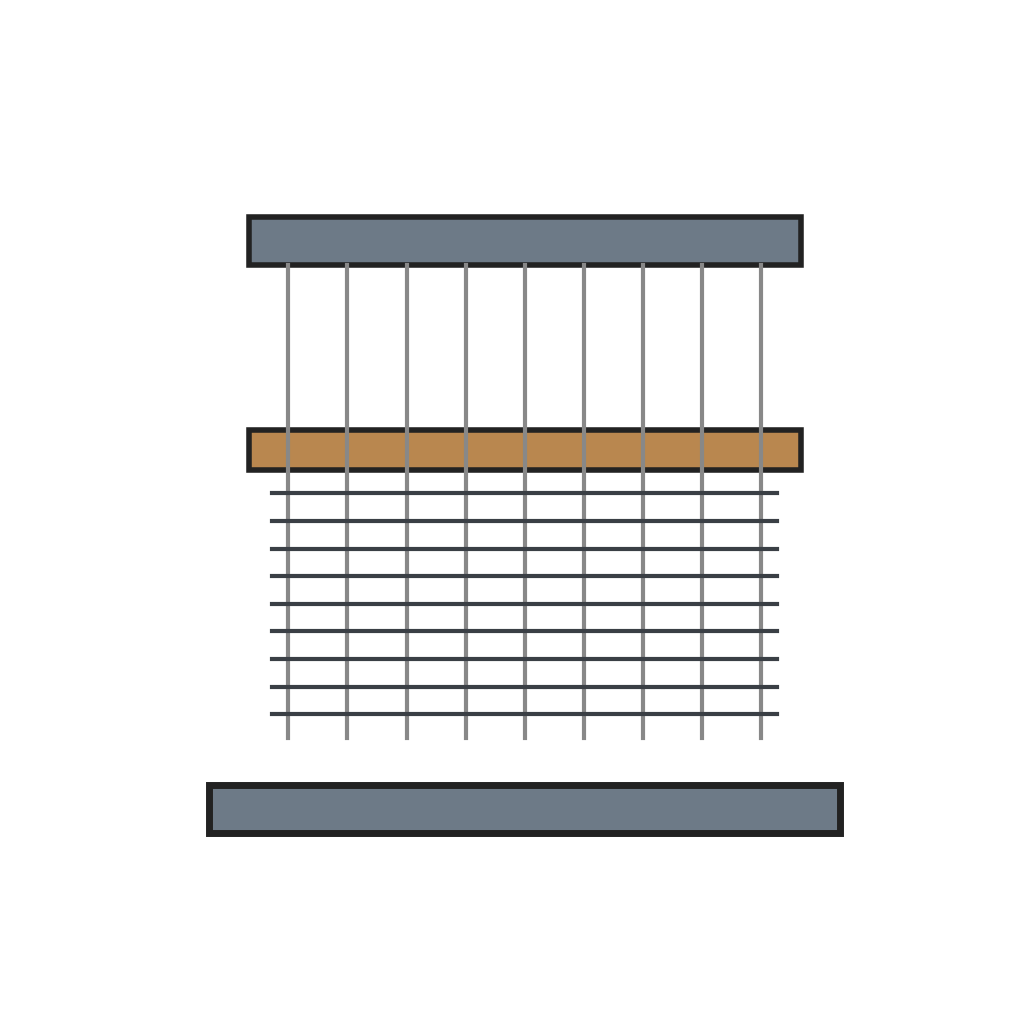 Drahtgewebewebstuhl
2
2
Make the frame
Make the frame
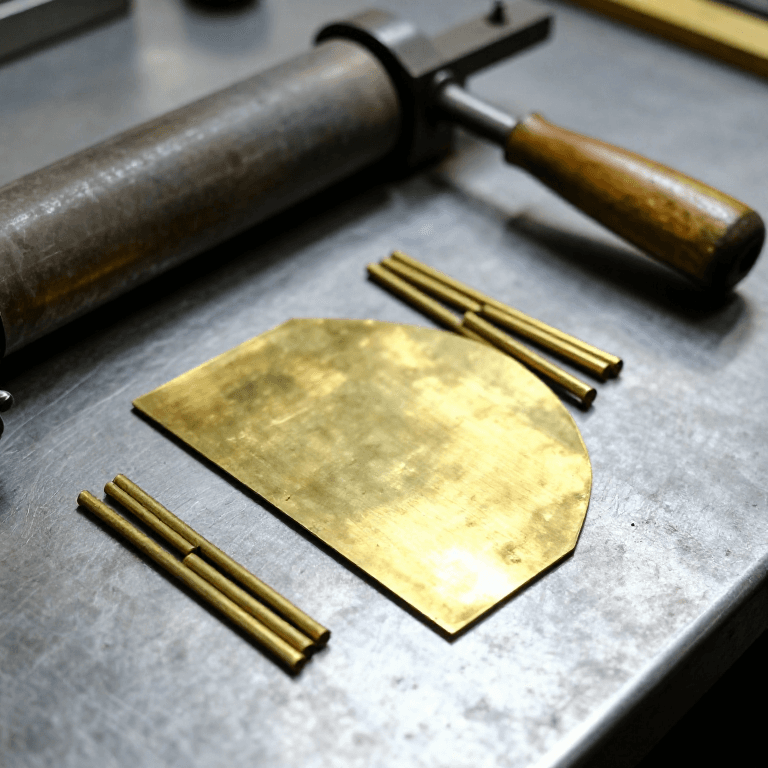
Make a circular frame about 20 cm (8 in) across, with about 5 cm (2 in), or 2.5 cm (1 in), between its top and the cloth. Ours: brass strip. Not given: the frame metal.
Materialien für diesen Schritt:
 Messingband1 frame
Benötigte Werkzeuge:
 Blechschere
 Lötkolben
3
3
Mount the cloth
Mount the cloth
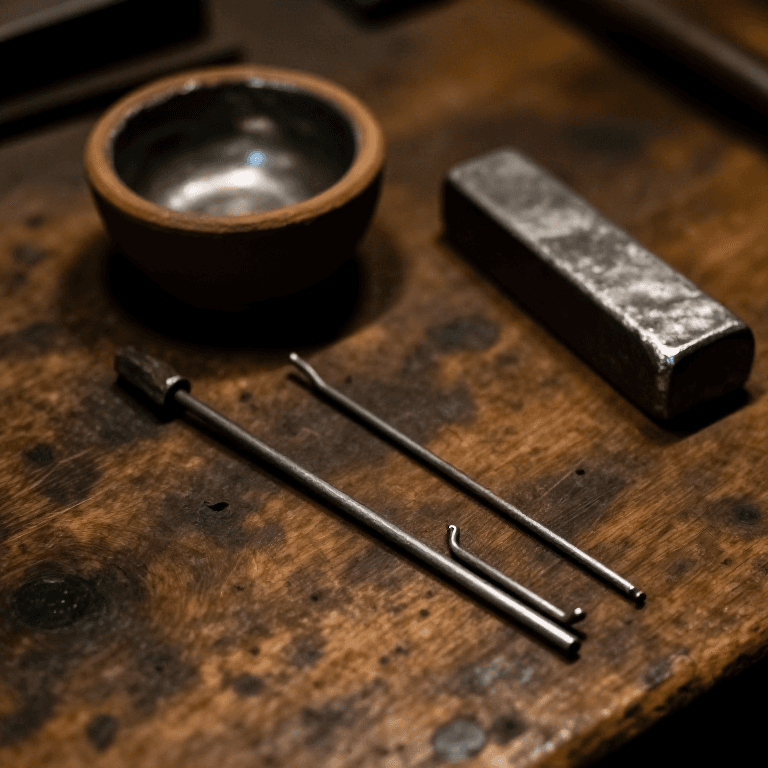
Mount the cloth on the frame without distorting it. Fill the joint between cloth and frame smoothly with solder, so the material being sieved cannot catch in it.
Materialien für diesen Schritt:
 Zinn-Blei-Lot1 joint
 Flussmittel1 joint
Benötigte Werkzeuge:
Lötkolben4
4
Check it against the tolerances
Check it against the tolerances
Measure the warp and shoot wires separately. Their average opening must be 0.125 mm within ±6 %, their average diameter 0.086 mm within −15 to +35 %, and no opening may exceed 0.125 mm by more than 40 %. Reject a sieve with punctures, loose or wavy cloth, poor soldering, or too many large openings.
Benötigte Werkzeuge:
 Mikrometer
 Lupe
Materialien
4- 1 warp and shoot wiresPlatzhalter
- 1 framePlatzhalter
- 1 jointPlatzhalter
- 1 jointPlatzhalter
Materialien verbundener Blueprints



Dieser Bauplan stellt her

CC0 Gemeinfrei
Dieser Blueprint ist unter CC0 veröffentlicht. Sie dürfen dieses Werk für jeden Zweck frei kopieren, ändern, verbreiten und verwenden, ohne um Erlaubnis zu fragen.
Unterstützen Sie den Maker, indem Sie Produkte über seinen Blueprint kaufen, wo er eine Maker-Provision von Anbietern festgelegt, verdient. Oder erstellen Sie eine neue Iteration dieses Blueprints und verbinden Sie ihn in Ihrem eigenen Blueprint, um Einnahmen zu teilen.