

Carbon Fiber — From Polymer Precursor to the Strongest Textile Fiber on Earth
In 1961, Dr. Akio Shindo at the Agency of Industrial Science and Technology in Osaka, Japan, discovered that polyacrylonitrile (PAN) fiber — a common textile acrylic — could be converted into carbon fiber by controlled heating in an inert atmosphere. The resulting fiber was 90–99% pure carbon, with a tensile strength exceeding steel and a density one-quarter that of steel. Toray Industries licensed Shindo's process and, after a decade of development, began commercial production in 1971. Today, Toray remains the world's largest carbon fiber producer, commanding approximately 30% of global capacity.
The transformation from PAN fiber to carbon fiber involves three thermal stages. Stabilization (200–300°C in air) oxidizes and crosslinks the PAN molecules, converting them from a thermoplastic to an infusible ladder polymer. Carbonization (1,000–1,500°C in nitrogen) drives off all non-carbon elements — hydrogen, nitrogen, oxygen — leaving a fiber that is over 93% carbon arranged in turbostratic graphite sheets aligned along the fiber axis. Optional graphitization (2,000–3,000°C) increases the carbon content above 99% and improves the elastic modulus, producing ultra-high-modulus fibers used in spacecraft and satellites.
Carbon fiber has a tensile strength of 3,500–7,000 MPa (versus 400–550 MPa for structural steel) and a density of only 1.75–1.95 g/cm³ (versus 7.85 for steel). This extraordinary strength-to-weight ratio has made it the dominant reinforcement fiber for high-performance composites in aerospace (Boeing 787 is 50% carbon fiber composite by weight), Formula 1 racing, wind turbine blades, sporting goods (tennis rackets, golf clubs, bicycle frames), and increasingly automotive structures. Global production exceeds 120,000 tonnes per year, with Toray, Toho Tenax (Teijin), and Mitsubishi Chemical as the three dominant producers — all Japanese, reflecting the technology's origins.
Anweisungen
Understand what carbon fiber is
Understand what carbon fiber is
Carbon fiber is a continuous filament, 5–10 micrometers in diameter (roughly one-tenth the diameter of a human hair), composed of at least 90% carbon atoms. The carbon atoms are bonded together in microscopic crystals aligned parallel to the fiber axis — a structure called turbostratic graphite. This alignment gives the fiber extraordinary strength and stiffness along its length while remaining lightweight. A single carbon filament is too thin to handle alone; carbon fibers are bundled into tows of 1,000 to 50,000 filaments (designated 1K to 50K), which are the commercial unit of sale.
Select the precursor fiber
Select the precursor fiber
Over 90% of commercial carbon fiber is made from polyacrylonitrile (PAN) — a synthetic acrylic fiber also used in knitwear and industrial fabrics. PAN is preferred because its molecular structure (a carbon backbone with pendant nitrile groups, -C≡N) readily forms the ladder polymer needed for carbonization. The remaining 10% uses rayon or petroleum pitch as precursors. The precursor fiber quality determines the final carbon fiber properties — Toray's flagship T800 and T1100 carbon fibers begin with specially developed PAN copolymer precursors optimized for carbon yield and mechanical properties.
Spin the PAN precursor fiber
Spin the PAN precursor fiber
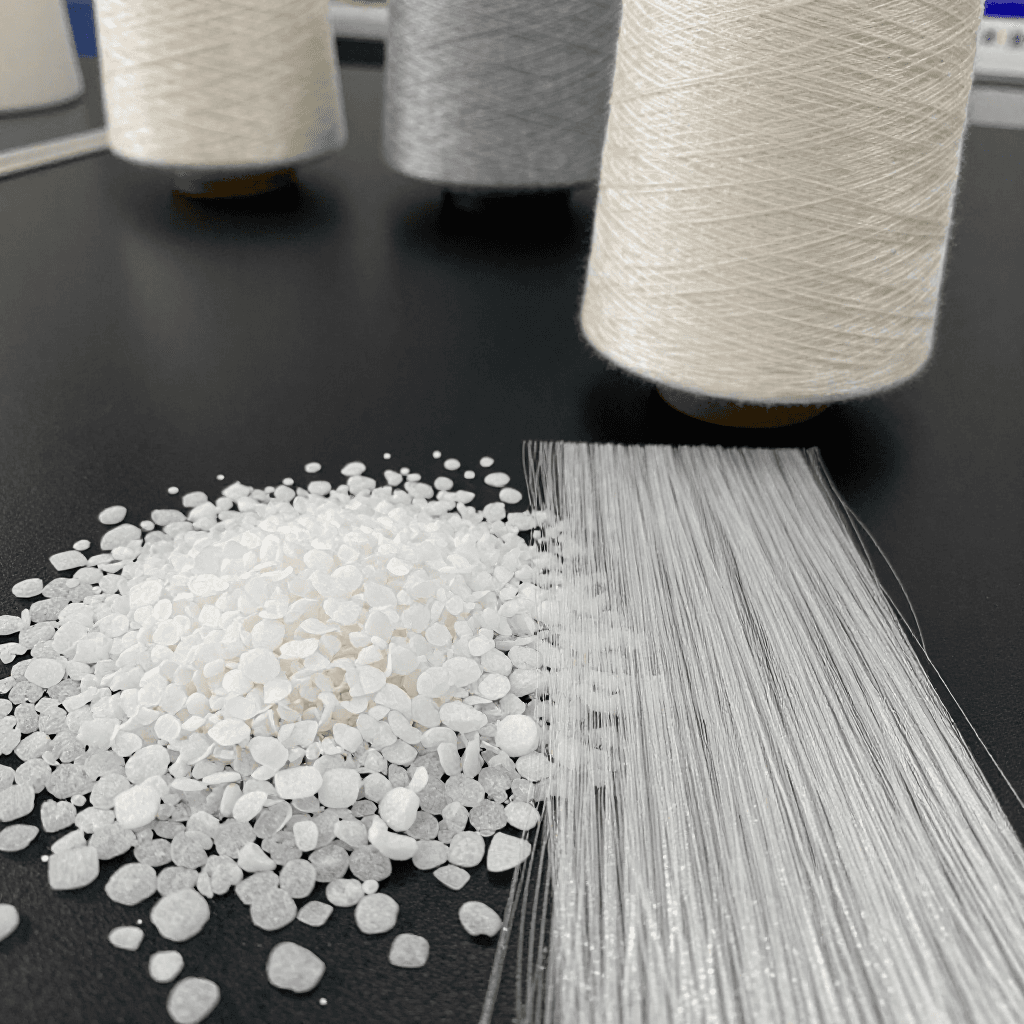
Dissolve PAN copolymer (typically 90–95% acrylonitrile with 5–10% co-monomer such as methyl acrylate or itaconic acid) in a solvent — dimethyl sulfoxide (DMSO), dimethylformamide (DMF), or sodium thiocyanate solution. Extrude the solution through a spinneret into a coagulation bath (wet spinning) or into hot air (dry-jet wet spinning) to form continuous PAN filaments. Draw the filaments to 8–12 times their original length to orient the PAN molecules along the fiber axis. The resulting precursor fiber is white, 10–15 micrometers in diameter, and indistinguishable in appearance from ordinary acrylic textile fiber.
Materialien für diesen Schritt:
 Ethylenglykol200 ml
Stabilize in air at 200–300°C
Stabilize in air at 200–300°C
Pass the PAN precursor fiber continuously through an oxidation oven at 200–300°C in air for 30–120 minutes. During stabilization, the nitrile groups on adjacent PAN chains react to form a conjugated ladder polymer — a rigid, thermally stable ring structure that will not melt during subsequent high-temperature treatment. The fiber changes color from white to yellow to brown to black as the cyclization progresses. Stabilization is the slowest and most energy-intensive step — it must be carefully controlled because the reaction is exothermic and can cause runaway heating if the temperature rises too fast.
Benötigte Werkzeuge:
 Destillierkolben aus Glas
Carbonize at 1,000–1,500°C in nitrogen
Carbonize at 1,000–1,500°C in nitrogen
Pass the stabilized fiber through a carbonization furnace at 1,000–1,500°C under nitrogen atmosphere. At these temperatures, the non-carbon atoms — hydrogen, oxygen, and most of the nitrogen — are expelled as volatile gases (HCN, H₂O, N₂, CO₂). The remaining carbon atoms rearrange into turbostratic graphite sheets — parallel hexagonal carbon planes aligned along the fiber axis, but with random rotational stacking between planes (unlike the regular ABAB stacking of true graphite). The fiber shrinks in diameter to 5–8 micrometers and loses approximately 50% of its mass. The resulting fiber is 93–95% carbon.
Optionally graphitize at 2,000–3,000°C
Optionally graphitize at 2,000–3,000°C
For ultra-high-modulus carbon fiber, pass the carbonized fiber through a graphitization furnace at 2,000–3,000°C under argon atmosphere. At these extreme temperatures, the turbostratic carbon structure becomes more ordered — the graphite planes grow larger and align more perfectly. Carbon content exceeds 99%. The elastic modulus increases from 230 GPa (standard modulus, carbonized only) to 500–900 GPa (ultra-high modulus, graphitized). However, tensile strength may decrease because larger graphite crystals create larger flaws. This trade-off — higher stiffness versus lower strength — determines which grade is selected for each application.
Surface-treat the fiber for adhesion
Surface-treat the fiber for adhesion
Carbonized fiber has a chemically inert graphite surface that bonds poorly to epoxy and other matrix resins. To create a strong fiber-matrix interface in composites, oxidize the fiber surface by electrolytic treatment — pass the fiber through an electrolyte bath (ammonium bicarbonate or sodium hydroxide solution) while applying electric current. This grafts oxygen-containing functional groups (hydroxyl, carboxyl, carbonyl) onto the fiber surface without damaging the bulk fiber. The surface roughness also increases, providing mechanical interlocking with the resin. Surface treatment increases the interfacial shear strength by 50–100%.
Apply sizing and wind onto bobbins
Apply sizing and wind onto bobbins
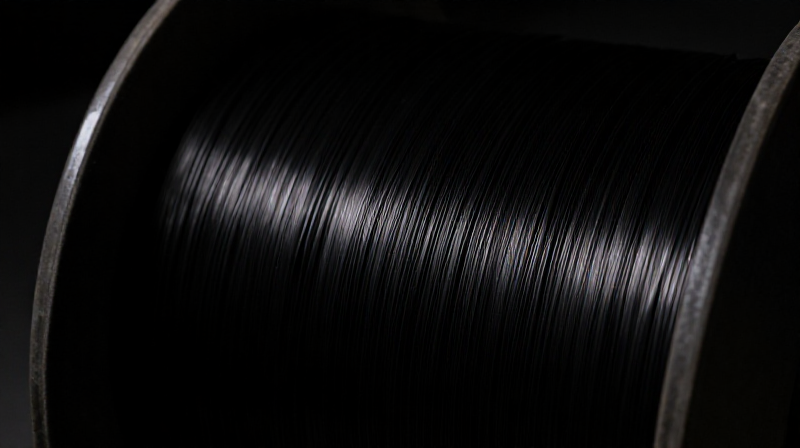
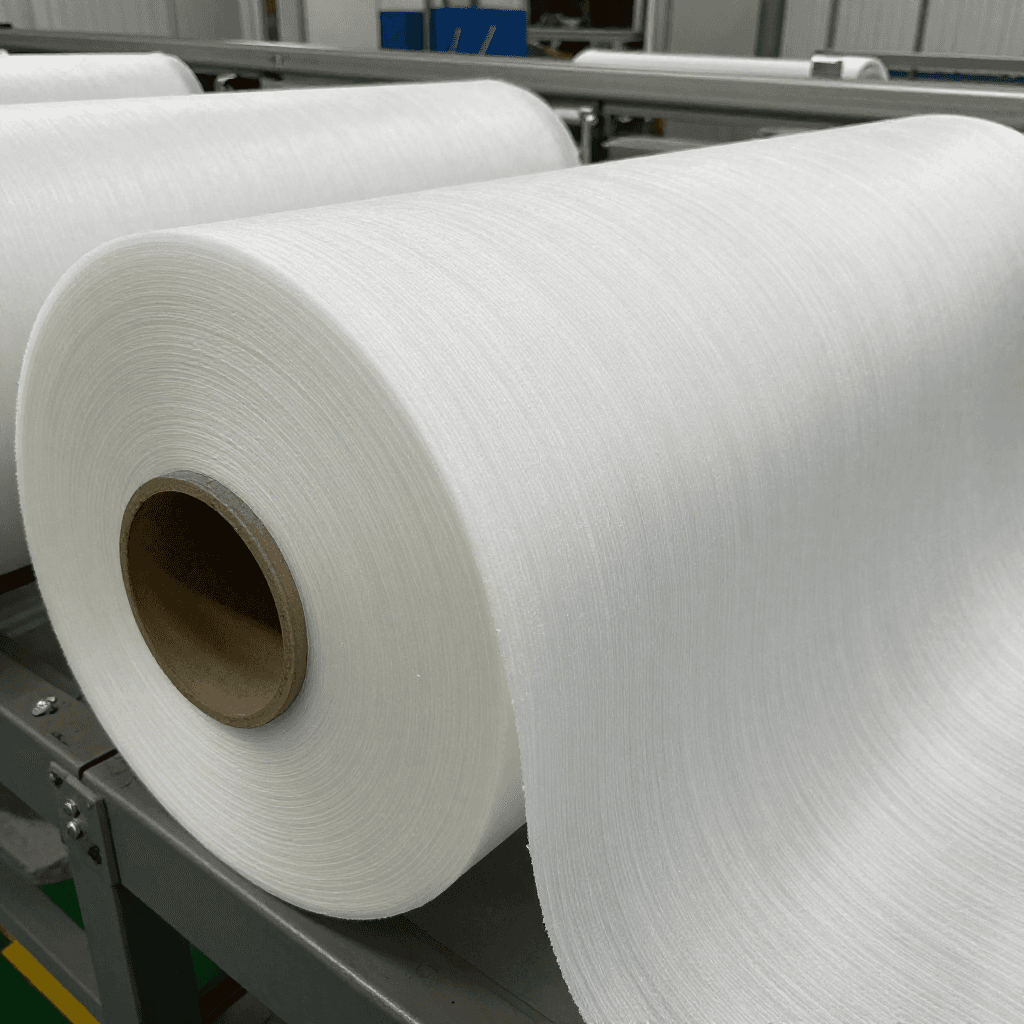
Coat the surface-treated fiber with a thin layer of sizing — typically 0.5–2% by weight of an epoxy-compatible polymer. Sizing protects the brittle carbon filaments from damage during handling, weaving, and composite layup. It also improves wet-out (the ability of liquid resin to spread along and between filaments). Wind the sized carbon fiber tow onto bobbins — the final product. Commercial tows are designated by filament count: 3K (3,000 filaments), 6K, 12K, 24K, and 50K. Aerospace applications typically use 3K–12K tows; industrial applications use 24K–50K large tows for faster layup.
Weave or braid carbon fiber into fabric
Weave or braid carbon fiber into fabric
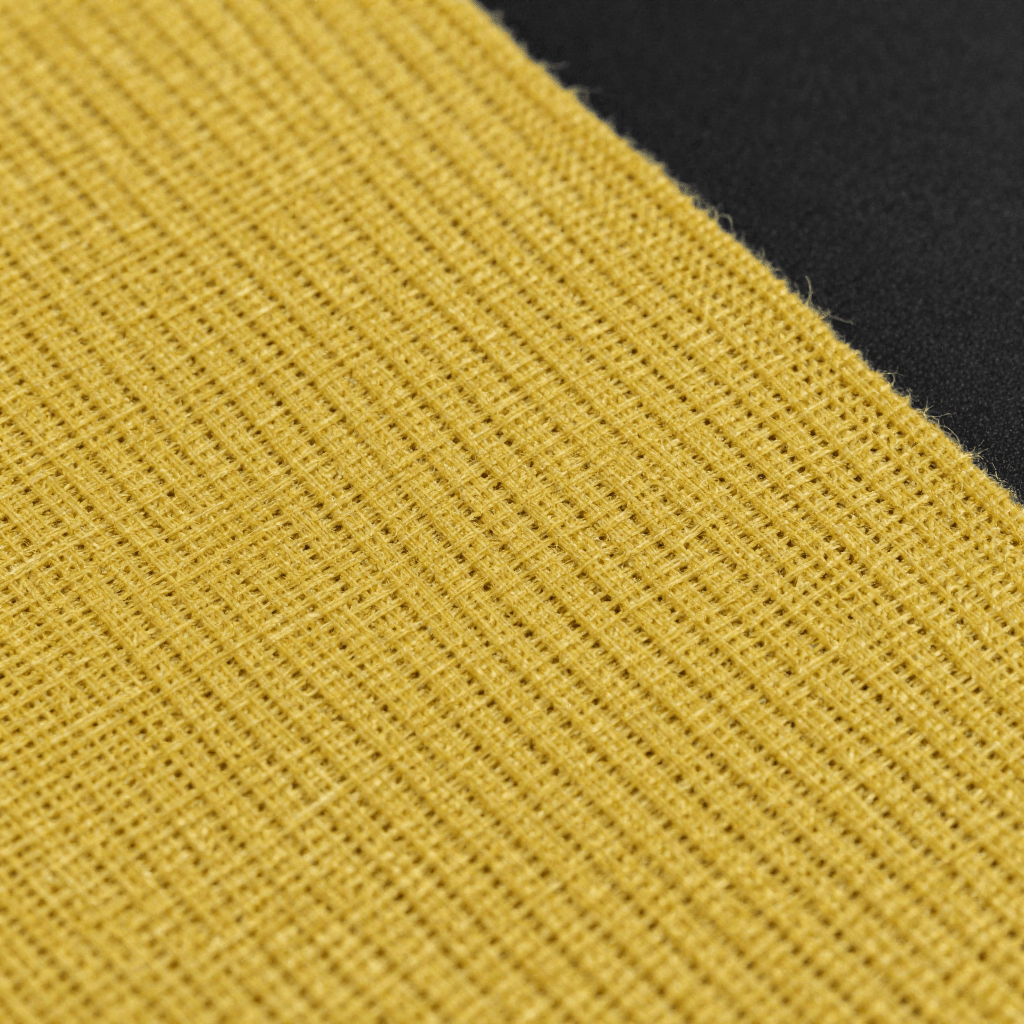
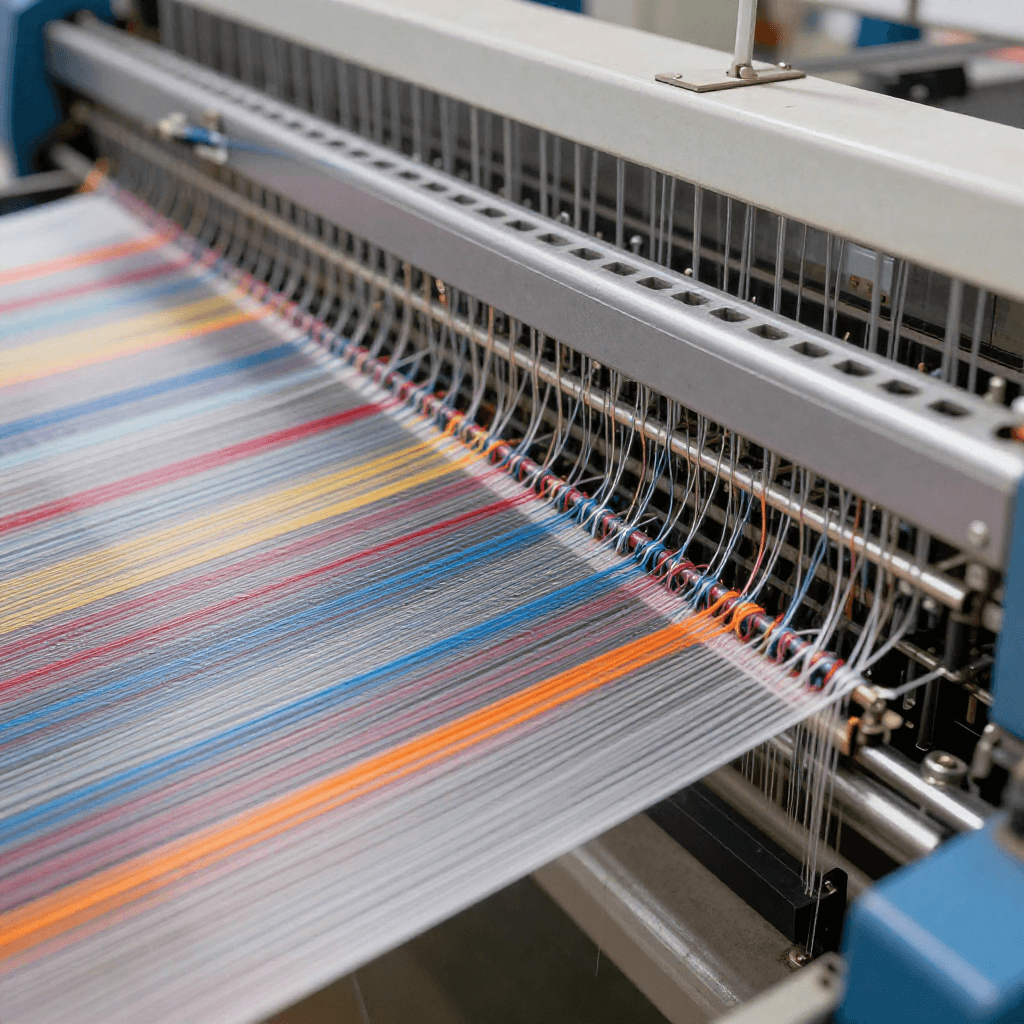
Convert carbon fiber tows into textile forms for composite manufacturing. Woven carbon fabric (plain weave, twill weave, or satin weave) is produced on modified rapier looms — the fiber is too brittle for shuttle looms. Unidirectional tape has all fibers aligned in one direction, held by a light cross-thread. Multiaxial fabrics (produced on warp knitting machines) stack layers at 0°, 90°, ±45° without crimping the fibers. Braided sleeves wrap around complex shapes. Each textile form offers different drapability, fiber orientation control, and mechanical properties — the choice depends on the composite application.
Apply carbon fiber in aerospace composites
Apply carbon fiber in aerospace composites
The Boeing 787 Dreamliner uses approximately 35 tonnes of carbon fiber reinforced polymer (CFRP) per aircraft — 50% of the structural weight, including the fuselage barrel, wings, and tail. CFRP saves 20% weight compared to aluminum, reducing fuel consumption proportionally. The Airbus A350 similarly uses 53% CFRP by weight. Carbon fiber composites are fabricated by layup (placing carbon fabric layers into a mold), infusing with epoxy resin, and curing in an autoclave at 120–180°C under 6–7 bar pressure. The autoclave cycle — typically 4–8 hours — crosslinks the epoxy, creating a rigid, lightweight structure.
Recognize the safety requirements
Recognize the safety requirements
Carbon fiber production and handling present multiple hazards. Stabilization and carbonization furnaces operate at extreme temperatures with toxic off-gases (hydrogen cyanide from PAN pyrolysis). Broken carbon filaments are electrically conductive — airborne carbon dust can cause short circuits in electrical equipment. Carbon fiber dust is a skin and respiratory irritant — the stiff, needle-like fragments penetrate skin and can cause contact dermatitis. All cutting and machining of carbon fiber composites must be done with dust extraction and respiratory protection. Carbon fiber waste is difficult to recycle because the thermoset epoxy matrix cannot be remelted.
Understand carbon fiber's place in textile technology
Understand carbon fiber's place in textile technology
Carbon fiber completes a transformation in what the word 'fiber' means. Traditional textile fibers — cotton, wool, silk, polyester, nylon — are soft, flexible materials designed for clothing and fabric. Carbon fiber is a structural material that happens to be produced in fiber form — its properties (extreme stiffness, high strength, low density, electrical conductivity, chemical inertness) have nothing to do with clothing and everything to do with replacing metal. Yet it is manufactured using textile processes (spinning, drawing, weaving, knitting, braiding) and its performance depends on textile engineering principles (fiber orientation, crimp, weave pattern). Carbon fiber represents the point where textile technology crossed over from making things to wear into making the structures of aircraft, racing cars, and wind turbines.
Materialien
1- 200 mlPlatzhalter
Benötigte Werkzeuge
1- Platzhalter
Materialien verbundener Blueprints
Dieser Bauplan stellt her
Verwandte Blueprints
Diese Blueprints teilen Wissen — Techniken, Materialien oder Prinzipien
CC0 Gemeinfrei
Dieser Blueprint ist unter CC0 veröffentlicht. Sie dürfen dieses Werk für jeden Zweck frei kopieren, ändern, verbreiten und verwenden, ohne um Erlaubnis zu fragen.
Unterstützen Sie den Maker, indem Sie Produkte über seinen Blueprint kaufen, wo er eine Maker-Provision von Anbietern festgelegt, verdient. Oder erstellen Sie eine neue Iteration dieses Blueprints und verbinden Sie ihn in Ihrem eigenen Blueprint, um Einnahmen zu teilen.