KUNST
SCHÖNHEIT & WELLNESS
HANDWERK
KULTUR & GESCHICHTE
UNTERHALTUNG
UMFELD
ESSEN & GETRÄNKE
REVERSE ENGINEERING
WISSENSCHAFTEN
SPORT
TECHNOLOGIE
WEARABLES
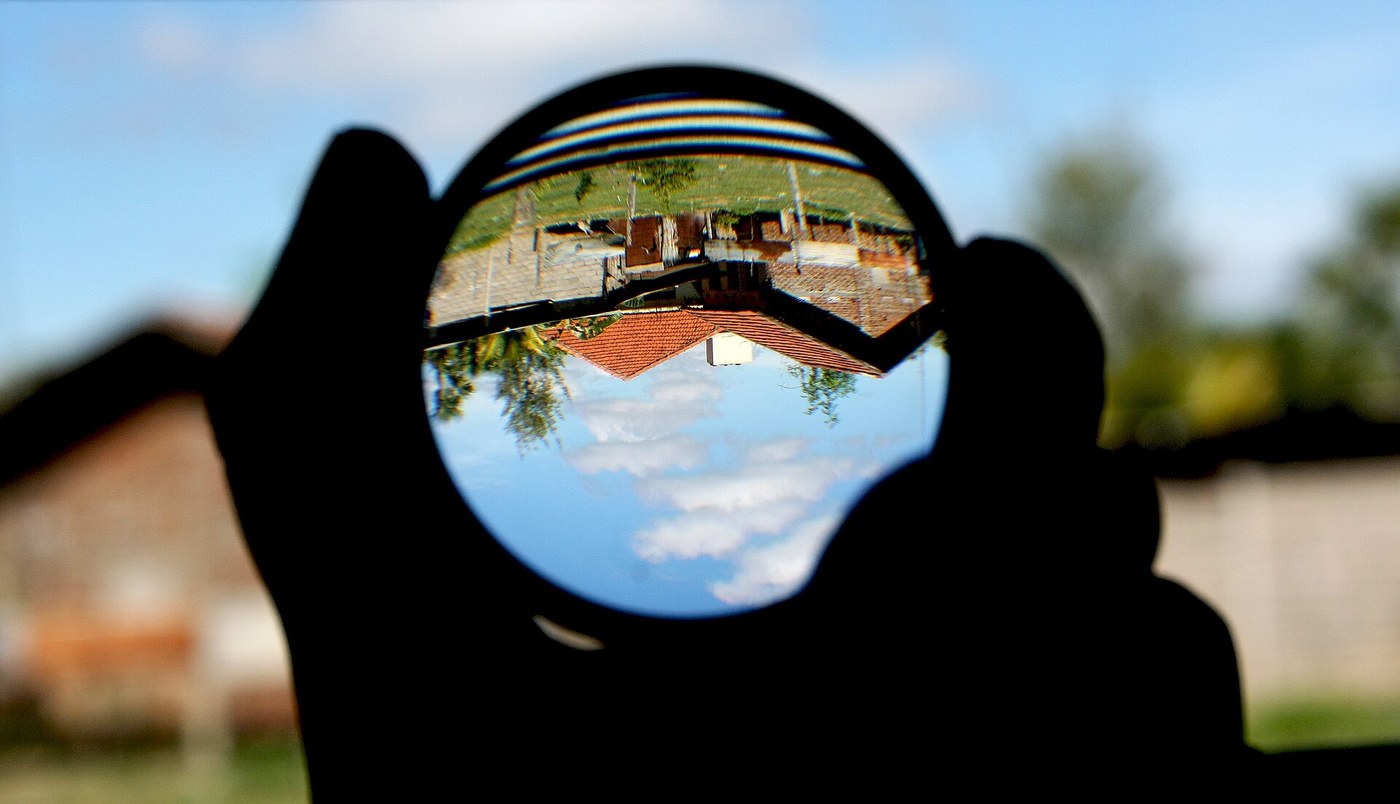


Convex and Concave Lenses Ground as a Pair
Rub one glass disc over another with wet grit and both change shape: the one on top goes hollow, the one beneath goes domed, and they stay a perfect fit. Grind both faces of a pair this way and the bottom disc becomes a double-convex lens, the top one a double-concave lens of the same curve. Longer work gives deeper curves and shorter focal lengths.
The picture: a double-convex lens held at arm's length shows the scene small and upside down.
Erfahren
Several days per pair
Anweisungen
1
1
Cut two discs
Cut two discs
Score two equal circles on the glass sheet, snap them out and nibble the edges round with grozing pliers. Fix a short wooden handle to the back of each with warm pitch.
Materialien für diesen Schritt:
 Glasscheibe1 Stück
 Kiefernpechleim20 g
 Hartholzleiste1 Stück
Benötigte Werkzeuge:
 Glasschneider
 Kröselzange
 Schutzbrille
2
2
Rough grind the first faces
Rough grind the first faces
Lay one disc face up on a firm table, wet it and sprinkle coarse grit. Push the other disc over it, face down, in short strokes, turning both a little all the time. The top one becomes concave, the bottom convex. Rinse and recharge as the grit wears.
Materialien für diesen Schritt:
 Wasser2 Liter
Benötigte Werkzeuge:
 Lineal
 Siliciumcarbid-Körnung
3
3
Check the curve
Check the curve
Lay a ruler across the hollow disc and measure the depth at the centre with the caliper. Keep the top disc on top to deepen the curve; swap them to flatten it.
Benötigte Werkzeuge:
Lineal Digitaler Messschieber 6 Zoll
4
4
Fine grind and polish
Fine grind and polish
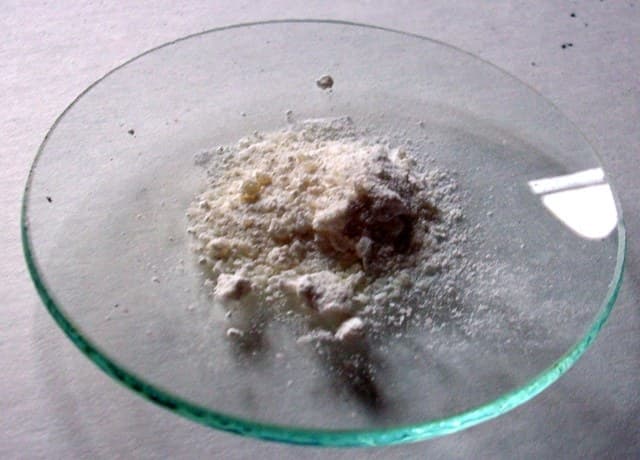
Go through finer grits, washing everything clean between grits. Polish each face on a pitch lap pressed to the other disc's curve, with tin oxide (putty powder) and water, until clear.
Materialien für diesen Schritt:
 Zinnoxid (Zinn(IV)-oxid)30 gKiefernpechleim100 g
Benötigte Werkzeuge:
Siliciumcarbid-Körnung5
5
Turn them over, do the second faces
Turn them over, do the second faces
Move the handles to the finished faces and grind the other sides the same way, the same disc on top, to the same depth. The bottom disc is now a double-convex lens, the top one double-concave.
Materialien für diesen Schritt:
Zinnoxid (Zinn(IV)-oxid)20 gBenötigte Werkzeuge:
Digitaler Messschieber 6 ZollSiliciumcarbid-Körnung6
6
Find the focal length
Find the focal length
Hold the convex lens in sunlight over paper and move it until the spot is smallest; that distance is its focal length. Grind more pairs to different depths for a set of focal lengths.
Benötigte Werkzeuge:
Lineal7
7
Focal length from the curve
Focal length from the curve
Jupyter-Notebook wird geladen …
8
8
Limits
Limits
Which disc goes hollow is the mirror makers' rule (Sky & Telescope, Stellafane); the lens formula is from Wikipedia. Window glass is not optical glass: expect some colour fringes and bubbles.
Materialien
5- 1 StückPlatzhalter
- 120 gPlatzhalter
- 1 StückPlatzhalter
- 2 LiterPlatzhalter
- Platzhalter
Dieser Bauplan stellt her


Verwandte Blueprints
Diese Blueprints teilen Wissen — Techniken, Materialien oder Prinzipien

CC0 Gemeinfrei
Dieser Blueprint ist unter CC0 veröffentlicht. Sie dürfen dieses Werk für jeden Zweck frei kopieren, ändern, verbreiten und verwenden, ohne um Erlaubnis zu fragen.
Unterstützen Sie den Maker, indem Sie Produkte über seinen Blueprint kaufen, wo er eine Maker-Provision von Anbietern festgelegt, verdient. Oder erstellen Sie eine neue Iteration dieses Blueprints und verbinden Sie ihn in Ihrem eigenen Blueprint, um Einnahmen zu teilen.