

Frequency Analysis
Anweisungen
Build your own reference profile
Build your own reference profile
Do not take the published table on trust — measure it.
- Take a page of ordinary English, at least 1000 letters.
- Tally every letter.
- Convert to percentages and draw a bar chart.
Materialien für diesen Schritt:
 Millimeterpapier1 pad
 Bleistiftsatz (Graphit)1 Set
Find how much text you need
Find how much text you need
The method has a minimum sample size, and it is worth knowing yours.
- Tally a 50-letter passage and chart it.
- Repeat with 200 letters, then 1000.
- Compare each against your reference.
Work from pairs, not just single letters
Work from pairs, not just single letters
Single-letter counts get you started; the structure finishes the job.
- Tally the commonest two-letter sequences — TH, HE, IN, ER, AN.
- Note doubled letters: LL, SS, EE, OO are common; QQ never occurs.
- Note that Q is essentially always followed by U.
Read a message end to end
Read a message end to end
Put it together on a real ciphertext enciphered with a scrambled alphabet.
- Chart the ciphertext frequencies and assign the top few candidates.
- Use doubles and common pairs to test each guess.
- Fill in short words — a one-letter word is A or I; a three-letter word beginning with your candidate T is likely THE.
- Revise any assignment that produces impossible spellings.
Materialien für diesen Schritt:
 Karton1 Packung
History and context
History and context
Al-Kindi (c. 801-873), working in the House of Wisdom in Baghdad, wrote A Manuscript on Deciphering Cryptographic Messages, which contains the earliest known description of frequency analysis. It emerged from an existing scholarly practice: Arabic linguists were already counting letter and word frequencies to study the Qur'an and to date texts. A technique developed for scholarship turned out to answer a completely different question.
Europe took roughly six hundred years to arrive at the same place, which is worth stating plainly rather than treating European cryptography as the main line with others as footnotes.
Where the approach applies: anywhere a code maps symbols consistently and the underlying message has statistical structure. That is a wide region — it covers simple substitution, many historical nomenclators, and a great deal of amateur encoding. It also applies outside cryptography entirely: the same counting is used to attribute disputed authorship, to identify the language of an unknown text, and in the earliest work on compression, where frequent symbols are given shorter codes.
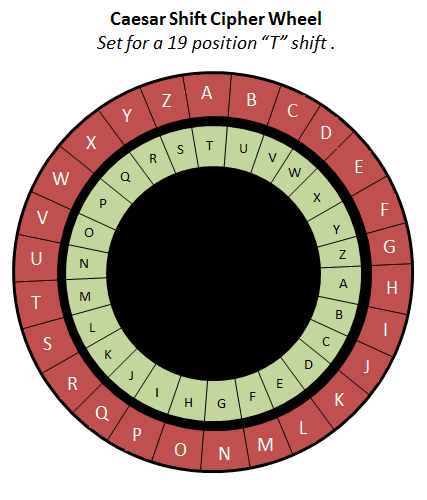
Where it does not reach: methods that change the mapping as they go, such as a turning cipher disc, flatten the profile and put the message outside this technique's range. That is not a defeat of frequency analysis; it defines the boundary of where it is the right tool, and it is why the polyalphabetic family exists at all.
Materialien
3- 1 padPlatzhalter
- Platzhalter
- 1 PackungPlatzhalter
Verwandte Blueprints
Diese Blueprints teilen Wissen — Techniken, Materialien oder Prinzipien
CC0 Gemeinfrei
Dieser Blueprint ist unter CC0 veröffentlicht. Sie dürfen dieses Werk für jeden Zweck frei kopieren, ändern, verbreiten und verwenden, ohne um Erlaubnis zu fragen.
Unterstützen Sie den Maker, indem Sie Produkte über seinen Blueprint kaufen, wo er eine Maker-Provision von Anbietern festgelegt, verdient. Oder erstellen Sie eine neue Iteration dieses Blueprints und verbinden Sie ihn in Ihrem eigenen Blueprint, um Einnahmen zu teilen.