Zusammenarbeit
KUNST
SCHÖNHEIT & WELLNESS
HANDWERK
KULTUR & GESCHICHTE
UNTERHALTUNG
UMFELD
ESSEN & GETRÄNKE
REVERSE ENGINEERING
WISSENSCHAFTEN
SPORT
TECHNOLOGIE
WEARABLES
Cord-Lever Churn: A Cord Wound Round a Hollow Staff Turns It Back and Forth as a Hinged Lever Swings, a Loose Gatherer Rides Its Ribs
Buttercup

Erstellt von

Buttercup

12. November 2026IE
2
0
0
0
0

Cord-Lever Churn: A Cord Wound Round a Hollow Staff Turns It Back and Forth as a Hinged Lever Swings, a Loose Gatherer Rides Its Ribs

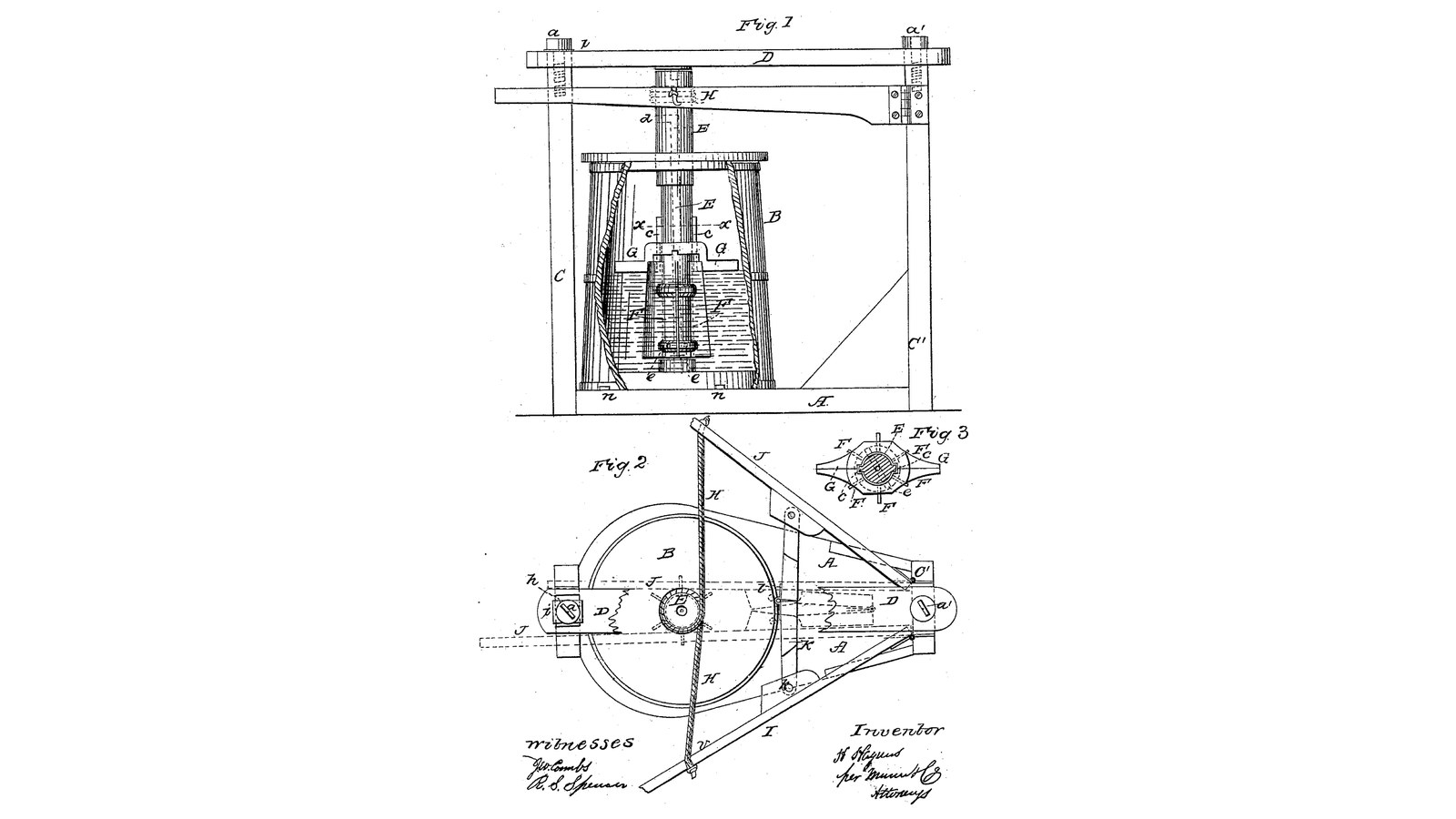
H. Hagans of Brandonville, Virginia, received US 32,868, dated 23 July 1861, for a churn turned like a bow drill. The dasher staff stands in an ordinary churn inside a frame; a cord tied to a bar hinged on one post is wound three times round the staff and hooked into a hand lever hinged on the other side of the same post, the two held apart by folding braces. Swinging the lever slides the cord and turns the staff back and forth. The staff is hollow, so air enters above the lid and leaves near the bottom; wings stir the cream, and a gatherer, loose on two ribs, rides up and down with the butter and gathers it. The patent gives no sizes; every size here is ours.
Fortgeschritten
About 2 days

Anweisungen

1

Cord and staff, like a bow drill

Jupyter-Notebook wird geladen …
2

A cord kept tight round a turning part, a year and a half before

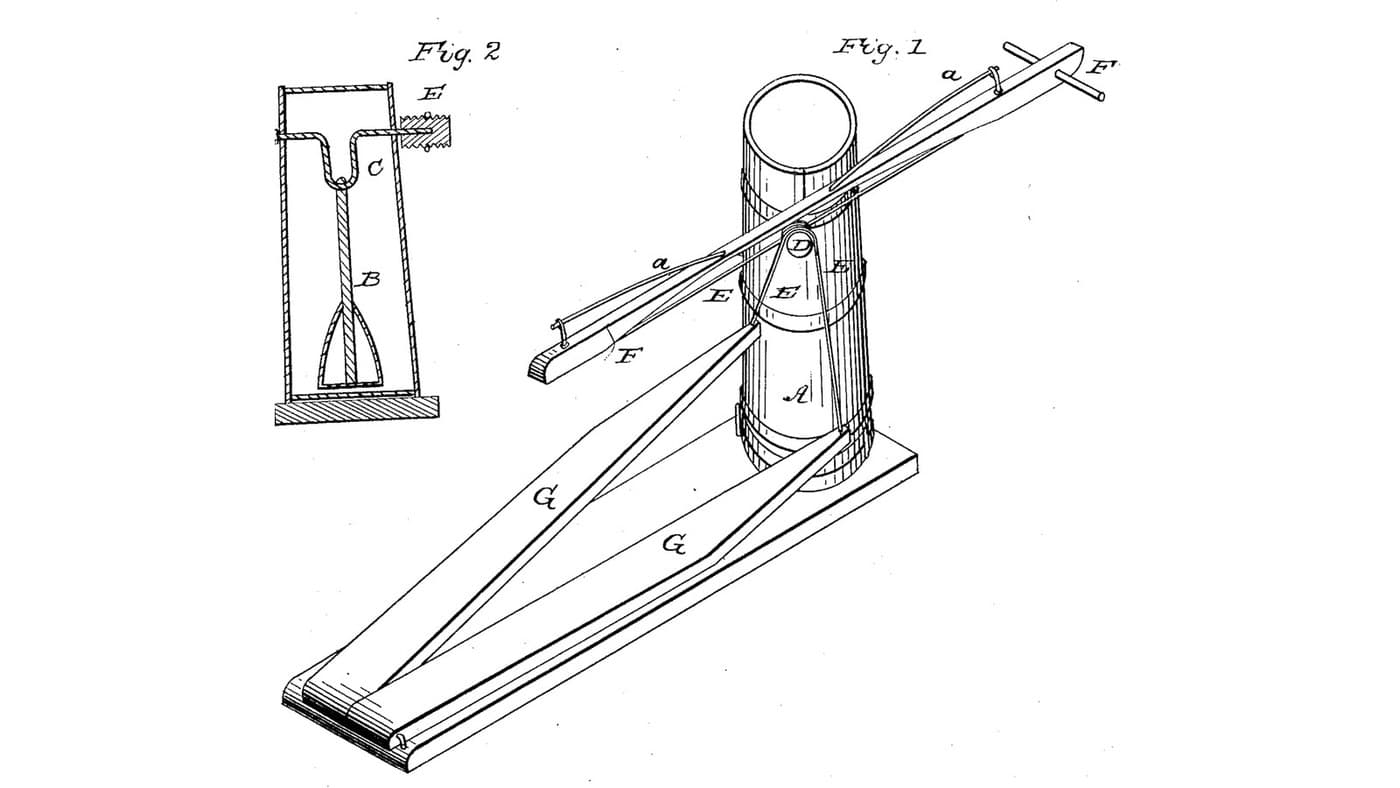
Willson keeps a cord tight with a sprung bow. Hagans winds it three times round the staff and keeps it taut with folding braces between a lever and a bar.
3

Read US 32,868

"The cord H is attached to the counter-bar J and is wound three times around the staff E, and the other end is placed in the notch v of the lever I, with the knot outside."
4

Frame: bed A, uprights C, C', cap D

Glue up a hardwood bed A 760 x 320 x 30 mm and screw four hardwood steady pins n 12 mm round it where the churn's foot will stand. Mortise two hardwood uprights C and C' 50 x 50 mm, 560 tall, into the bed's ends, 710 mm apart over their centres. Cut a hardwood cap D 780 x 50 x 30 mm, bored 13 mm at the churn's centre for the staff's pivot. Pivot one end on the top of C' with a bolt a' and wing nut; at the other end cut a mortise h 12 x 20 mm over a bolt a in the top of C, with a flat bar binding plate i under its wing nut, so turning the plate lets that end lift off and swing aside.

Materialien für diesen Schritt:

HartholzbrettHartholzbrett3 Stück
HolzleimHolzleim1 Stück
HartholzdübelHartholzdübel1 Stück
Sechskantschrauben-SortimentSechskantschrauben-Sortiment2 Stück
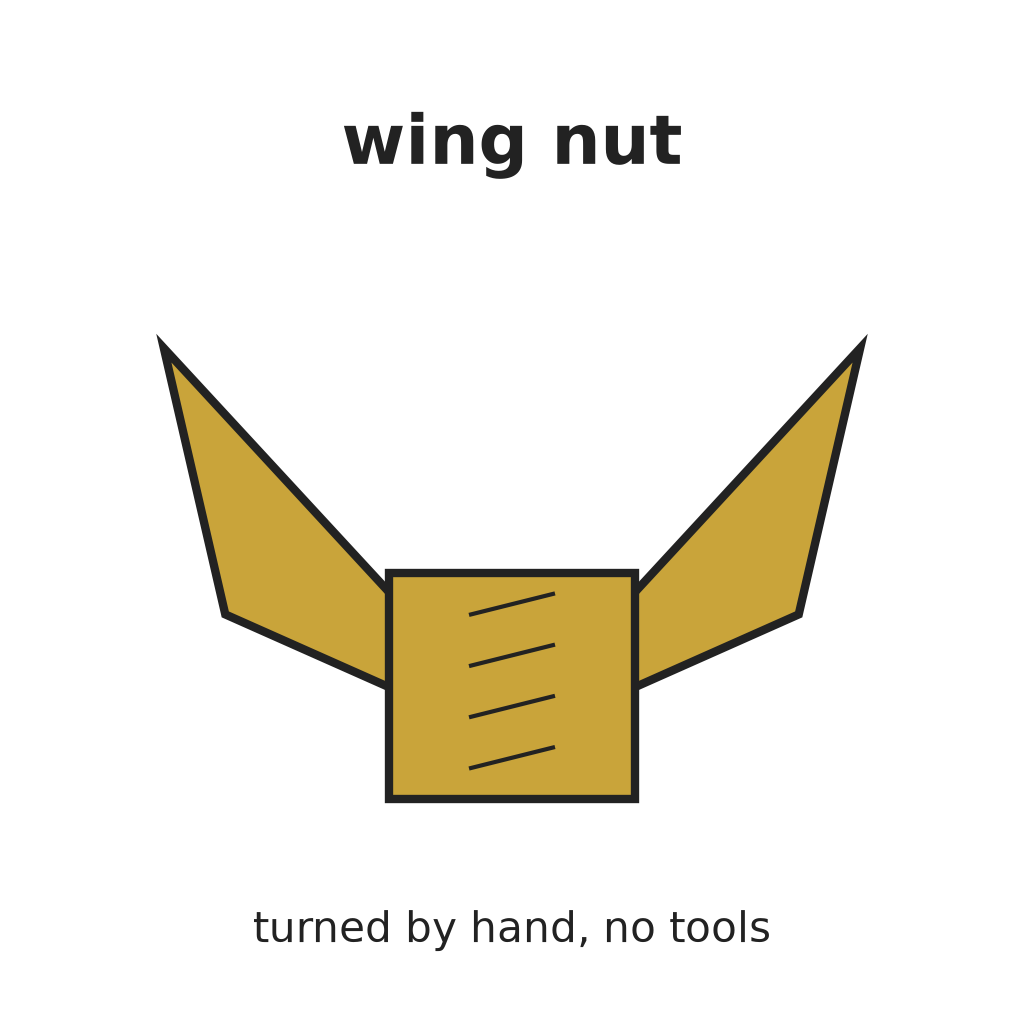
HandflügelmutterHandflügelmutter2 Stück
Baustahl-FlachstahlBaustahl-Flachstahl1 Stück

Benötigte Werkzeuge:
TischkreissägeTischkreissäge
Stechbeitelsatz für HolzStechbeitelsatz für Holz
OberfräseOberfräse
AkkubohrschrauberAkkubohrschrauber
BohrersatzBohrersatz
Schraubzwinge mit SchiebebügelSchraubzwinge mit Schiebebügel
RollgabelschlüsselRollgabelschlüssel
Bandmaß (Rollmeter)Bandmaß (Rollmeter)
5

Print the step b

The step in the churn's bottom: 40 mm across, 12 high, with a 22.6 mm socket 10 deep. PETG, 0.2 mm layers, 30 % infill, 4 walls.
DesigndateiSTLCC0 - Free
6

Print the gatherer G

The butter-gatherer: a hub 60 mm across and 40 high, 23 mm bore with two slots for the ribs, and two tapered arms reaching 110 mm. Print it in two halves split through the slots, and screw them together on the staff. PETG, 0.2 mm layers, 30 % infill, 4 walls.
DesigndateiSTLCC0 - Free
7

Churn B, staff E, wings F, ribs c and gatherer G

Use a 20-litre food-grade bucket as the churn B, with the step in its bottom, and cut an HDPE lid with a 24 mm hole. Cut a 22 mm stainless tube 525 mm long as the hollow staff E; drill four 8 mm holes e round it 30 mm above its foot and one d 430 mm up, above the lid. Glue and screw four hardwood wings F 110 x 40 x 6 mm radially on it 60 to 100 mm up, and two hardwood ribs c 8 x 6 mm, 120 long, on opposite sides 170 to 290 mm up. Screw the gatherer's halves together round it between the ribs, so it slides freely up and down. Plug the tube's top and turn a 12 mm pivot on it for the cap.

Materialien für diesen Schritt:

20-Liter-Eimer20-Liter-Eimer1 Stück
HDPE-PlatteHDPE-Platte1 Stück
EdelstahlrohrEdelstahlrohr1 Stück
HartholzbrettHartholzbrett1 Stück
HolzleimHolzleim1 Stück
HolzschraubenHolzschrauben12 Stück
PETG-FilamentPETG-Filament1 Stück
HartholzdübelHartholzdübel1 Stück

Benötigte Werkzeuge:

FDM-3D-DruckerFDM-3D-Drucker
Bügelsäge (Metallsäge)Bügelsäge (Metallsäge)
Feilen (Handfeile)Feilen (Handfeile)
AkkubohrschrauberAkkubohrschrauber
BohrersatzBohrersatz
Schraubendreher-SatzSchraubendreher-Satz
KompassKompass
StichsägeStichsäge
Flachfräsbohrer-SatzFlachfräsbohrer-Satz
8

Lever I, bar J, braces K and cord H

Cut a hardwood lever I 40 x 25 mm, 700 long with a handle, and a counter-bar J 520 long. Hang each on a butt hinge on opposite sides of C', 440 mm up, so they swing level, I on the front and J on the back, reaching past the staff on either side. Cut a notch v in I where it passes the staff. Make the braces K two strips of mild steel flat bar 200 mm long, each bolted to a lever at k 150 mm from the post, and bolted to each other at l, so they fold. Tie a braided cord H to J beside the staff, wind it three times round the staff above the lid, and hook its other end into the notch v with the knot outside, the braces straight and the cord taut.

Materialien für diesen Schritt:

HartholzbrettHartholzbrett1 Stück
Möbel-Scharnier (Aufschraubband)Möbel-Scharnier (Aufschraubband)2 Stück
HolzschraubenHolzschrauben12 Stück
Baustahl-FlachstahlBaustahl-Flachstahl1 Stück
Sechskantschrauben-SortimentSechskantschrauben-Sortiment3 Stück
SchnurSchnur1 Stück

Benötigte Werkzeuge:

TischkreissägeTischkreissäge
StichsägeStichsäge
Bügelsäge (Metallsäge)Bügelsäge (Metallsäge)
Feilen (Handfeile)Feilen (Handfeile)
SchraubstockSchraubstock
AkkubohrschrauberAkkubohrschrauber
BohrersatzBohrersatz
Schraubendreher-SatzSchraubendreher-Satz
RollgabelschlüsselRollgabelschlüssel
9

The build in 3D

FreeCAD model of this build, the churn cut open: the bed with its steady pins, the two uprights and cap, the hollow staff with its wings, ribs and the loose gatherer, the step, the lid, the lever and counter-bar hinged on one post with the folding braces, and the cord wound round the staff.
DesigndateiBLENDCC0 - Free
10

Churn

Swing the cap aside, set the churn between the steady pins with the staff in its step, pour in about 10 litres of heavy cream at about 15 °C, checked with the thermometer, put on the lid and swing the cap back over the staff's pivot, turning the binding plate. Wind on the cord. Swing the lever to and fro, timing it; the staff turns back and forth and draws air down through itself. When the butter comes, slow down so the gatherer collects it. Fold the braces, unhook the cord, swing the cap aside, lift out the staff, take out the butter, pour the buttermilk into a bowl, wash the butter in cold water until it runs clear, salt and weigh it.

Materialien für diesen Schritt:

SchlagsahneSchlagsahne10 l
Grobes MeersalzGrobes Meersalz1 Stück
WasserWasser1 Stück

Benötigte Werkzeuge:

Einsteck-FühlerthermometerEinsteck-Fühlerthermometer
StoppuhrStoppuhr
Digitale KüchenwaageDigitale Küchenwaage
Große Rührschüssel aus EdelstahlGroße Rührschüssel aus Edelstahl
11

Troubleshooting

Cord-lever churn troubleshooting.

Flow

Loading...
12

History and honest limits

**H. Hagans** of Brandonville, Preston County, Virginia (now West Virginia), US 32,868, 23 July 1861, "Improved Churn"; the drawing spells the name Hagan. He claimed the self-adjusting rotary butter-gatherer G and ribs c with the dasher rod and wings, and the jointed braces K, hinged levers I and J and driving cord H with the dasher rod and post C'. His churn was an ordinary barrel; ours is a bucket. His staff was wood bored hollow; ours is a stainless tube. The patent gives no sizes; every size here is ours.

Materialien

16

Benötigte Werkzeuge

20

Designdateien

3

CC0 Gemeinfrei

Dieser Blueprint ist unter CC0 veröffentlicht. Sie dürfen dieses Werk für jeden Zweck frei kopieren, ändern, verbreiten und verwenden, ohne um Erlaubnis zu fragen.

Unterstützen Sie den Maker, indem Sie Produkte über seinen Blueprint kaufen, wo er eine Maker-Provision von Anbietern festgelegt, verdient. Oder erstellen Sie eine neue Iteration dieses Blueprints und verbinden Sie ihn in Ihrem eigenen Blueprint, um Einnahmen zu teilen.

Diskussion

(0)

Anmelden um an der Diskussion teilzunehmen

Kommentare werden geladen...