
KUNST
SCHÖNHEIT & WELLNESS
HANDWERK
KULTUR & GESCHICHTE
UNTERHALTUNG
UMFELD
ESSEN & GETRÄNKE
REVERSE ENGINEERING
WISSENSCHAFTEN
SPORT
TECHNOLOGIE
WEARABLES
Keeping It Together: Shoulders, Keys, Circlips and What Each One Resists
Martin

Erstellt von

Martin

24. September 2026NO
21
0
0
0
0

Keeping It Together: Shoulders, Keys, Circlips and What Each One Resists

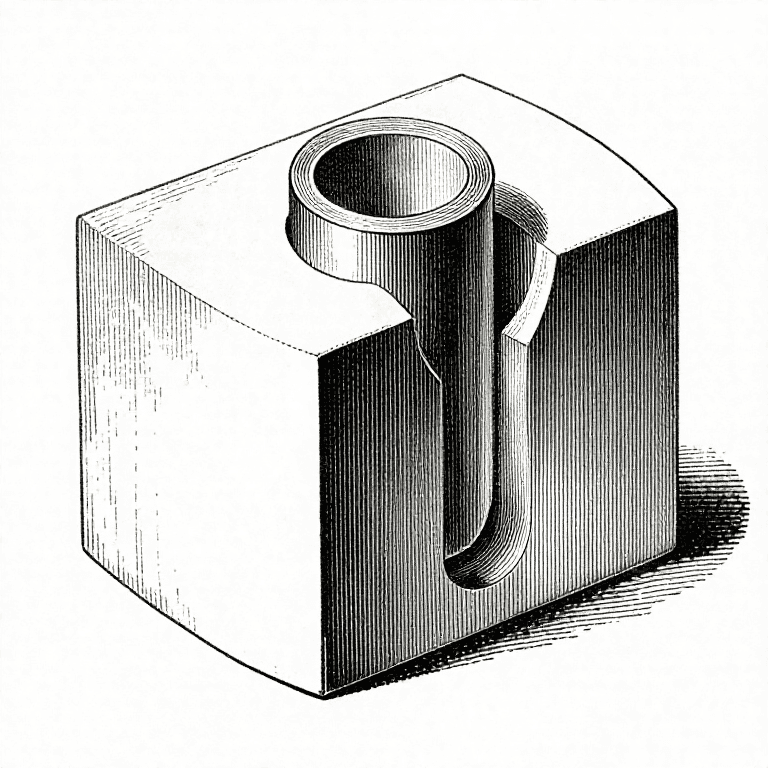
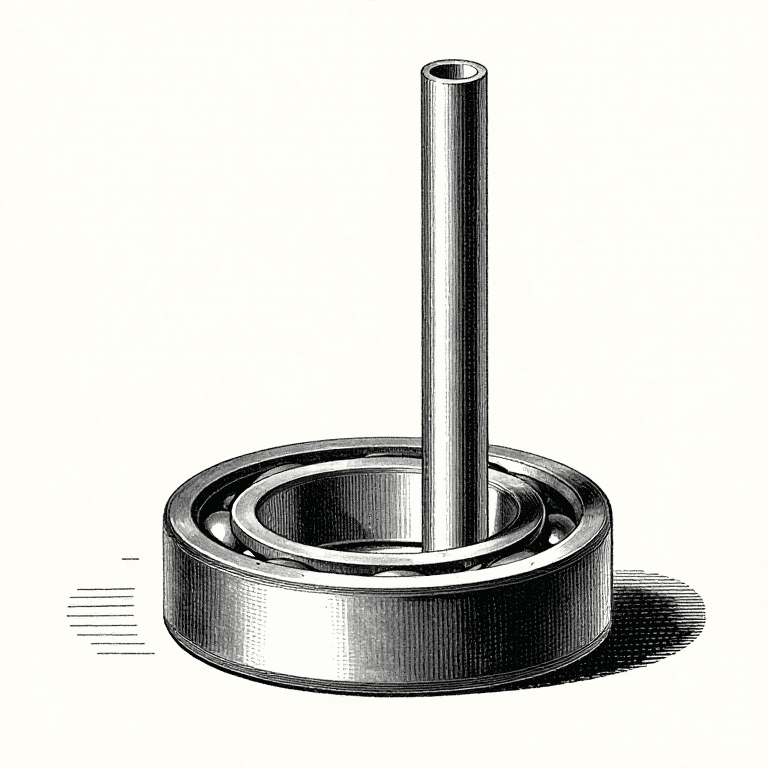
A part on a shaft can move in three ways: it can slide ALONG the shaft, it can rotate AROUND it, and it can rattle radially. Each needs its own answer, and the commonest assembly fault is using one feature to do a job it cannot do. A SHOULDER stops axial movement in one direction and nothing else. A KEY stops rotation and nothing else. A CIRCLIP stops axial movement in one direction. An INTERFERENCE FIT resists all three, up to its limit. So a pulley with a key and no clamp will walk along its shaft; a pulley with a grub screw and no key will eventually spin; and a bearing located only by a circlip on one side will be pushed out the other. Every real assembly needs two or three of these together.
Fortgeschritten
3 hours

Anweisungen

1

Locate axially against a shoulder, and clamp the other side

A machined shoulder is the best axial location there is: it is part of the shaft, it cannot loosen, and it positions the part precisely. But it works in one direction only. So the other side needs something — a locknut, a circlip, a clamping collar, an end plate. The part is then trapped between two features and cannot move either way. Make the shoulder the right size. A shoulder taller than the bearing's inner ring will foul the seal or the outer ring; too short and it contacts only part of the ring face and pushes it out of square. Bearing makers publish the shoulder diameter for exactly this reason.

Materialien für diesen Schritt:

Stahlwelle 30 mmStahlwelle 30 mm1 Stück
Ball Bearing - Non-Flanged (8mm Bore, 22mm OD)Ball Bearing - Non-Flanged (8mm Bore, 22mm OD)1 Stück

Benötigte Werkzeuge:

MessschieberMessschieber
FühlerlehrensatzFühlerlehrensatz
2

Keys carry torque, and only on their sides

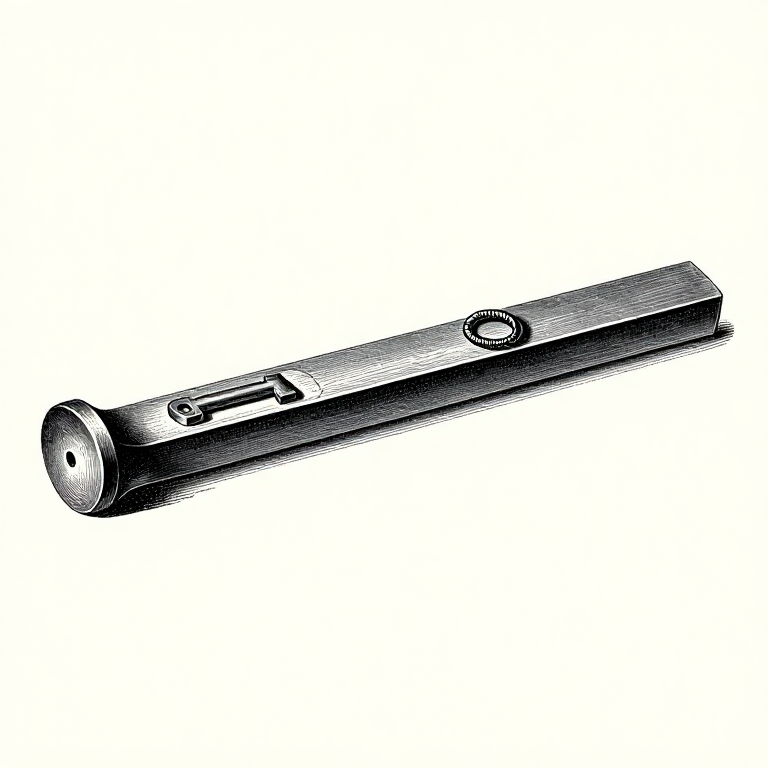
A parallel key transmits torque through its two long SIDES bearing against the keyway walls. The top of the key should not touch the bottom of the hub's keyway — there is meant to be a small clearance there. A key that is a tight fit on its top and loose on its sides carries nothing. It is held by friction on a face that was never designed to grip, and it will roll in the keyway and batter it oval. Keyways are stress raisers. A keyway cut into a shaft removes material exactly where the bending stress is highest, so a keyed shaft is meaningfully weaker than a plain one — which is why highly loaded joints use splines, tapers or interference fits instead.

Materialien für diesen Schritt:

Stahlwelle 30 mmStahlwelle 30 mm1 Stück
RolleRolle1 Stück

Benötigte Werkzeuge:

MessschieberMessschieber
FühlerlehrensatzFühlerlehrensatz
Schwerer SchraubstockSchwerer Schraubstock
3

Circlips, grub screws and what each is honestly good for

A CIRCLIP is a light axial stop. It is excellent at preventing a part from wandering and poor at resisting a real thrust load, and it must be fully seated in its groove with the sharp edge facing the load. A GRUB SCREW into a plain shaft is the weakest common method. It grips on a tiny area, it digs a burr into the shaft that makes the part hard to remove, and it loosens under vibration. It is acceptable for a light component, and it is not a substitute for a key. Two grub screws at ninety degrees are much better than one, a flat milled on the shaft better again, and a grub screw used ALONGSIDE a key — one to carry torque, one to stop axial movement — is the combination that actually works.

Materialien für diesen Schritt:

GewindestiftGewindestift1 Stück
SchraubensicherungSchraubensicherung1 Stück
Stahlwelle 30 mmStahlwelle 30 mm1 Stück

Benötigte Werkzeuge:

Schwerer SchraubstockSchwerer Schraubstock
FühlerlehrensatzFühlerlehrensatz
4

Vibration undoes threads, so lock them

A threaded fastener on a machine that vibrates will loosen, because vibration lets the surfaces slip microscopically and each slip lets the thread turn a little. That is a mechanism, not bad luck, and it does not care how tight the fastener was. The cures work differently. THREAD LOCKER fills the gaps so the surfaces cannot slip. A NYLOC nut adds friction that the vibration must overcome. A TAB WASHER or wire lock is a mechanical stop that does not rely on friction at all. Correct preload is the first defence and the one people skip. A joint tightened properly is clamped hard enough that its faces never slip, so the loosening mechanism never starts — which is the tightening rung's whole argument, and it is why a locking compound is a second line rather than a first.

Materialien für diesen Schritt:

SchraubensicherungSchraubensicherung1 Stück
GewindestiftGewindestift1 Stück

Benötigte Werkzeuge:

Schwerer SchraubstockSchwerer Schraubstock

Materialien

5

Benötigte Werkzeuge

3
Geschätzte Gesamtkosten
Was der Maker gekauft hat. Materialien ohne Preis besorgst du dort, wo du sie kaufst.
€1.11

CC0 Gemeinfrei

Dieser Blueprint ist unter CC0 veröffentlicht. Sie dürfen dieses Werk für jeden Zweck frei kopieren, ändern, verbreiten und verwenden, ohne um Erlaubnis zu fragen.

Unterstützen Sie den Maker, indem Sie Produkte über seinen Blueprint kaufen, wo er eine Maker-Provision von Anbietern festgelegt, verdient. Oder erstellen Sie eine neue Iteration dieses Blueprints und verbinden Sie ihn in Ihrem eigenen Blueprint, um Einnahmen zu teilen.

Diskussion

(0)

Anmelden um an der Diskussion teilzunehmen

Kommentare werden geladen...