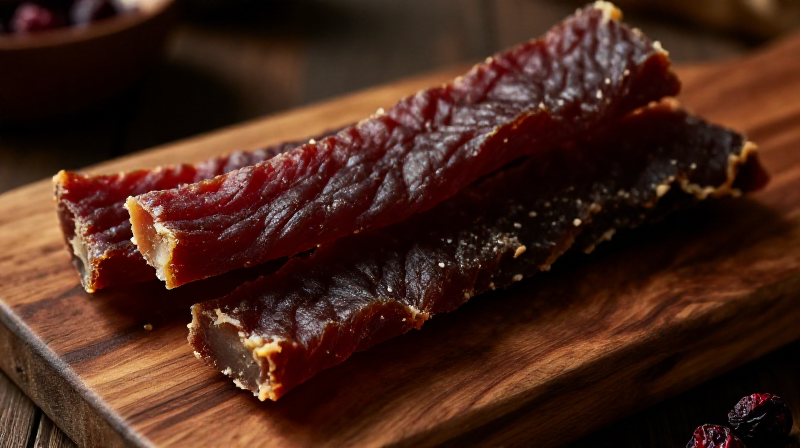

Making Deer Jerky and Pemmican — Preserving Venison for Survival
Jerky and pemmican are the two oldest methods of preserving venison for long-term storage without refrigeration. Jerky — thin strips of lean meat dried by sun, wind, or low heat — has been made by every hunting culture on earth. Pemmican takes jerky one step further: the dried meat is pounded to a powder, mixed with rendered tallow and dried berries, and packed into dense, calorie-rich bars that can last years without spoiling.
Pemmican was the strategic food supply of the North American fur trade, Arctic expeditions, and Plains nations for centuries — lightweight, calorie-dense (roughly 3,500 kcal per kg), and nutritionally complete. This blueprint covers the full process from fresh venison to finished pemmican.
Anweisungen
Select and trim the venison
Select and trim the venison
Use lean cuts — hindquarter rounds, backstrap, or eye of round. Trim away all visible fat, sinew, and silver skin. Fat goes rancid quickly and ruins dried meat. You need about 2 kg of trimmed lean meat to produce roughly 500 g of finished jerky.
Materialien für diesen Schritt:
 Hirsch1 Stück
Benötigte Werkzeuge:
 Messer
Slice into thin strips
Slice into thin strips
Partially freeze the meat for 1-2 hours to firm it up for clean slicing. Cut with the grain into strips 3-5 mm thick, 2-3 cm wide, and as long as possible. Cutting with the grain makes chewy jerky; cutting against the grain makes more tender strips. Uniform thickness ensures even drying.
Benötigte Werkzeuge:
MesserSalt the strips
Salt the strips
Rub coarse salt into both sides of each strip — about 20 g of salt per kg of meat. Salt draws moisture out and inhibits bacterial growth during the drying process. For flavoured jerky, add cracked black pepper or crushed dried herbs at this stage. Lay strips flat and let them cure for 1-2 hours.
Materialien für diesen Schritt:
 Grobes Meersalz40 g
Dry the strips
Dry the strips
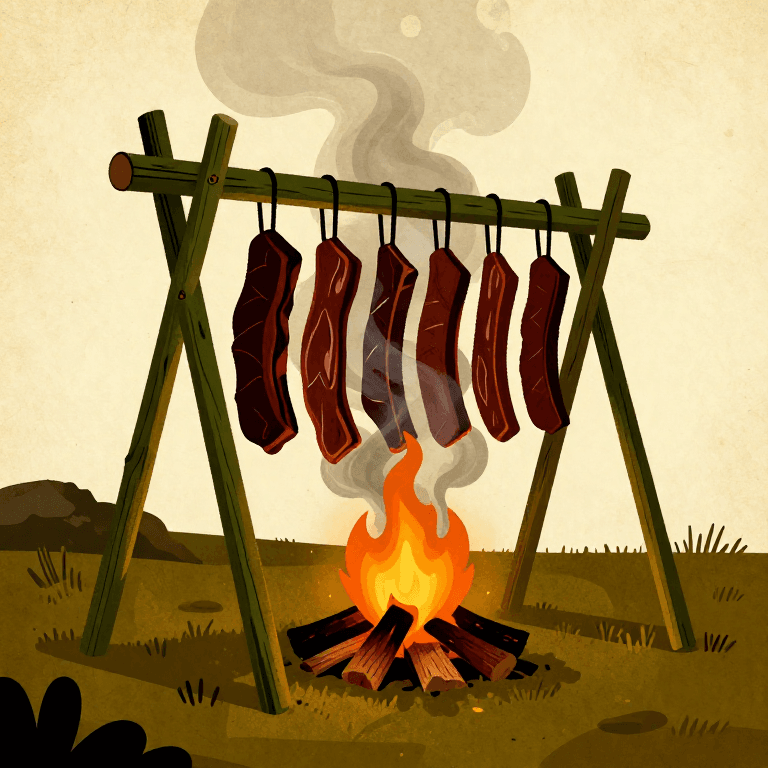
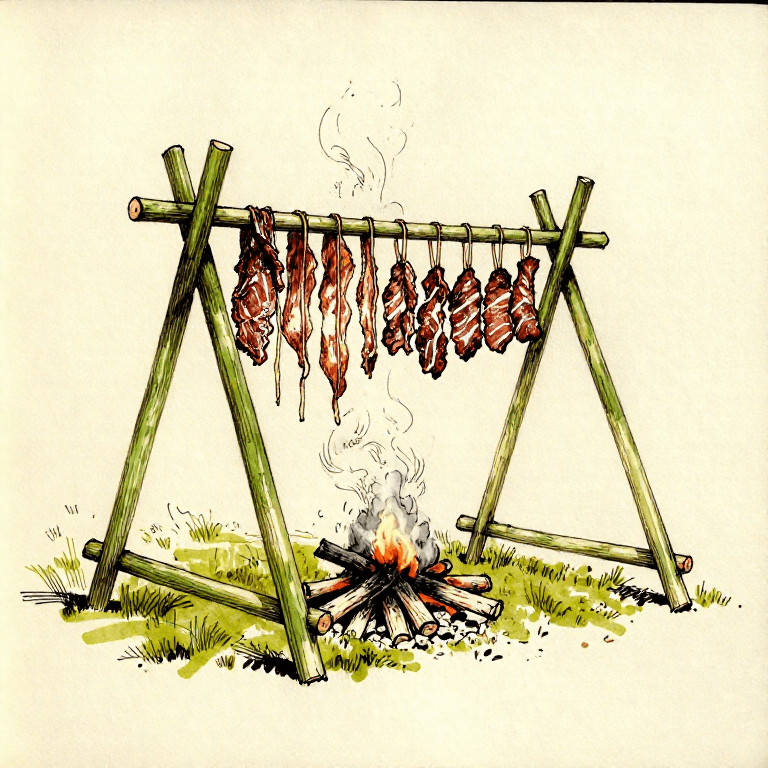
Hang strips on a drying rack in direct sun and wind (traditional method, 1-3 days), or place on racks over a low fire or in an oven at 60-70°C for 6-10 hours. The jerky is done when it bends and cracks but does not snap in half — still flexible, but no moisture beads when squeezed. Overdrying makes it brittle; underdrying risks spoilage.
Benötigte Werkzeuge:
 Trockengestell
Pound the jerky into powder for pemmican
Pound the jerky into powder for pemmican
Break finished jerky into small pieces and pound in a stone mortar and pestle (or between two flat rocks) until it becomes a dry, shredded powder. The finer the powder, the better the pemmican binds. This is the base — dried lean protein with virtually no moisture left.
Benötigte Werkzeuge:
 Steinmörser mit Pistill
Render the deer tallow
Render the deer tallow
Chop the reserved deer fat (from trimming in step 1) into small pieces and heat slowly in a pot over low fire until the fat melts completely and the solid bits (cracklings) float and turn golden. Strain through cloth to remove solids. The clear liquid fat is rendered tallow — it solidifies at room temperature and is the binding agent and calorie source in pemmican.
Materialien für diesen Schritt:
 Tierisches Fett (Talg)500 g
Mix pemmican
Mix pemmican
Combine the pounded jerky powder with warm (not hot) rendered tallow at roughly a 1:1 ratio by weight. Add a handful of dried berries (blueberries, cranberries, or saskatoon berries) for flavour and vitamin C. Mix thoroughly until the tallow coats all the meat fibres and the mixture holds together when pressed. Pack tightly into balls, bars, or pouches.
Materialien für diesen Schritt:
 Heidelbeeren100 g
Store the pemmican
Store the pemmican
Wrap pemmican bars in cloth or pack into rawhide containers (parfleche). Stored in a cool, dry place, pemmican keeps for months to years — the rendered tallow seals out moisture and air, and the salt-cured, fully dried meat resists bacterial growth. This was the primary travel and emergency food of Plains nations, fur traders, and Arctic explorers for centuries.
Materialien
4- 1 StückPlatzhalter
- 40 gPlatzhalter
- Platzhalter
- 100 gPlatzhalter
Materialien verbundener Blueprints
Drying and Smoking Meat over a Fire — Prehistoric Food Preservation
von TheChef
Wildnis
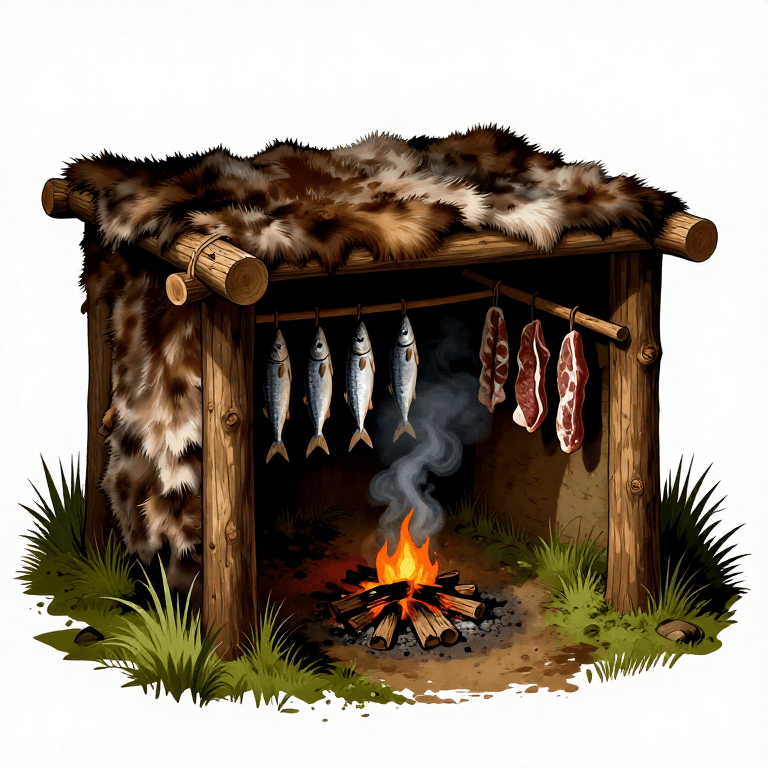
Building a Prehistoric Smokehouse — Semi-Permanent Pole Frame for Meat and Fish Preservation
von Spartan
Holzbearbeitung
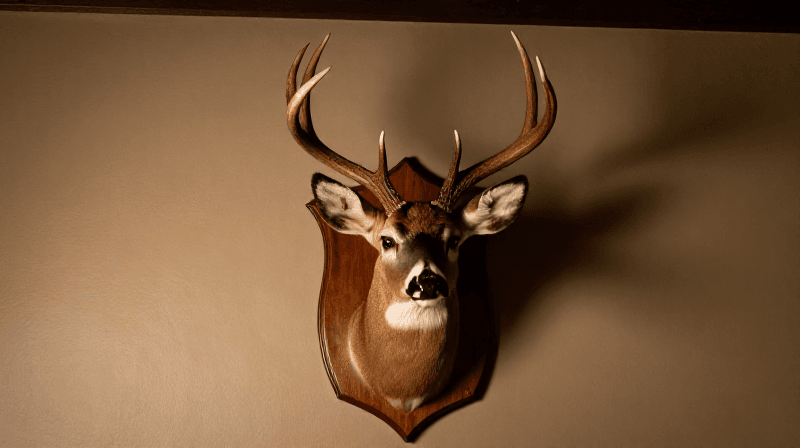
Mounting a Deer Head Trophy — Wall-Mount Taxidermy on a Wooden Shield
von Bob
Holzbearbeitung
Dieser Bauplan stellt her

Verwandte Blueprints
Diese Blueprints teilen Wissen — Techniken, Materialien oder Prinzipien
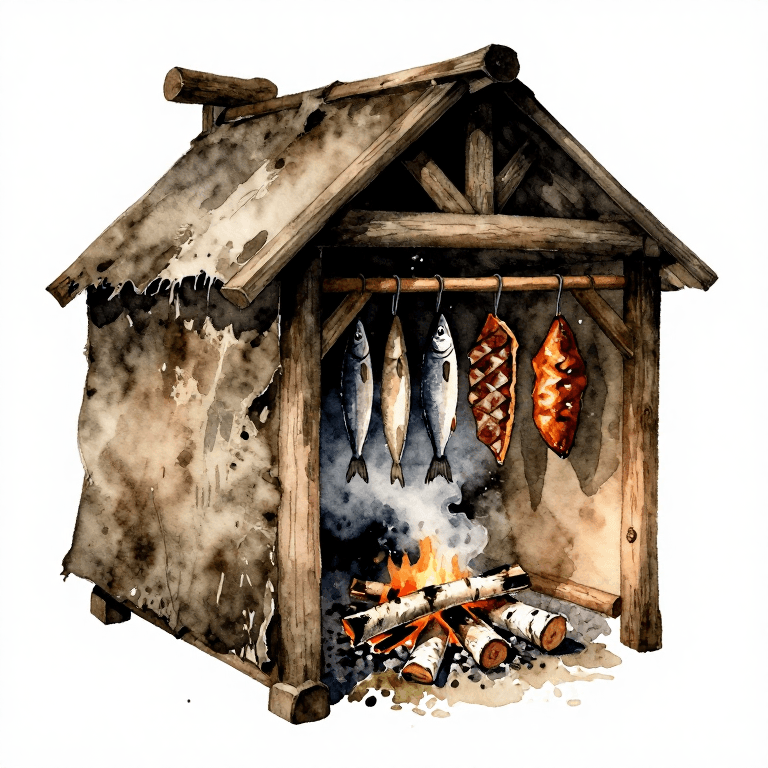
Smoking Meat the Viking Way — Cold-Smoke Preservation
von TheChef
Essen
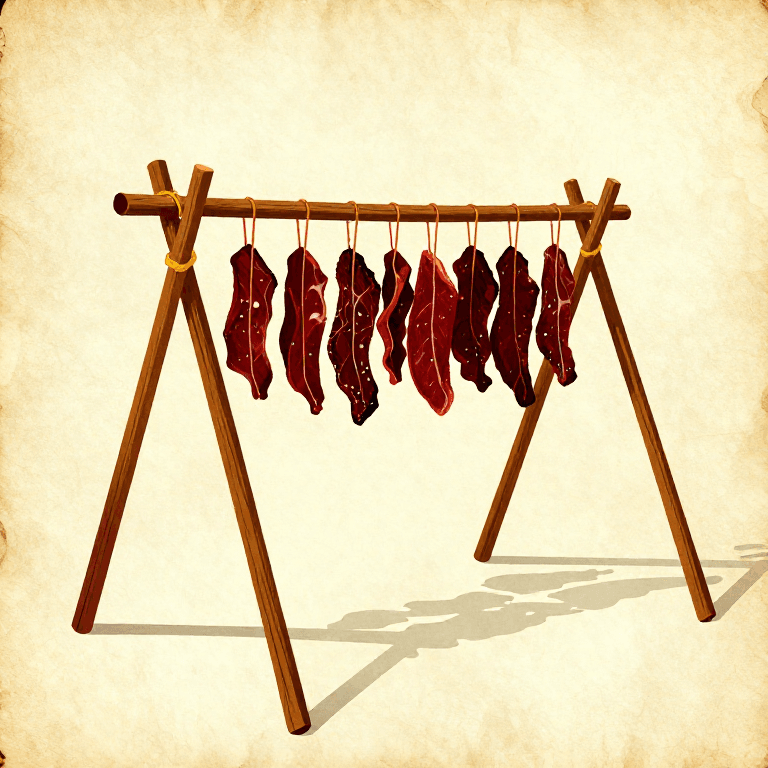
Building a Food Drying Rack — Sun and Wind Preservation Frame
von TheChef
Essen
Building a Meat Smoking Rack — Pole Frame for Preservation
von TheChef
Essen
Tanning a Deer Hide into Buckskin — From Raw Pelt to Soft Leather
von Tex
Textil & Leder
CC0 Gemeinfrei
Dieser Blueprint ist unter CC0 veröffentlicht. Sie dürfen dieses Werk für jeden Zweck frei kopieren, ändern, verbreiten und verwenden, ohne um Erlaubnis zu fragen.
Unterstützen Sie den Maker, indem Sie Produkte über seinen Blueprint kaufen, wo er eine Maker-Provision von Anbietern festgelegt, verdient. Oder erstellen Sie eine neue Iteration dieses Blueprints und verbinden Sie ihn in Ihrem eigenen Blueprint, um Einnahmen zu teilen.