Zusammenarbeit
KUNST
SCHÖNHEIT & WELLNESS
HANDWERK
KULTUR & GESCHICHTE
UNTERHALTUNG
UMFELD
ESSEN & GETRÄNKE
REVERSE ENGINEERING
WISSENSCHAFTEN
SPORT
TECHNOLOGIE
WEARABLES
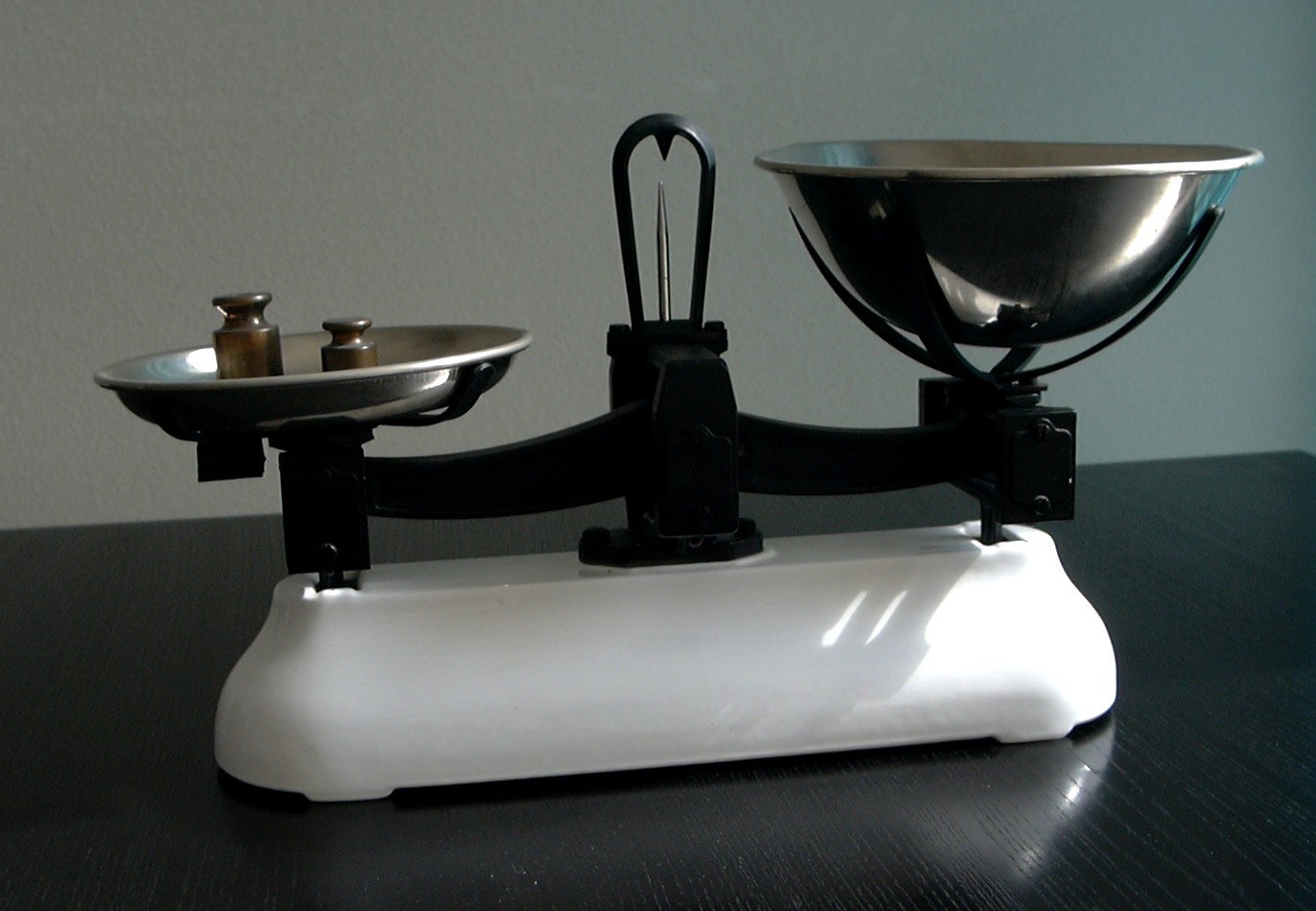


Roberval Balance: a Parallelogram Frame That Keeps Both Pans Level (Roberval, 1669)
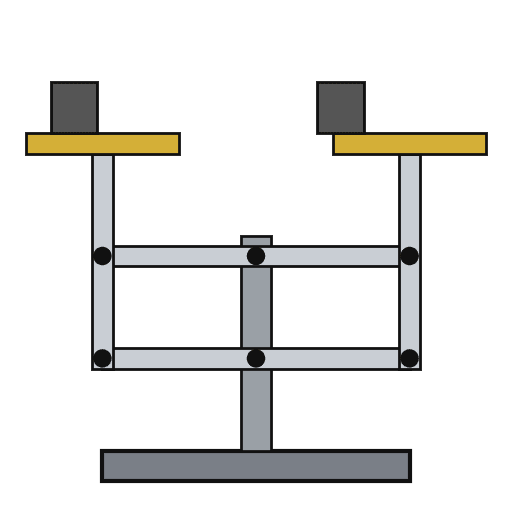
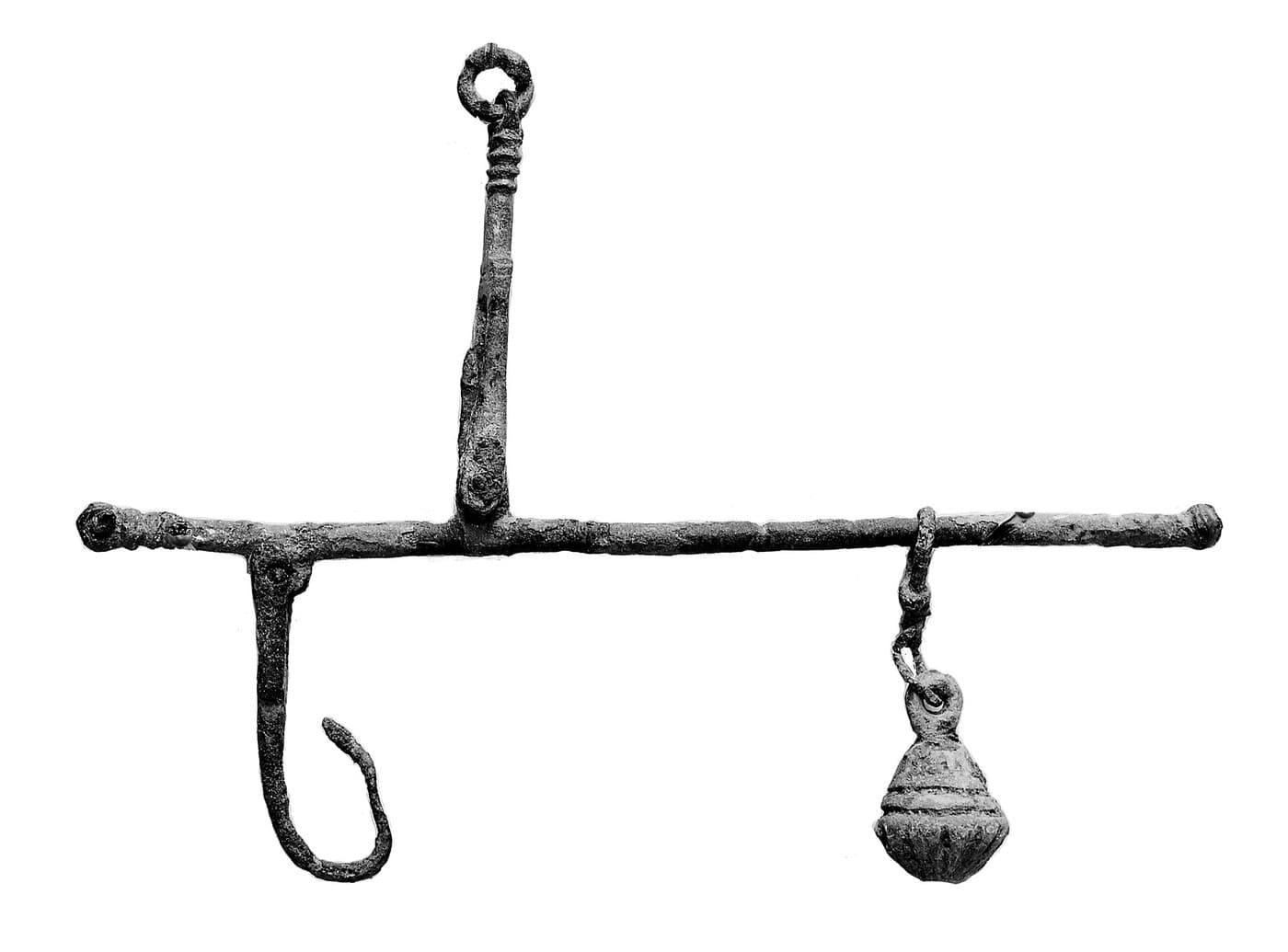
The equal-arm balance rebuilt as a hinged frame. Gilles Personne de Roberval showed it to the Académie Royale des Sciences in 1669. Two bars pivot on a post, joined at their ends by two upright bars into a hinged rectangle; each pan is fixed to an upright, so it stays level as the frame tilts.
Result: a balance on which a weight weighs the same wherever it sits on its pan, even when both loads are on the same side of the post. Later shop scales of the Roberval type keep this frame.
Source: the 1670 Journal des savants account as given by J. F. Hall, Two Hundred Years of Analyzing Roberval's Balance, Caltech Report 2024-01. Unknown: materials and sizes. Picture: Wikimedia Commons.
Fortgeschritten
1 day
Anweisungen
1
1
Make the six frame pieces and the post
Make the six frame pieces and the post
Make a post standing on a pedestal, a top bar and a bottom bar of the same length, and two upright bars of the same length as each other. Mark each horizontal bar at its exact middle: its two arms must be equal. Make two flat platforms (the pans). Not given: the material and the sizes.
Materialien für diesen Schritt:
 Unbekanntes Material1 bars, post, pedestal, platforms
Benötigte Werkzeuge:
 Unbekannte Maße
2
2
Pin the frame to the post
Pin the frame to the post
Pin the top bar to the post at its middle, and the bottom bar to the post at its middle, directly below, so both can turn. Pin the left upright to the left ends of both bars, and the right upright to the right ends. The four bars now form a rectangle that can lean into a parallelogram; the uprights always stay upright. Tight pins bind unless every length is exact, so Hall advises slotting the lower hole in the post upright: it may slide up and down but not sideways. Ours: drill the pin holes by hand.
Materialien für diesen Schritt:
Unbekanntes Material1 six pinsBenötigte Werkzeuge:
 Handbohrer
3
3
Fix the pans to the uprights
Fix the pans to the uprights
Fix one platform rigidly to each upright, so it cannot turn. The weights sit on the platforms or hang from them. As the frame tilts, the uprights move straight up and down and the platforms stay level.
Materialien für diesen Schritt:
Unbekanntes Material1 fixings4
4
Test it
Test it
With the pans empty the frame should rest level. Put equal weights on the two pans: they balance. Now slide one weight to the edge of its pan, or to the far side of the post: they still balance. With unequal arms, weights balance when their ratio is the inverse of the arm lengths.
Benötigte Werkzeuge:
 Gewicht
Benötigte Werkzeuge
3- Platzhalter
- Platzhalter
- Platzhalter
Materialien verbundener Blueprints
Dieser Bauplan stellt her
Verwandte Blueprints
Diese Blueprints teilen Wissen — Techniken, Materialien oder Prinzipien

CC0 Gemeinfrei
Dieser Blueprint ist unter CC0 veröffentlicht. Sie dürfen dieses Werk für jeden Zweck frei kopieren, ändern, verbreiten und verwenden, ohne um Erlaubnis zu fragen.
Unterstützen Sie den Maker, indem Sie Produkte über seinen Blueprint kaufen, wo er eine Maker-Provision von Anbietern festgelegt, verdient. Oder erstellen Sie eine neue Iteration dieses Blueprints und verbinden Sie ihn in Ihrem eigenen Blueprint, um Einnahmen zu teilen.