Zusammenarbeit
KUNST
SCHÖNHEIT & WELLNESS
HANDWERK
KULTUR & GESCHICHTE
UNTERHALTUNG
UMFELD
ESSEN & GETRÄNKE
REVERSE ENGINEERING
WISSENSCHAFTEN
SPORT
TECHNOLOGIE
WEARABLES
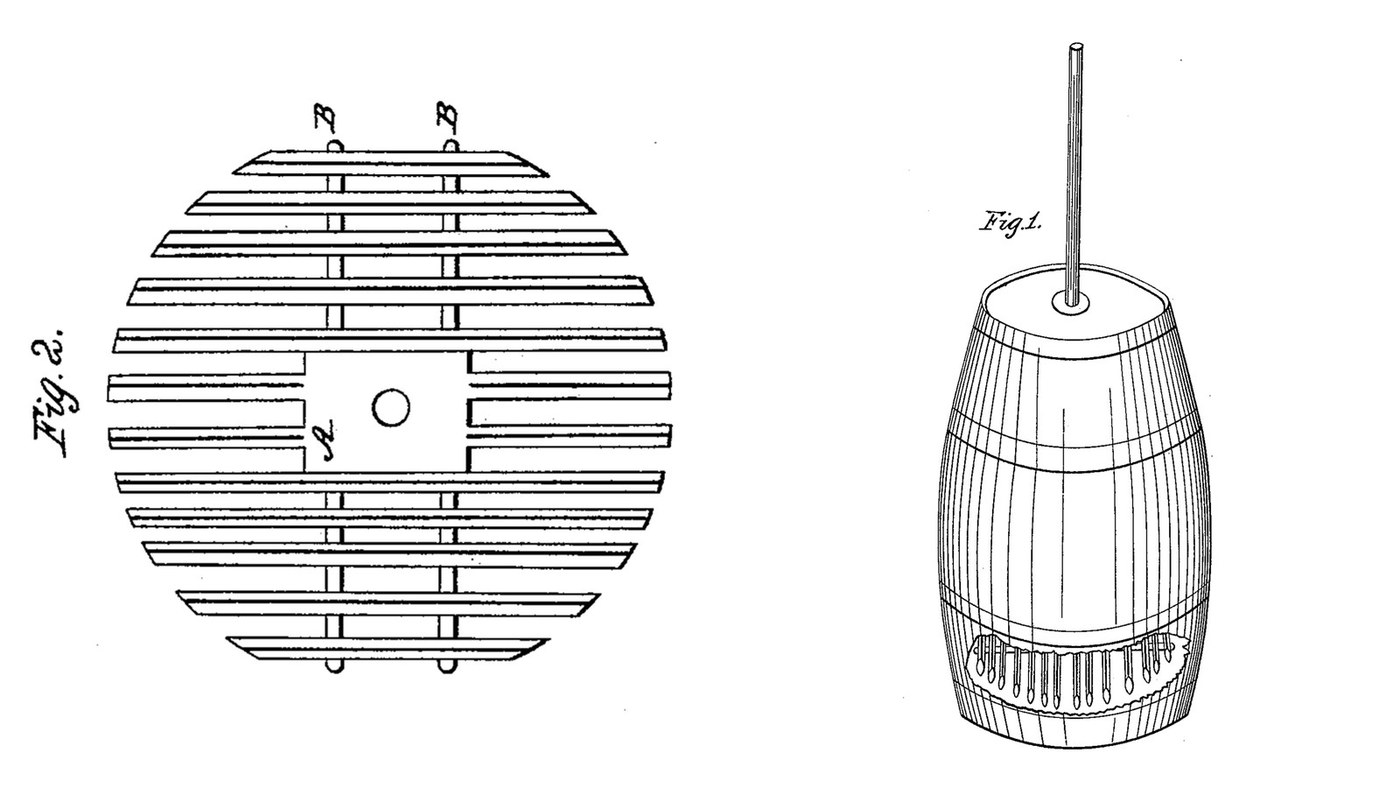


Oval-Breaker Rod Dasher: Breakers Strung on Two Rods, Add More for More Agitation
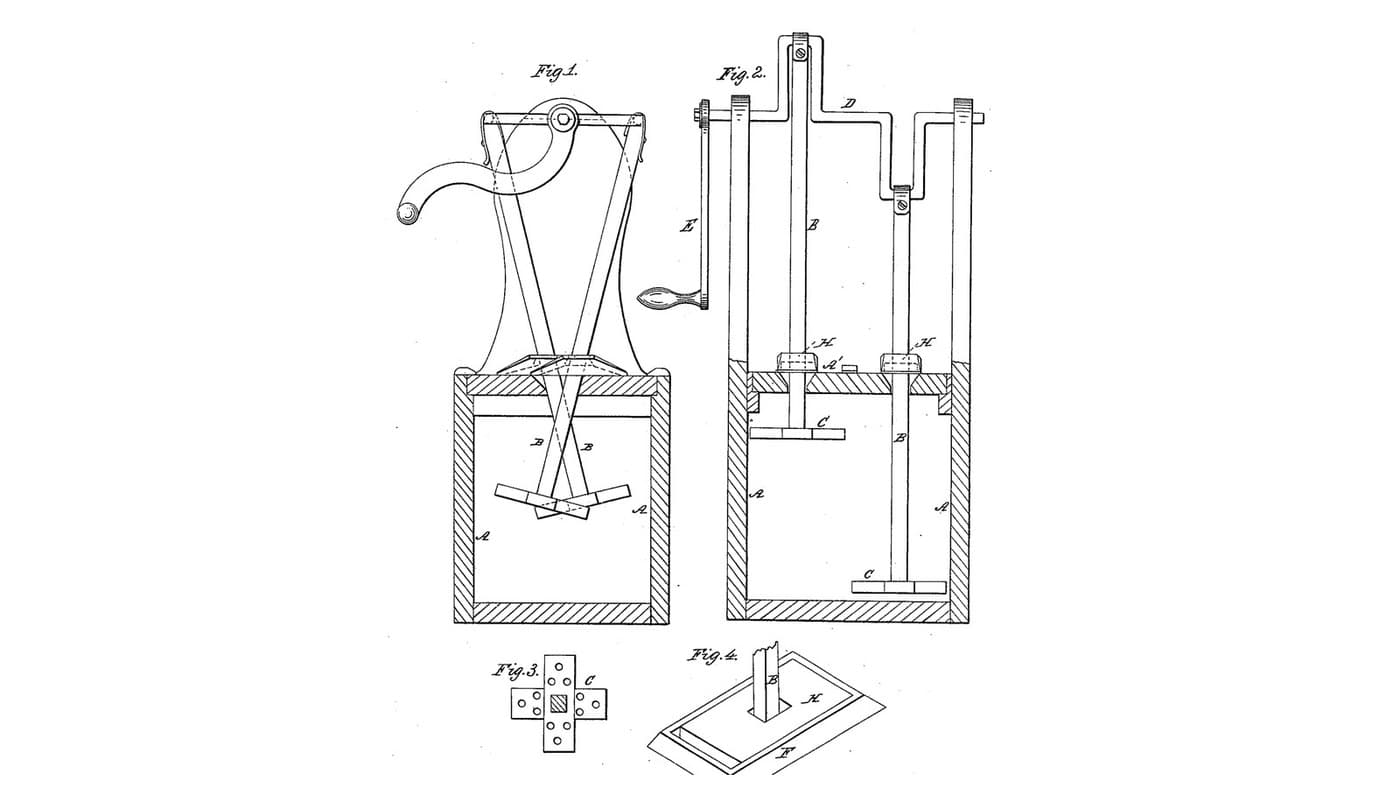
Alfred Rose of Penn Yan, New York, received US 25,914, dated 25 October 1859, for a churn-dasher for an ordinary up-and-down churn. A centre piece takes the staff, and breakers of oval section, with nearly sharp upper and lower edges, are strung beside it on two parallel rods, their ends cut to a circle. Putting on more breakers narrows the gaps between them and gives more agitation.
The patent gives no sizes; every size here is ours.
Anfänger
About a day, plus printing
Anweisungen
1
1
Breaker lengths, and how open the dasher is
Breaker lengths, and how open the dasher is
Jupyter-Notebook wird geladen …
2
2
An up-and-down dasher of crossed boards, a few weeks before
An up-and-down dasher of crossed boards, a few weeks before
Gilpatrick's dashers are two boards crossed and bored with holes. Rose builds his from breakers strung on rods, so the openings can be changed.
3
3
Read US 25,914
Read US 25,914
"They may be adjusted to the width required to give the necessary agitation and if more agitation is required put on more of the breakers, thereby reducing the space between them and any amount of agitation required may by this means be produced."
4
4
Print the spacers
Print the spacers
Sixteen spacer rings 12 mm across and 8 mm long, bored 6.4 mm, to go on the rods between the pieces. Print more, or shorter ones, to change the gaps. PETG, 0.2 mm layers, 100 % infill.
5
5
Centre piece A
Centre piece A
Draw a 248 mm circle on 30 mm hardwood. Cut the centre piece 64 mm wide right across it, then cut away its middle down to a 90 mm block, leaving two prongs 12 mm wide each side, 20 mm apart, out to the circle. Bore a 31 mm hole down through the block for the staff, and two 6.6 mm holes across it, 50 mm apart, for the rods. Shave the prongs to an oval 12 x 24 mm, their upper and lower edges nearly sharp.
Materialien für diesen Schritt:
 Hartholzbrett1 Stück
 Holzleim1 Stück
Benötigte Werkzeuge:
 Kompass
 Tischkreissäge
 Stichsäge
 Flachfräsbohrer-Satz
 Akkubohrschrauber
 Bohrersatz
 Schweifhobel
 Schleifpapier
6
6
Breakers and rods B
Breakers and rods B
Cut eight breakers 12 x 24 mm from hardwood, two each of 230, 210, 179 and 129 mm long along their middles, ends trimmed to the circle. Shave each to the same oval with nearly sharp edges, and bore two 6.6 mm holes through each, 50 mm apart across their middles. Cut two 6 mm stainless threaded rods 236 mm long, thread the breakers and spacers on either side of the centre piece, and close each end with a cap nut.
Materialien für diesen Schritt:
Hartholzbrett1 Stück Gewindestange1 Stück
 Sicherungsmutter mit Kunststoffeinsatz4 Stück
 PETG-Filament1 Stück
Benötigte Werkzeuge:
 FDM-3D-DruckerTischkreissägeSchweifhobelAkkubohrschrauberBohrersatz
 Bügelsäge (Metallsäge)
 Feilen (Handfeile)
 Rollgabelschlüssel
 Bandmaß (Rollmeter)
7
7
The build in 3D
The build in 3D
FreeCAD model of the dasher: the centre piece with its prongs and the staff's foot, the eight breakers with their ends on a 248 mm circle, the two rods, spacers and cap nuts.
8
8
Churn
Churn
Fit a 30 mm hardwood staff into the centre piece and wedge it. Use a dash churn at least 260 mm across inside where the dasher works. Pour in cream at about 15 °C to a third of the churn's height, checked with the thermometer, put the dasher in and the lid on, and work the staff up and down, timing it. When the butter comes, lift the dasher out, drain the buttermilk, wash the butter in cold water until it runs clear, salt and weigh it. If it churns slowly, add breakers next time to close the gaps.
Materialien für diesen Schritt:
 Schlagsahne6 l
 Grobes Meersalz1 Stück
 Hartholzdübel1 StückHolzleim1 Stück
Benötigte Werkzeuge:
 Butterfass
 Einsteck-Fühlerthermometer
 Stoppuhr
 Digitale Küchenwaage
 Große Rührschüssel aus Edelstahl
 Wasser
9
9
Troubleshooting
Troubleshooting
Rod dasher troubleshooting.
Flow
Loading...
10
10
History and honest limits
History and honest limits
**Alfred Rose** of Penn Yan, Yates County, New York, US 25,914, 25 October 1859, "Churn-Dasher". He claimed "the churn dasher when made in the manner substantially as specified". The patent gives no sizes and leaves the number of breakers to the maker; every size here is ours, and his drawing shows five breakers each side where ours has four.
Materialien
8- 1 StückPlatzhalter
- 2 StückPlatzhalter
- 1 StückPlatzhalter
- Platzhalter
- 1 StückPlatzhalter
- 6 lPlatzhalter
- 1 StückPlatzhalter
- 1 StückPlatzhalter
Benötigte Werkzeuge
19- Platzhalter
- 1 vendor sell this, none ship to you yetPlatzhalter
- 1 vendor sell this, none ship to you yetPlatzhalter
- Platzhalter
- 1 vendor sell this, none ship to you yetPlatzhalter
- Platzhalter
- Platzhalter
- Platzhalter
- Platzhalter
- Platzhalter
- Platzhalter
- Platzhalter
- 1 vendor sell this, none ship to you yetPlatzhalter
- Platzhalter
- Platzhalter
- Platzhalter
- Platzhalter
- Platzhalter
- Platzhalter
Designdateien
2Dieser Bauplan stellt her

Verwandte Blueprints
Diese Blueprints teilen Wissen — Techniken, Materialien oder Prinzipien


CC0 Gemeinfrei
Dieser Blueprint ist unter CC0 veröffentlicht. Sie dürfen dieses Werk für jeden Zweck frei kopieren, ändern, verbreiten und verwenden, ohne um Erlaubnis zu fragen.
Unterstützen Sie den Maker, indem Sie Produkte über seinen Blueprint kaufen, wo er eine Maker-Provision von Anbietern festgelegt, verdient. Oder erstellen Sie eine neue Iteration dieses Blueprints und verbinden Sie ihn in Ihrem eigenen Blueprint, um Einnahmen zu teilen.