KUNST
SCHÖNHEIT & WELLNESS
HANDWERK
KULTUR & GESCHICHTE
UNTERHALTUNG
UMFELD
ESSEN & GETRÄNKE
REVERSE ENGINEERING
WISSENSCHAFTEN
SPORT
TECHNOLOGIE
WEARABLES
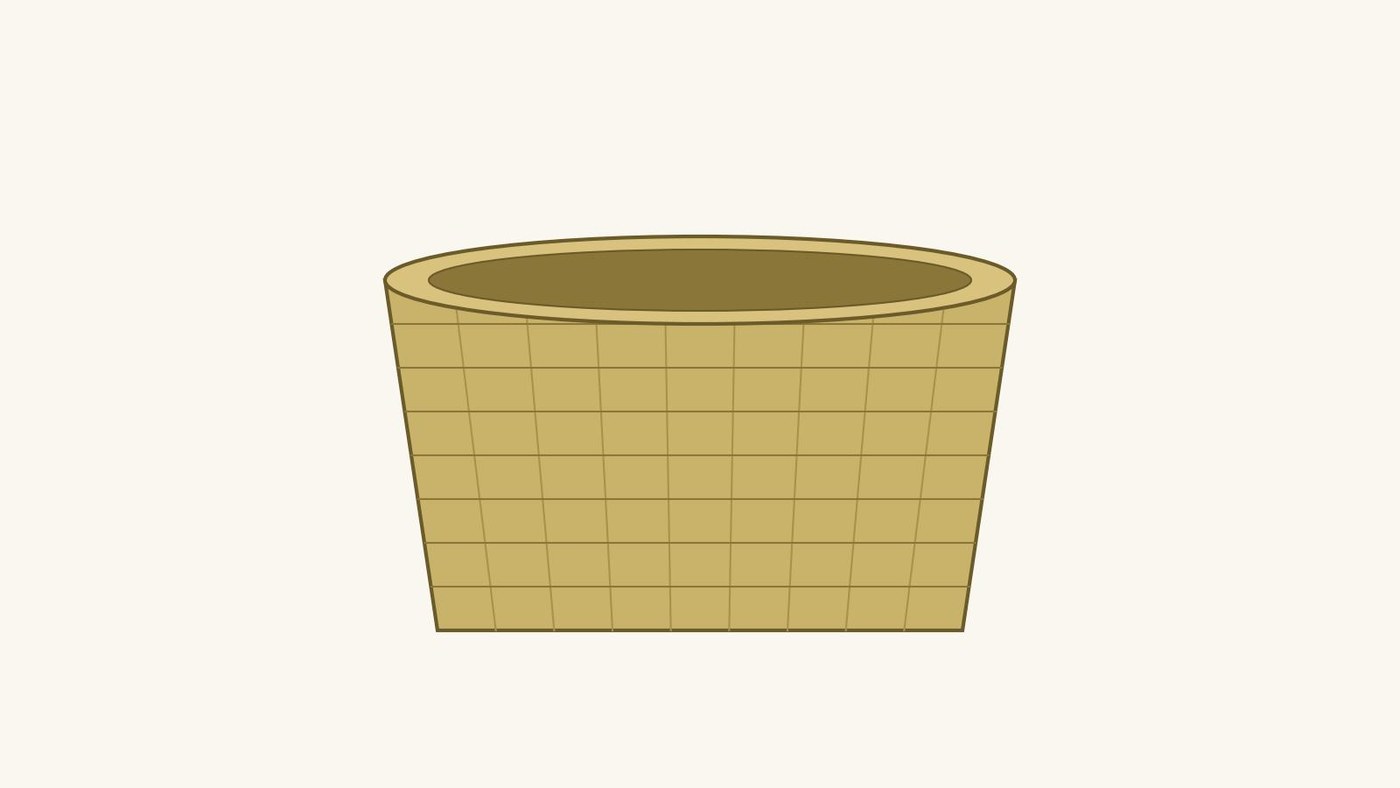


Rush Basket: Soaked Rush Plaited into a Base and Turned Up into Sides
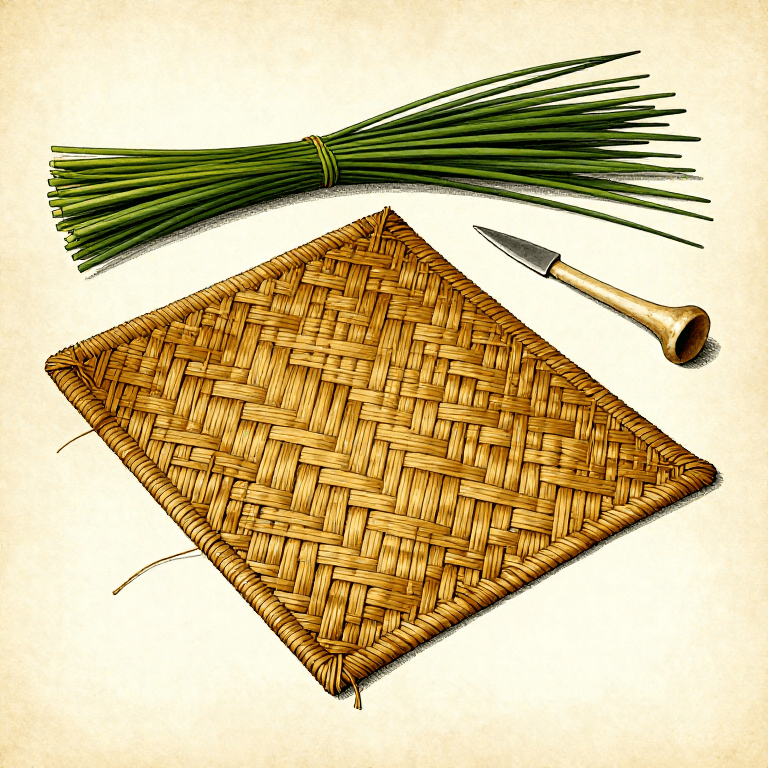
Rush stems are fibrous: from California to Scandinavia people made baskets of them. Soak dried rush until supple, plait a square base over one, under one, then bend the strands up and plait round to build the sides, tucking the ends in at the rim.
The picture: our diagram of a plaited rush basket.
Anfänger
A day
Anweisungen
1
1
Soak
Soak
Soak the dried rush in water until it bends without cracking, then keep it wrapped in a damp cloth.
Materialien für diesen Schritt:
 Getrocknete Binsenstängel1 kg
Benötigte Werkzeuge:
 Eimer
 Wasser
 Baumwolltuch
2
2
Plait the base
Plait the base
Lay half the strands side by side and weave the rest across them, over one and under one, into a tight square.
Benötigte Werkzeuge:
Baumwolltuch3
3
Raise the sides
Raise the sides
Bend all the strands up at the edge of the base and weave new strands round them, over one and under one, pushing each round down tight.
Benötigte Werkzeuge:
Eimer4
4
Finish the rim
Finish the rim
Fold each upright strand down over the last round and tuck it into the weave with the awl. Trim the ends and let the basket dry.
Benötigte Werkzeuge:
 Ahle
 Messer
5
5
Strands for your basket
Strands for your basket
Jupyter-Notebook wird geladen …
Materialien
1- Platzhalter
Dieser Bauplan stellt her
Verwandte Blueprints
Diese Blueprints teilen Wissen — Techniken, Materialien oder Prinzipien

CC0 Gemeinfrei
Dieser Blueprint ist unter CC0 veröffentlicht. Sie dürfen dieses Werk für jeden Zweck frei kopieren, ändern, verbreiten und verwenden, ohne um Erlaubnis zu fragen.
Unterstützen Sie den Maker, indem Sie Produkte über seinen Blueprint kaufen, wo er eine Maker-Provision von Anbietern festgelegt, verdient. Oder erstellen Sie eine neue Iteration dieses Blueprints und verbinden Sie ihn in Ihrem eigenen Blueprint, um Einnahmen zu teilen.