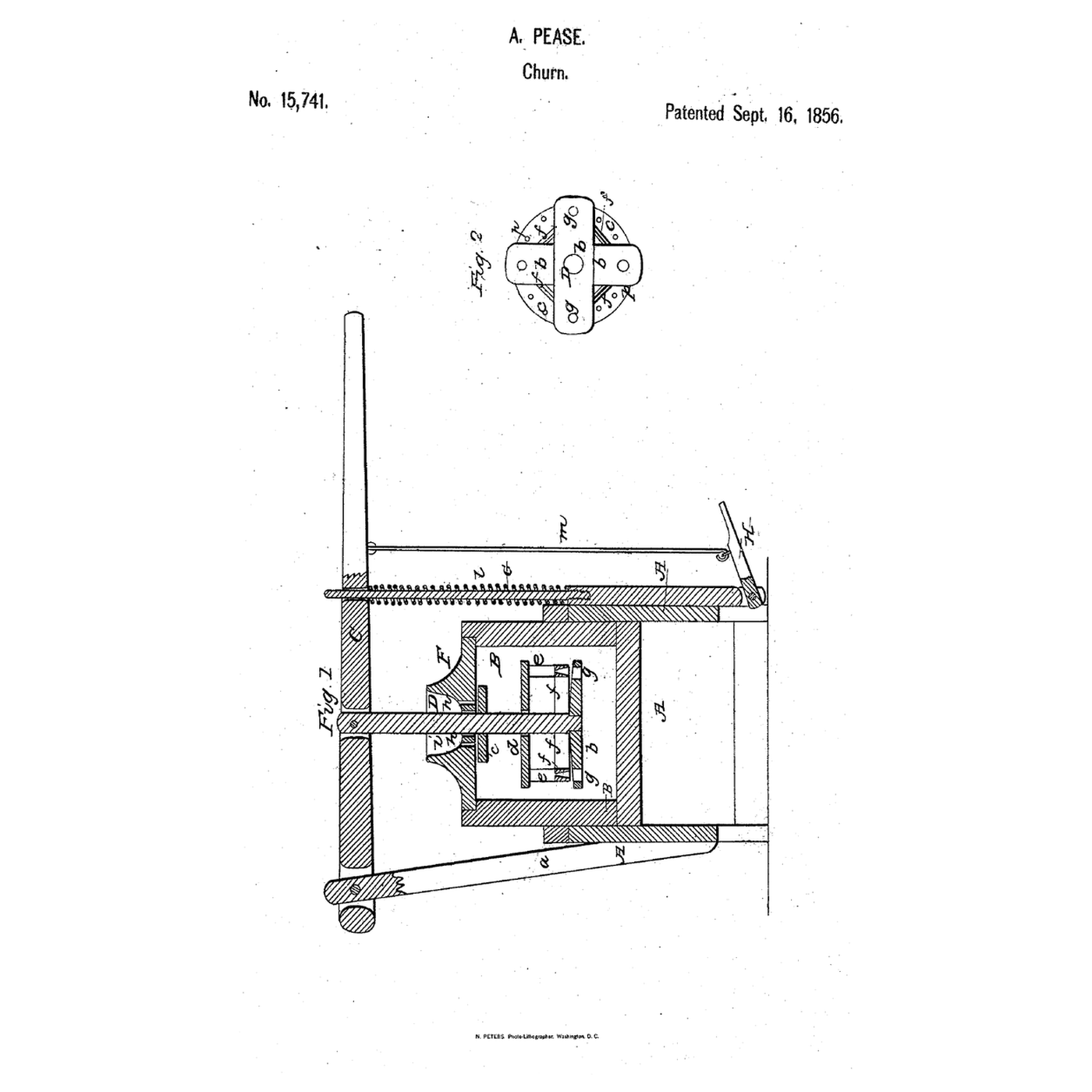


Sliding-Board Lever Dash Churn: A Free Board Between Two Fixed Ones, a Lever With a Spring
Anweisungen
The sliding board
The sliding board
A dasher that strikes itself before it
A dasher that strikes itself before it
Read US 15,741
Read US 15,741
Print the parts
Print the parts
Materialien für diesen Schritt:
 PETG-Filament1 Stück
Benötigte Werkzeuge:
 FDM-3D-Drucker
Print the lower board
Print the lower board
Print the upper board
Print the upper board
Print the sliding board
Print the sliding board
Print the cover with its cup
Print the cover with its cup
The dasher
The dasher
Materialien für diesen Schritt:
 Hartholzdübel1 Stück
 Holzleim1 Stück
Benötigte Werkzeuge:
 Handsäge
 Schleifpapier
Frame, lever and spring
Frame, lever and spring
Materialien für diesen Schritt:
 20-Liter-Eimer1 Stück
 Kiefernbrett1 Stück
 Rundstahl (Baustahl)1 Stück
 Druckfedernsortiment1 Stück
 Holzschraube #8 x 1"1 Stück
Benötigte Werkzeuge:
Handsäge Akkubohrschrauber
 Bohrersatz
 Schraubendreher-Satz
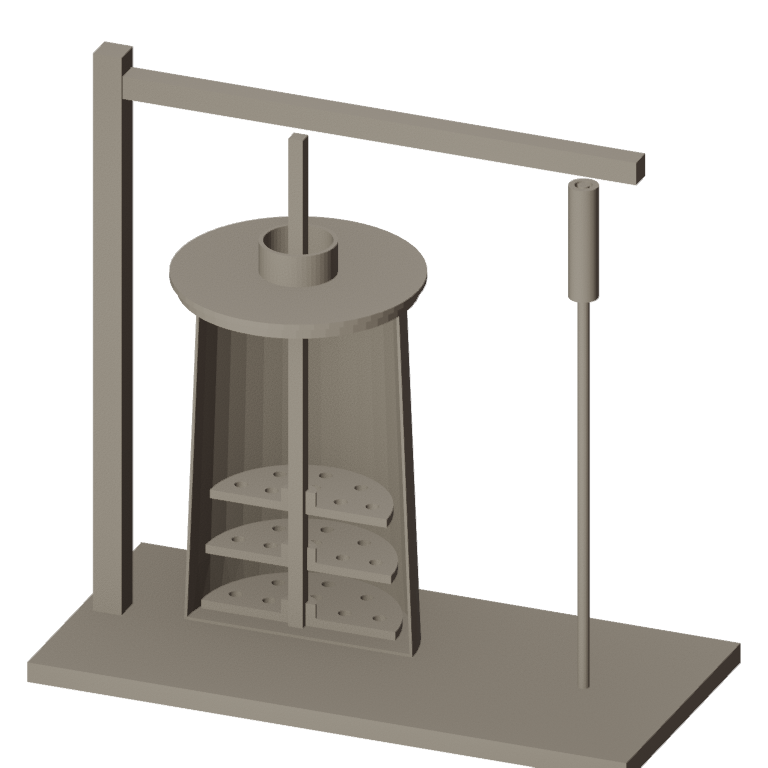
The build in 3D
The build in 3D
Churn
Churn
Materialien für diesen Schritt:
 Schlagsahne2000 ml
 Grobes Meersalz1 Stück
 Wasser1 Stück
Benötigte Werkzeuge:
 Einsteck-Fühlerthermometer
 Stoppuhr
 Digitale Küchenwaage
 Große Rührschüssel aus Edelstahl
Troubleshooting
Troubleshooting
Flow
History and honest limits
History and honest limits
Materialien
11- 1 StückPlatzhalter
- 1 StückPlatzhalter
- 1 StückPlatzhalter
- 1 StückPlatzhalter
- 1 StückPlatzhalter
- 1 StückPlatzhalter
- 1 StückPlatzhalter
- 1 StückPlatzhalter
- 2000 mlPlatzhalter
- 1 StückPlatzhalter
- 1 StückPlatzhalter
Benötigte Werkzeuge
10- Platzhalter
- Platzhalter
- Platzhalter
- 1 vendor sell this, none ship to you yetPlatzhalter
- Platzhalter
- Platzhalter
- Platzhalter
- Platzhalter
- Platzhalter
- Platzhalter
Designdateien
5Dieser Bauplan stellt her
Verwandte Blueprints
Diese Blueprints teilen Wissen — Techniken, Materialien oder Prinzipien
Two-Frame Percussion Dasher Churn: The Upper Frame Strikes the Lower at Every Down Stroke
von Spindle
Holzbearbeitung
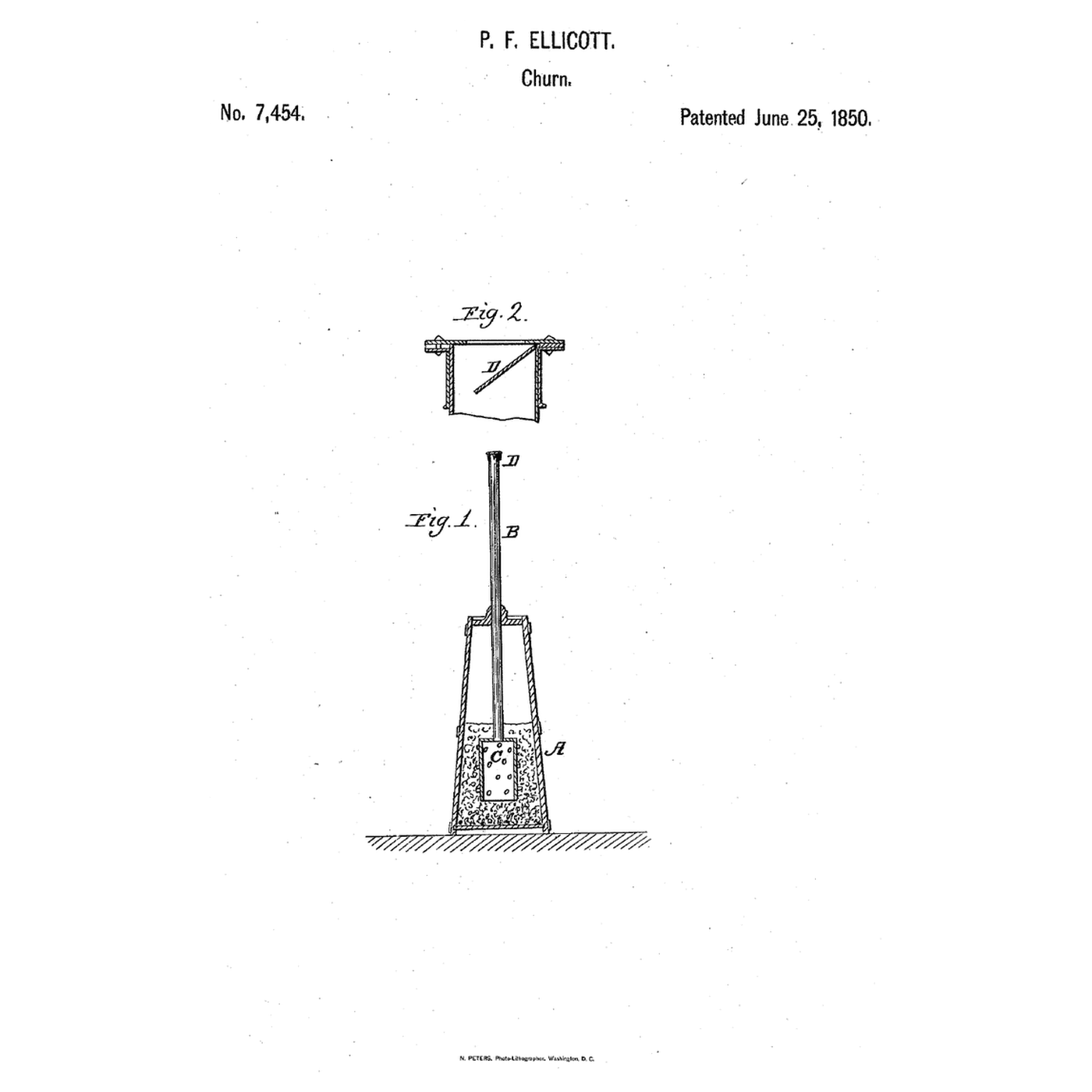
Valved Hollow-Staff Plunger Churn: A Valve at the Top, Air Forced Out at the Foot
von TheChef
ESSEN & GETRÄNKE

Churning Butter from Cream — The 5,000-Year-Old Fat Separation
von TheChef
HANDWERK
CC0 Gemeinfrei
Dieser Blueprint ist unter CC0 veröffentlicht. Sie dürfen dieses Werk für jeden Zweck frei kopieren, ändern, verbreiten und verwenden, ohne um Erlaubnis zu fragen.
Unterstützen Sie den Maker, indem Sie Produkte über seinen Blueprint kaufen, wo er eine Maker-Provision von Anbietern festgelegt, verdient. Oder erstellen Sie eine neue Iteration dieses Blueprints und verbinden Sie ihn in Ihrem eigenen Blueprint, um Einnahmen zu teilen.